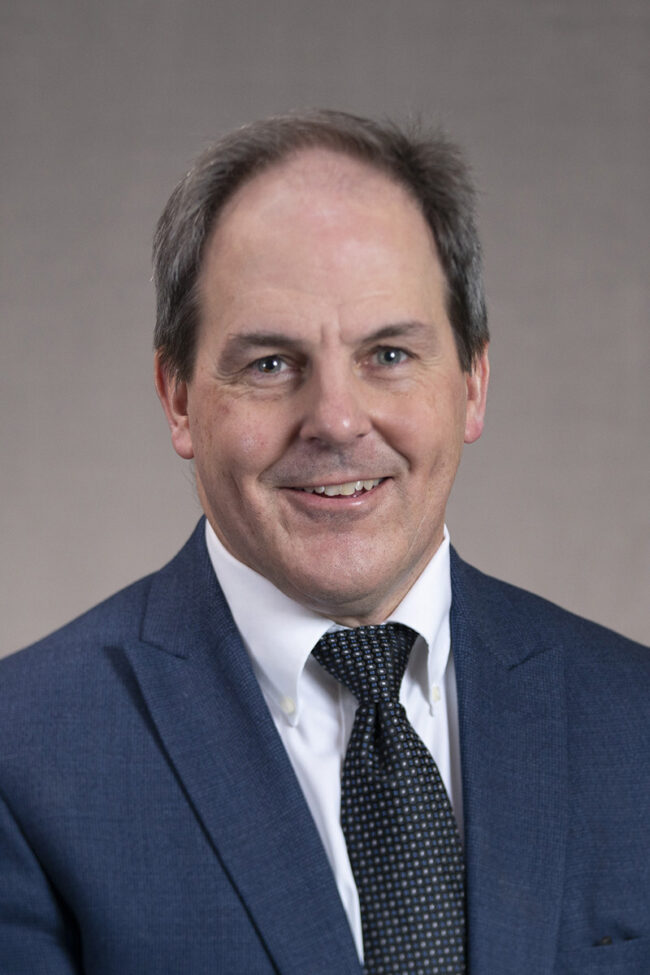
Caterpillar Inc. (NYSE: CAT) has announced that Tony Fassino, group president of the company’s largest operating segment, Construction Industries, will retire on May 31, 2026. Rod Shurman, a veteran of Caterpillar Inc. with broad operational and engineering experience, has been appointed as his successor effective February 1, 2026, initiating a structured leadership handover during a critical phase for the global construction equipment industry.
The transition will see Fassino assume the title of group president, retired, for the final four months of his tenure, ensuring continuity as the business prepares for longer-term shifts in customer expectations, equipment electrification, and digital operations. Shurman’s elevation sends a clear signal that Caterpillar Inc. intends to lean on homegrown talent to navigate both growth opportunities and competitive headwinds in its core markets.
How does this leadership change reflect Caterpillar’s internal succession model and operational priorities?
The choice of Rod Shurman reflects Caterpillar Inc.’s preference for deeply embedded operational leaders with multi-division experience. Shurman joined the company in 1997 and has held increasingly senior positions across engineering, customer service, and business unit leadership. His most recent role as senior vice president of the Building Construction Products division gave him direct oversight of Caterpillar Inc.’s compact equipment and attachments businesses, which are central to urban development and high-cycle rental markets.
Prior to this, Shurman also led two of the company’s more forward-looking units: the Oil & Gas division and the Electrification & Energy Solutions division. These assignments put him in the middle of Caterpillar Inc.’s efforts to modernize its power systems portfolio and decarbonize its product roadmap. This exposure will be highly relevant as Construction Industries continues to integrate electric drivetrains, telematics, and predictive diagnostics into its Earthmoving and Excavation lines.
His selection underscores Caterpillar Inc.’s long-term commitment to executive continuity. The four-month transitional overlap with Fassino is consistent with Caterpillar Inc.’s approach of minimizing disruption, especially in divisions where multi-year product development, supply chain resilience, and dealer network alignment must be maintained.

What are the strategic implications for Caterpillar’s construction segment under new leadership?
Construction Industries is the backbone of Caterpillar Inc., contributing a significant share of the company’s $64.8 billion in 2024 revenue. The division encompasses Earthmoving, Excavation, Building Construction Products, Cat Rental and Used, China Operations, and two customer solutions segments aligned by market maturity. It also houses the Construction Industries Supply Management group, a function critical to the company’s ability to respond to global demand variability.
The incoming leadership will need to reconcile near-term macroeconomic volatility with long-term transformation goals. Demand in North America has remained solid due to continued infrastructure spending, but global supply chain tightness, cost inflation, and dealer inventory normalization have begun to test margin resilience.
Shurman’s hands-on experience with both powertrain modernization and customer solution engineering is expected to play a major role in how Caterpillar Inc. balances traditional equipment sales with service-driven revenue. His familiarity with compact machinery will be essential as customers increasingly prioritize versatile equipment that supports tight urban job sites, faster turnaround, and reduced emissions.
The shift also comes at a time when automation, fleet connectivity, and operator-assist technologies are rapidly expanding in adoption. Construction Industries will likely continue to explore partnerships and in-house development in areas such as autonomous grading, semi-autonomous digging, and cloud-based maintenance scheduling. How effectively Shurman integrates these technologies across the segment’s global offerings will shape both customer retention and future margin profiles.
How does Tony Fassino’s legacy shape expectations for what comes next?
Tony Fassino’s career at Caterpillar Inc. spans 30 years, culminating in his appointment as group president of Construction Industries in 2021. During his tenure, he helped introduce a wave of product and go-to-market innovations aimed at stabilizing Caterpillar Inc.’s performance through the pandemic, inflationary cycles, and supply chain disruptions. He previously served as senior vice president of Building Construction Products and has deep familiarity with the customer segments now under Shurman’s remit.
Fassino played a central role in developing and executing Caterpillar Inc.’s strategies in global distribution, digital services, and channel excellence. He also led critical stakeholder engagement efforts through leadership roles at industry organizations, including the Association of Equipment Manufacturers, the Associated Equipment Distributors Foundation, and the American Road & Transportation Builders Association, where he serves as chair for 2025 to 2026.
His retirement marks the close of a high-stability era for the segment and places a premium on execution continuity under Shurman. Given that many of the product strategies now in motion were designed under Fassino’s leadership, Shurman inherits not just the operating structure but also the strategic assumptions that have shaped dealer incentives, inventory planning, and customer service delivery.
What risks and opportunities lie ahead for Shurman’s leadership in a changing global market?
Rod Shurman steps into the role during a moment of divergence in global construction trends. While North American demand remains buoyed by infrastructure stimulus and resilient residential construction, the outlook in China and other emerging markets is mixed. In China, Caterpillar Inc. continues to face aggressive price competition from domestic equipment manufacturers, placing pressure on both volume and dealer economics.
At the same time, rental fleet operators globally are demanding shorter product cycles, higher uptime, and tighter integration with software platforms that enable job site efficiency. This shift aligns with Shurman’s recent focus areas and may prompt new investments in connected services, equipment-as-a-service models, and predictive analytics for rental-heavy customers.
Dealer relationships remain a critical pillar of the Construction Industries business. Shurman’s ability to deepen support for dealer-led digital transformation, streamline parts and service fulfillment, and respond to competitive erosion in key regions will directly influence Caterpillar Inc.’s market share and customer satisfaction.
There is also increasing pressure from institutional investors and environmental stakeholders for Caterpillar Inc. to demonstrate real progress on its low-carbon equipment roadmap. While Shurman does not come from a sustainability or policy background, his time in the Electrification & Energy Solutions division positions him to accelerate rollout timelines for hybrid and electric product lines without compromising operational performance or resale value.
How are investors likely to interpret this transition in light of Caterpillar’s market positioning?
Caterpillar Inc. stock has remained broadly stable in recent quarters, supported by strong cash flow, disciplined capital returns, and consistent execution across its operating segments. While the announcement of a leadership change in Construction Industries does not signal a break from strategy, it will likely trigger a renewed focus from analysts on execution risk, especially in China and dealer inventory levels in North America and Europe.
Rod Shurman’s internal appointment avoids external uncertainty and suggests a steady course rather than a dramatic realignment. However, his track record in more technology-forward units may cause some investors to speculate whether Caterpillar Inc. is preparing to shift more aggressively toward service-based offerings, autonomous platforms, or green equipment launches.
Execution will be closely watched through indicators such as segment operating margins, aftermarket parts revenue, and pace of electrification adoption. While the first few quarters may show little operational divergence, by 2027 institutional stakeholders will expect to see evidence of differentiated performance under Shurman’s leadership—especially in areas like capital allocation, innovation velocity, and global channel competitiveness.
What Caterpillar’s leadership transition tells us about strategic focus, execution risk, and long-term competitiveness
Caterpillar Inc.’s decision to appoint Rod Shurman as its next Construction Industries chief highlights the company’s continued reliance on operational veterans to guide core businesses through evolving customer needs and geopolitical uncertainty. With his experience spanning product development, energy solutions, and compact machinery, Shurman enters the role with a toolkit well-matched to today’s hybrid landscape of traditional equipment and intelligent systems.
The transition is orderly, deliberate, and built on a bench strength model that favors long-cycle product knowledge and channel familiarity. Yet as electrification, autonomy, and jobsite digitization accelerate, Shurman’s ability to execute on new priorities while maintaining legacy revenue streams will define whether Caterpillar Inc. can defend and expand its leadership position in global construction markets.
Key takeaways on Caterpillar’s leadership change in Construction Industries and what it means for strategy
- Caterpillar Inc. has named Rod Shurman to succeed Tony Fassino as group president of Construction Industries, effective February 1, 2026, with a four-month transition period.
- Shurman’s elevation signals operational continuity but also positions the division for strategic acceleration in electrification, rental solutions, and digital integration.
- Construction Industries is Caterpillar Inc.’s largest revenue contributor and central to investor perception of long-term margin sustainability and capital efficiency.
- Fassino’s 30-year tenure included roles that shaped global product strategy, dealer alignment, and post-pandemic execution stability, making his exit a pivotal moment.
- Shurman’s background in energy transition, compact equipment, and engineering operations will likely influence the company’s pace of service transformation and channel modernization.
- Geographic risks remain pronounced, particularly in China, where pricing pressure and local competition may test Caterpillar Inc.’s resilience under new leadership.
- Investor attention will focus on margin mix, pace of tech deployment, and aftermarket revenue as indicators of leadership impact during the 2026–2028 period.
- The transition reflects Caterpillar Inc.’s internal succession model and steady-state operating philosophy, but leaves room for strategic innovation under a new operational lens.
Discover more from Business-News-Today.com
Subscribe to get the latest posts sent to your email.