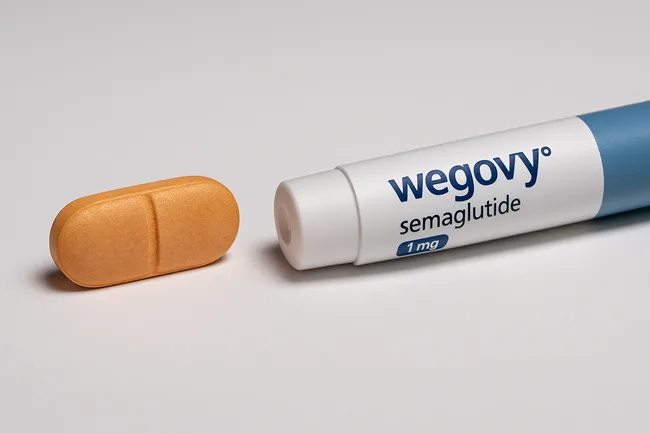
Novo Nordisk A/S (CPH: NOVO-B) and Eli Lilly and Company (NYSE: LLY) are redefining obesity treatment with a new generation of oral GLP-1 drugs that could reshape the way chronic weight management is approached worldwide. In May 2025, Novo Nordisk confirmed that the U.S. Food and Drug Administration has accepted its New Drug Application for a 25 mg oral formulation of Wegovy (semaglutide), targeting adults with obesity or overweight alongside weight-related comorbidities. The submission is backed by Phase 3 OASIS 4 trial data, setting the stage for what could become the first oral GLP-1 approved for chronic weight loss in the U.S.
Simultaneously, Eli Lilly is advancing orforglipron, a novel, non-peptide small molecule GLP-1 receptor agonist, through its Phase 3 ACHIEVE program. In the recent ACHIEVE-1 trial, orforglipron demonstrated statistically significant reductions in A1C and body weight for patients with type 2 diabetes—raising the question: can pills compete with the powerful efficacy of injectables like Wegovy and Zepbound?
The evolution of GLP-1 therapeutics into oral formats represents a pivotal step toward improving access, simplifying adherence, and potentially expanding treatment to millions more patients worldwide.
How effective are oral GLP-1 therapies like Novo Nordisk’s 25 mg Wegovy and Eli Lilly’s orforglipron compared to injectable options?
While injectable semaglutide (Wegovy) has set the clinical benchmark for obesity pharmacotherapy—achieving 15% to 21% average weight loss across various STEP trials—the efficacy of oral alternatives is under close scrutiny. In the OASIS 4 trial, Novo Nordisk tested the 25 mg oral Wegovy formulation in adults with obesity over 64 weeks, showing statistically significant weight loss. However, full trial data detailing average percentage weight reduction has not yet been disclosed. Analysts expect that efficacy will trail injectables, but could remain competitive for patients who prioritize convenience over maximal effect.
Eli Lilly’s orforglipron, meanwhile, is a daily oral GLP-1 receptor agonist that achieved an average A1C reduction of up to 1.6% and weight loss of 7.9% in its ACHIEVE-1 Phase 3 trial. The non-peptide nature of orforglipron enables room-temperature stability, large-scale manufacturing, and wider global distribution potential compared to peptide-based oral agents like Rybelsus or oral Wegovy. While these outcomes are slightly below the efficacy of injectable Zepbound (tirzepatide), which routinely exceeds 20% weight loss, they mark a strong entry for orforglipron in diabetes management and potentially for obesity once dedicated studies conclude later in 2025.
What role does convenience play in determining real-world adherence for oral versus injectable GLP-1 drugs?
Real-world adherence to injectable GLP-1 drugs has become a key concern for clinicians and insurers alike. According to recent data from the Cleveland Clinic and large patient cohort studies in Florida and Ohio, average real-world weight loss from Wegovy was just 5%—far below clinical trial results. Early discontinuation, dose intolerance, and reimbursement barriers were cited as leading contributors.
In contrast, oral GLP-1 pills may offer solutions to many of these friction points. Orforglipron is administered without pre-meal timing requirements, unlike oral semaglutide, which requires fasting protocols. The simplicity of daily pill intake combined with a needle-free experience may improve long-term treatment persistence, particularly among populations averse to injections or lacking reliable refrigeration.
Novo Nordisk’s 25 mg oral Wegovy, if approved, could mark a major shift in its obesity franchise by complementing the injectable portfolio and offering a gradient of options based on patient preference and access. Investors are closely watching whether this approach will curb dropout rates and improve insurance alignment, especially in countries with limited specialty care support.
What does investor and institutional sentiment suggest about the future of oral GLP-1 formulations?
Investor reactions have been decisive. Following the announcement of positive orforglipron Phase 3 data, Eli Lilly shares surged by over 13%—marking the strongest single-day gain for the pharmaceutical major in decades. Institutional sentiment reflects strong conviction that oral GLP-1 options could unlock vast untapped patient segments, particularly in geographies where injectable logistics are prohibitive.
Novo Nordisk, which has faced production bottlenecks amid soaring demand for injectable Wegovy and Ozempic, is positioning oral semaglutide as a strategic tool to balance its delivery channels. Analysts believe that oral GLP-1 drugs could help manage supply-demand dynamics, improve gross margin profiles, and diversify risk across drug delivery formats.
Analyst forecasts project that oral GLP-1s could reach $15 billion to $20 billion in annual sales by 2030, complementing an injectable market that may exceed $100 billion globally.
Which pipeline drugs are emerging as next-generation oral GLP-1 or combination therapies?
Beyond orforglipron and oral Wegovy, multiple second-wave candidates are shaping up. Novo Nordisk is advancing amycretin, an oral co-agonist targeting GLP-1 and amylin pathways, and is also banking on CagriSema—a once-weekly injectable co-formulation of semaglutide and cagrilintide—which has shown 20% weight loss in early Phase 3 data.
Eli Lilly is accelerating its full Phase 3 ACHIEVE series for orforglipron, which includes dedicated obesity trials expected to report later in 2025. Regulatory filings are expected in the U.S. for both diabetes and obesity indications by late 2025 and 2026 respectively.
Outside the two market leaders, smaller biotechnology firms are exploring oral delivery technologies to enable peptides like GLP-1, PYY, and glucagon analogs—many using permeation enhancers and nanoemulsion vehicles. While early stage, these platforms signal that oral peptide drugs are becoming a major innovation frontier across endocrine and metabolic diseases.
What regulatory and market access hurdles remain for oral GLP-1 drugs in the U.S. and globally?
Novo Nordisk expects a U.S. FDA decision on the oral Wegovy NDA by the end of 2025. If approved, it would be the first oral GLP-1 therapy indicated for weight loss, broadening Novo Nordisk’s leadership beyond injectable semaglutide. European filings are likely to follow, with the European Medicines Agency expected to request additional cardiovascular or renal safety data for broad reimbursement.
Eli Lilly, riding the momentum of its Zepbound success, will likely seek accelerated pathways for orforglipron if upcoming obesity trials support equivalency to injectables. Lilly executives have already indicated a focus on primary care channels for orforglipron to maximize adoption and leverage its oral administration advantage.
Payer sentiment will be key. Current GLP-1 therapies face challenges around formulary placement, step therapy, and cost-sharing. Oral drugs with modestly lower efficacy but better tolerability may offer a more cost-effective model for mass obesity treatment—especially if linked with digital adherence tools and primary prevention strategies.
How might oral GLP-1 drugs shape the future of chronic obesity and metabolic disease care?
By 2027, the GLP-1 class is expected to dominate obesity pharmacotherapy. Yet injectable limitations—needle aversion, refrigeration, cost, and access—still prevent many from benefiting. Oral semaglutide 25 mg and orforglipron could alter this dynamic. As chronic disease prevention becomes more community-based and payer-driven, oral agents may serve as first-line interventions in obesity and metabolic syndrome.
If future trial data confirm strong cardiometabolic protection, these drugs could become foundational in treating high blood pressure, type 2 diabetes, liver disease, and even early cognitive decline linked to obesity. Oral formulations may also drive a cultural normalization of anti-obesity medication, reducing stigma and reframing obesity as a treatable, lifelong condition.
Pharmaceutical innovation in this space now hinges on bioavailability optimization, cost reduction, and supply scalability. For Novo Nordisk and Eli Lilly, the next frontier is not just delivering results—but doing so in formats patients can live with, stick to, and afford.
Discover more from Business-News-Today.com
Subscribe to get the latest posts sent to your email.