




How does Latvia’s €275 million Rheinmetall project reshape national defence capabilities and European security?
Latvia has made a bold move to secure its national security and industrial base by signing a €275 million agreement with Rheinmetall AG to establish a new ammunition production facility on its soil. The deal was formalised with a Memorandum of Understanding signed in Hamburg in the presence of Latvian Prime Minister Evika Siliņa. The project will be delivered through a joint venture structure, with Rheinmetall Waffe Munition GmbH holding a 51 percent stake and the State Defence Corporation of Latvia taking a 49 percent interest.
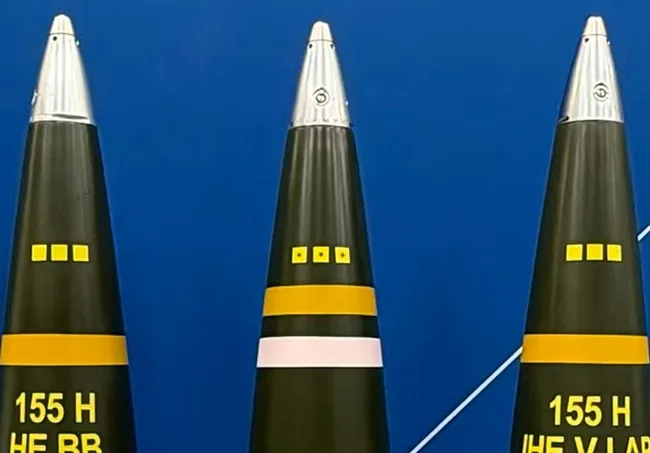
The facility will specialise in producing NATO-standard 155 millimetre artillery ammunition and is designed to supply both Latvia’s National Armed Forces and partner nations across Europe. It represents a significant milestone in Latvia’s long-term strategy to reduce dependence on external defence suppliers, expand its defence industrial capacity, and reinforce its position within NATO’s collective security framework.
For Rheinmetall, the plant further cements its status as one of the world’s most important defence manufacturers and reflects a strategy of expanding its footprint across Europe by establishing distributed production hubs. For Latvia, the investment offers both immediate defence value and broader economic returns by creating jobs, driving supply chain participation, and embedding advanced industrial capability domestically.
Why is Latvia prioritising independent artillery shell production at this stage of European security realignment?
The urgency behind the deal stems from the ongoing war in Ukraine, which has highlighted critical vulnerabilities in European supply chains for defence materiel, particularly in the area of artillery ammunition. The conflict has consumed hundreds of thousands of shells, forcing NATO members to confront the reality that their production capacities had fallen behind the pace of modern conflict.
Latvia’s decision to host its own artillery production plant is therefore not simply a procurement initiative. It is a recognition that national security now requires local manufacturing to guarantee steady supplies. Prime Minister Evika Siliņa underscored this point during the signing ceremony, noting that investing in the defence industry is equivalent to investing in the safety and future of Latvia’s citizens. She also emphasised that the partnership with Rheinmetall will not only protect Latvia but also strengthen supply security across Europe, enhancing both industrial capacity and economic development.
This step marks a turning point for Latvia, which historically relied heavily on NATO partners for armaments. By building domestic capacity, the Baltic nation is signaling that it wants to transition from being a security consumer to becoming a security contributor within Europe.
What will the new ammunition production facility deliver, and when will operations begin?
The planned facility will be a state-of-the-art production site incorporating a shell forging and filling line designed to meet NATO standards. Construction is scheduled to begin in spring 2026, and production is expected to commence approximately one year later.
The €275 million investment is projected to deliver an annual output of several tens of thousands of artillery shells, ensuring that Latvia will be able to cover its own military needs while also contributing to NATO supply lines. Importantly, the facility will generate at least 150 direct jobs, with indirect economic benefits spreading further through contracts with regional suppliers in engineering, logistics, and metallurgy.
This integration of local companies into the value chain is a key feature of the project. Rather than functioning as a stand-alone plant operated entirely by Rheinmetall, the joint venture model is designed to encourage knowledge transfer, build domestic expertise, and anchor the industry within Latvia’s economy for the long term.
How does the Latvian facility fit into Rheinmetall’s expanding European production network?
Rheinmetall’s strategic expansion across Europe has been one of the most closely watched developments in the defence sector. Just months before the Latvian deal, Lithuania commissioned Rheinmetall to build a similar ammunition facility in Baisogala. Both plants are designed to be comparable in scale and output, reflecting a broader blueprint by Rheinmetall to develop a distributed network of production centres capable of meeting surging demand.
Armin Papperger, Chief Executive Officer of Rheinmetall AG, said the Latvian facility would not only enhance Latvia’s sovereignty but also reinforce Rheinmetall’s leadership as the world’s largest producer of artillery ammunition. He stressed that the group is committed to working with governments as a long-term partner in building national security capacity. His comments also suggested that Rheinmetall intends to replicate this partnership model in other countries, further widening its role as NATO’s industrial backbone.
The creation of twin facilities in Lithuania and Latvia places the Baltic states at the heart of Europe’s rearmament drive. Their strategic location and strong political commitment to NATO make them natural hosts for such industrial projects, and they are now emerging as regional hubs for ammunition manufacturing.
What are the wider economic and industrial benefits of this investment for Latvia?
The project is more than a defence contract; it is a catalyst for economic development. By bringing advanced production technology and processes into Latvia, the deal will accelerate the growth of its domestic defence sector. Ingrida Kirse, Board Member of the State Defence Corporation, noted that the partnership combines Latvia’s responsibility for supplying its armed forces with Rheinmetall’s decades of expertise, setting the foundation for a sustainable national defence industry.
The integration of Latvian companies into the supply chain means the economic footprint will extend beyond the 150 direct jobs at the facility. Suppliers of raw materials, transportation providers, and technology partners are expected to benefit from the project, creating a multiplier effect across the domestic economy. Additionally, the training and upskilling of Latvian workers in advanced manufacturing processes will generate longer-term human capital benefits, ensuring the country builds a pool of technical expertise.
How does the Latvia–Rheinmetall deal align with NATO readiness and European rearmament priorities?
From NATO’s perspective, the Latvian investment comes at a critical moment. Ammunition shortages have been among the most pressing challenges faced by member states as they seek to support Ukraine while also rebuilding their own stockpiles. By adding another major production facility, NATO strengthens its resilience, reduces dependence on long global supply chains, and gains redundancy across its logistics network.
The Latvian facility will not only service the country’s own armed forces but will also contribute to NATO’s collective stockpile. Analysts note that this distributed approach to ammunition manufacturing is part of a broader push across Europe to establish regional nodes of production that can collectively meet alliance-wide demand. With Lithuania and Latvia both hosting Rheinmetall plants, the Baltic region is quickly becoming a cornerstone of Europe’s ammunition supply strategy.
What is the investor sentiment surrounding Rheinmetall’s growing European order book and stock performance?
Rheinmetall AG’s stock, traded on the Frankfurt Stock Exchange under the ticker RHM, has been one of the most notable performers in the European defence sector since the Russian invasion of Ukraine in 2022. Investor sentiment has been consistently positive, with institutional flows heavily weighted on the buy side.
The Latvia deal is viewed by investors as another sign of Rheinmetall’s ability to capture long-term, multi-country contracts that create predictable cash flows. Analysts highlight that the company’s distributed production model reduces supply risk and positions Rheinmetall to remain indispensable to NATO and EU member states.
In 2025, Rheinmetall’s share price has reflected these expectations, with upward momentum driven by record order backlogs in both ammunition and armoured vehicle segments. Market observers expect continued growth, and some institutional investors see the Baltic facilities as evidence that Rheinmetall is locking in strategic partnerships that will underpin its revenue for years to come.
What are the long-term strategic implications for Latvia and its role within NATO?
Latvia’s decision to build an artillery ammunition facility in partnership with Rheinmetall is more than a short-term response to current security concerns. It represents a long-term shift in national strategy, elevating Latvia from being primarily a consumer of NATO’s security guarantees to becoming an active contributor to the alliance’s industrial base.
By hosting a key facility in NATO’s ammunition supply chain, Latvia positions itself as a critical link in Europe’s rearmament efforts. The move will likely enhance its political influence within the alliance and underscore its commitment to collective defence. At the same time, the economic and industrial benefits ensure that the project serves not only military needs but also broader national development goals.
In the years ahead, as European defence spending continues to rise, Latvia’s model of partnering with a global defence leader while embedding local economic participation may serve as a blueprint for other mid-sized nations seeking both security and growth.
Discover more from Business-News-Today.com
Subscribe to get the latest posts sent to your email.
