Why did Marriott Vacations Worldwide change CEOs in 2025?
Marriott Vacations Worldwide Corporation (NYSE: VAC) has entered a transitional phase following the abrupt leadership change announced on November 8, 2025. The company’s board of directors appointed Matthew E. Avril, a board member since March 2025, as interim president and chief executive officer. This leadership decision follows the immediate departure of John Geller, who stepped down from both his executive and board roles at the company. The move is intended to set the stage for a new chapter in strategic execution, operational realignment, and shareholder value recovery.
This executive shake-up arrives at a critical juncture for Marriott Vacations Worldwide Corporation. Despite reaffirming its 2025 financial guidance earlier in the month, the company continues to face investor skepticism, particularly around long-term margin expansion and operational performance. The appointment of Avril, a seasoned veteran in the vacation ownership and hospitality industry, signals a clear pivot toward experienced leadership capable of accelerating performance and streamlining execution during a time of macroeconomic headwinds and increased competition.
What makes Matthew Avril a strategic fit for this transition?
Matthew Avril brings over three decades of executive experience across top-tier hospitality and vacation ownership firms. Before joining the board of Marriott Vacations Worldwide Corporation, he served as chief executive officer at Diamond Resorts International, a major player in the timeshare sector. He also previously held the position of president of the hotel group at Starwood Hotels & Resorts Worldwide and was designated chief executive officer-elect at Vistana Signature Experiences prior to its integration with Marriott Vacations Worldwide.
The decision to install Avril in the interim chief executive officer role was backed by the board’s confidence in his operational insight and prior success in leading turnarounds in the hospitality sector. Chairman of the board Bill Shaw noted that Avril had already contributed strategically since joining the board and described his appointment as a timely intervention to realign the company’s direction. Avril acknowledged the urgency of the moment and committed to working with the board and executive team to deliver near-term shareholder value.
By choosing a leader with a proven track record in the core business areas of vacation ownership, hotel operations, and customer engagement, Marriott Vacations Worldwide Corporation appears to be reinforcing its intent to stabilize internal operations before pursuing longer-term strategic realignment.
What are the underlying challenges prompting this leadership change?
The leadership transition at Marriott Vacations Worldwide Corporation comes amid a broader recalibration of investor expectations in the leisure travel and vacation ownership sectors. The company’s shares have underperformed in 2025, declining by nearly 17 percent year-to-date, raising red flags among long-term institutional holders. While broader indices have seen resilience, especially among diversified travel and leisure conglomerates, single-segment players like Marriott Vacations Worldwide Corporation have faced pricing pressures, margin constraints, and weaker-than-expected sales volumes in certain key geographies.
The board has also signaled concern around operational execution and shareholder returns. The timing of the CEO change, shortly after the company reaffirmed its 2025 guidance and ahead of a scheduled Investor Day, suggests that the departure of John Geller was not tied to immediate financial stress but to strategic performance gaps. By replacing him with an executive who understands both legacy resort economics and modern ownership models, the board appears to be repositioning the company to deliver faster value creation and improved investor messaging.
What is the financial outlook for 2025 and how is the company addressing valuation concerns?
Despite the change in leadership, Marriott Vacations Worldwide Corporation has maintained its previously issued 2025 financial outlook. The company expects full-year revenues to exceed $4.8 billion with adjusted EBITDA projected in the range of $850 million to $890 million. These forecasts, reaffirmed earlier in November, suggest that the company is not facing an acute financial deterioration but is instead underperforming relative to internal benchmarks and investor expectations.
To help address persistent concerns around valuation, the board has indicated plans to repurchase shares under the company’s remaining $347 million authorized buyback program. Management has stated that it will pursue opportunistic repurchases during the current quarter, using capital allocation as a tool to enhance per-share earnings and restore market confidence.
The share repurchase plan reflects the board’s view that Marriott Vacations Worldwide Corporation stock is undervalued relative to intrinsic earnings potential. Industry analysts have pointed out that the company’s shares currently trade at a significant discount to peers such as Hilton Grand Vacations and Travel + Leisure Co., particularly on forward-looking EV/EBITDA and price-to-earnings ratios.
How are institutional investors reacting to the leadership and buyback announcements?
Investor sentiment toward Marriott Vacations Worldwide Corporation remains cautious but not pessimistic. Many institutional holders are taking a wait-and-watch approach as they assess how Avril’s interim leadership affects near-term performance metrics and capital allocation discipline. The announcement of share repurchases has been seen as a constructive move, although it has not yet reversed the stock’s broader downward trend.
Several analysts covering the stock have reiterated neutral ratings, citing the need for greater visibility into the company’s long-term leadership succession, cost control measures, and revitalization of vacation ownership sales. Others are urging the board to use this transition period to reevaluate product mix, pricing strategy, and international expansion plans. The postponement of the December 17 Investor Day has added to this uncertainty, as it delays further insight into the company’s evolving strategic roadmap.
Nonetheless, Avril’s appointment has injected a degree of credibility into the interim phase. His prior turnaround credentials and board familiarity are viewed as stabilizing factors, with the potential to drive more decisive operational improvements ahead of the next earnings cycle.
What strategic opportunities and risks lie ahead in 2026?
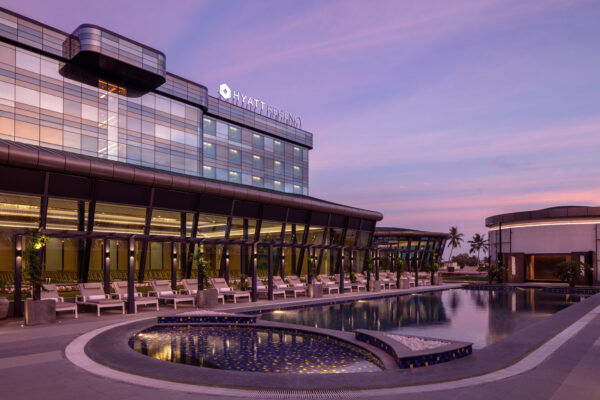
Looking forward, Marriott Vacations Worldwide Corporation faces both structural opportunities and tactical risks. On one hand, the company benefits from an enviable portfolio of 120 vacation ownership resorts and approximately 700,000 owner families. It also maintains exclusive brand relationships with Marriott International and an affiliate of Hyatt Hotels Corporation, giving it access to trusted global loyalty ecosystems that bolster its product credibility and customer retention rates.
However, demand for vacation ownership has become more cyclical in recent years, and inflationary pressures have squeezed affordability for many prospective customers. The competitive landscape has also shifted as newer travel options such as digital-first flexible lodging platforms and subscription-based travel clubs attract younger consumer segments.
Additionally, operational challenges including labor shortages, supply chain constraints, and rising financing costs on customer contracts have continued to weigh on performance. The use of artificial intelligence for customer engagement, booking management, and risk assessment is on the rise in the sector, and Marriott Vacations Worldwide Corporation will need to stay ahead of digital trends to retain competitive positioning.
While no near-term restructuring has been announced, the interim leadership may explore a more surgical approach to cost optimization, segment-specific strategy recalibration, or asset portfolio rationalization as part of the transition roadmap into 2026.
What are the key takeaways from Marriott Vacations Worldwide’s CEO transition and its near‑term financial outlook?
- Marriott Vacations Worldwide Corporation has appointed Matthew Avril as interim chief executive officer following the immediate exit of John Geller.
- The company’s board has begun the search for a permanent chief executive officer and postponed the December 17 Investor Day to allow more time for strategic realignment.
- Matthew Avril brings over 30 years of hospitality leadership experience, including prior roles at Diamond Resorts International and Starwood Hotels.
- Marriott Vacations Worldwide Corporation reaffirmed its 2025 guidance, projecting over $4.8 billion in revenue and up to $890 million in adjusted EBITDA.
- The company plans to deploy the remaining $347 million in its share repurchase program during the current quarter, citing undervaluation.
- VAC shares are down nearly 17 percent year to date, prompting analysts to call for clearer long‑term capital allocation and operational execution strategies.
- Institutional sentiment is currently mixed, with many investors awaiting Q4 2025 results and further clarity on strategic direction before reassessing their positions.
- The interim period may offer an opportunity to re‑evaluate pricing, digital engagement, cost structure, and global growth strategy going into 2026.
Discover more from Business-News-Today.com
Subscribe to get the latest posts sent to your email.