The Indian IT sector finds itself at a pivotal juncture. After years of predictable growth driven by large outsourcing contracts and digital transformation deals, the global demand environment is shifting. Discretionary tech budgets have slowed, clients are taking longer to renew contracts, and decision cycles are stretching well beyond the usual timelines. At the same time, artificial intelligence—particularly generative AI—is emerging as the next major growth frontier. But the core question remains: can this pivot to AI truly fill the revenue void left by softening demand in legacy IT and consulting services?
The signs of transition are clear. Companies like Infosys, Tata Consultancy Services (TCS), Wipro, HCLTech, and Tech Mahindra are investing heavily in AI capabilities, platforms, talent reskilling, and infrastructure. Yet for all the bold declarations and capital commitments, the gap between promise and monetization remains wide. The AI wave may be real, but its ability to fully compensate for the slowdown in traditional tech services is still uncertain—and possibly years away from becoming a material offset.
What macroeconomic challenges are forcing Indian IT firms to pivot away from legacy services
Over the past two decades, Indian IT firms have thrived on a high-margin, scalable services model. Large global clients outsourced everything from application maintenance and cloud migration to enterprise resource planning and business process outsourcing. These projects were predictable, multi-year, and came with high renewal rates.
That model is now being disrupted. Enterprises in the United States and Europe are reevaluating their tech spends amid inflationary pressures, rising interest rates, geopolitical risk, and internal cost-cutting. The result has been a sharp decline in discretionary spending. Unlike regulatory, compliance, or maintenance-driven tech initiatives, discretionary projects—such as innovation pilots, customer experience redesign, and legacy modernization—are the first to be paused or delayed.
This slowdown is already visible in sector performance. TCS reported a 2.66% year-on-year decline in revenue for Q2 FY26, while Wipro and Infosys also posted subdued growth despite strong cash flows and deal wins. Analysts tracking the sector note that average contract renewal timelines have now stretched from 6–8 months to over 12 months, and in some cases as long as 15 months. IT budgets are still present—but their release is being staggered.
In this environment, Indian IT firms are under pressure to reinvent the narrative—and the numbers. AI is the headline act.
How much are Indian IT companies really investing to scale their AI delivery and platforms
Recent quarters suggest that this is not just talk. TCS announced a $6–7 billion commitment to AI data centers, planning to build up to 1 gigawatt of capacity across key geographies. The company is also doubling its AI-skilled workforce, reaching approximately 160,000 employees trained in future-ready skills.
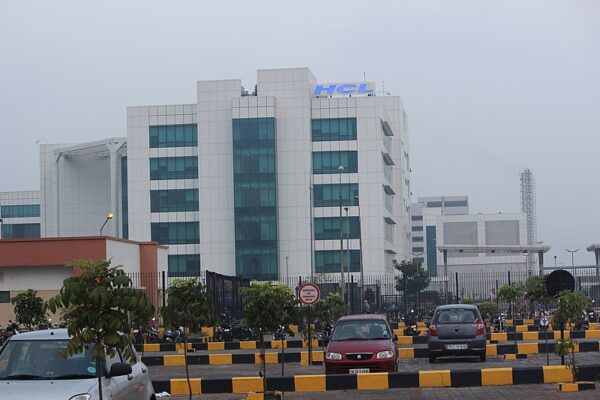
HCLTech became the first top-tier Indian IT company to disclose standalone AI revenue, reporting $100 million from AI-led services in Q2 FY26. This is a small percentage of its overall revenue, but the signal is significant. It reflects actual billing and delivery at scale—beyond pilot projects and POCs.
Wipro too is leaning into large AI-led contracts. In its latest earnings report, the company revealed that it closed two major AI-driven deals, each worth over $500 million. Infosys, while more conservative in its public disclosures, continues to anchor transformation engagements around its AI-first Topaz platform.
Hiring trends also reinforce the shift. While legacy IT hiring has declined—with job postings down over 10%—the demand for data scientists, machine learning engineers, and AI architects remains strong. Internal talent transformation programs across Indian IT majors are aggressively focused on training employees in GenAI, automation frameworks, and AI-powered delivery models.
The pivot is happening—but whether it will plug the revenue shortfall is a more complicated question.
Can current AI revenue and deal momentum meaningfully offset lost discretionary tech income
Theoretically, AI promises higher value per engagement, outcome-based pricing, and lower delivery costs through automation. In practice, however, the timelines for realization are longer than most investor models would prefer. Generative AI platforms must go through pilot testing, compliance review, data governance checks, and integration across legacy stacks. Most enterprise clients are still in the experimentation phase.
Moreover, the current AI revenue contribution is still too small to create an immediate impact on the income statement. HCLTech’s $100 million in AI revenue is only a fraction of its quarterly topline. For AI to replace even 10% of lost revenue from discretionary consulting and systems integration, the segment would have to scale several-fold.
There’s also the capital and margin dimension. AI infrastructure is expensive—especially if players are trying to build their own data centers, acquire GPU capacity, or partner with cloud hyperscalers at large scale. While these investments will generate future value, they also risk margin compression in the short term, especially if revenue doesn’t ramp in parallel.
Client-side caution is another factor. Many enterprise buyers are intrigued by AI’s potential, but are reluctant to commit large budgets until business value is proven. This leads to slow ramp-up, even for deals that are signed. For Indian IT firms, this results in a mismatch between booking and billing—contract wins are announced, but revenue recognition takes time.
What execution, talent, and margin risks could derail Indian IT’s pivot to AI in FY26
Execution remains the single biggest challenge. Reskilling over 300,000 employees across organizations to deliver AI-native services is a massive operational undertaking. There’s also growing competition—not just from peer IT majors, but from cloud providers, AI-native startups, and global system integrators that are nimbler in delivering AI models, APIs, and integration layers.
Attrition of top AI talent is another risk. High-performing AI professionals are in demand globally, and Indian IT firms may struggle to match compensation benchmarks set by U.S.-based tech companies or well-funded AI startups.
On the client side, adoption hurdles like data privacy, integration complexity, and internal resistance to change could delay project execution. Additionally, overinvestment in AI infrastructure ahead of demand could lead to underutilized assets and write-down risks in the long term.
Finally, the sector’s overall exposure to the U.S. economy remains a structural vulnerability. If inflation or monetary tightening prolongs client caution, AI alone may not be sufficient to offset the broader demand gap.
Which Indian IT players are showing early signs of success with scalable AI-led engagements
Despite the challenges, certain firms are emerging as bellwethers in the AI transformation narrative. HCLTech’s willingness to break out AI revenue—and the fact that it hit $100 million in a single quarter—is likely to push peers to do the same. Investors will now expect Infosys, TCS, and Wipro to report AI metrics more transparently.
TCS’s aggressive bet on data centers and internal AI tools shows that it is prepared to go beyond services and into platform-led delivery. Wipro’s large deal wins in GenAI and AI engineering signal its ability to win transformational mandates. Infosys continues to embed Topaz into multiple sectors, with early client wins in financial services, telecom, and energy.
These early signals are crucial, because they establish AI not as a future ambition—but as a current revenue stream. Over the next four to six quarters, the key to sustained investor confidence will lie in AI revenue mix percentage, margin expansion through automation, and client retention rates in GenAI-led engagements.
Will generative AI and platform services fully replace traditional IT services in the near term
Indian IT’s pivot to AI is not just inevitable—it is essential. The discretionary tech slowdown is not likely to reverse quickly, and AI represents both a margin lever and a growth opportunity. But while AI has momentum, it is not yet a full replacement for traditional revenue lines. There is a transition period, and the industry is currently in the middle of it.
Over the next two to three years, successful IT firms will be those that convert AI talk into platform traction, deliver measurable ROI for clients, and adapt their delivery, pricing, and talent models to fit an AI-native world. The discretionary gap may not be fully filled in the short term—but for those that execute well, AI could become the backbone of a more sustainable and scalable IT business model.
Key takeaways from India’s AI pivot in the IT services sector
- Indian IT firms are leaning heavily on AI-led transformation deals to counterbalance the slump in discretionary tech spending across BFSI, retail, and telecom.
- Platforms like TCS AI.Cloud, Infosys Topaz, Wipro ai360, and HCLTech’s AI Force are being positioned as scalable engines to win margin-accretive business.
- Analysts caution that while AI pilots are abundant, conversion into large, multiyear production deals remains sluggish—dragging topline acceleration.
- The talent gap in AI and data engineering continues to weigh on delivery, particularly for legacy-heavy firms retraining bench capacity.
- Enterprise clients in the U.S. and Europe are prioritizing cost-takeout, consolidation, and vendor rationalization over exploratory AI projects.
- Despite the pivot, revenue contributions from AI remain under 5% for most Tier-1 players as of FY25, with visibility for meaningful ramp-up skewed to FY27.
- Investors are now tracking two metrics: the proportion of AI-led wins in total TCV, and the margin profile of these projects compared to legacy infra/AMS.
- The sector’s medium-term narrative hinges on one question: can Indian IT industrialize AI fast enough to create a new growth engine—or is this pivot just a hedge?
Discover more from Business-News-Today.com
Subscribe to get the latest posts sent to your email.