




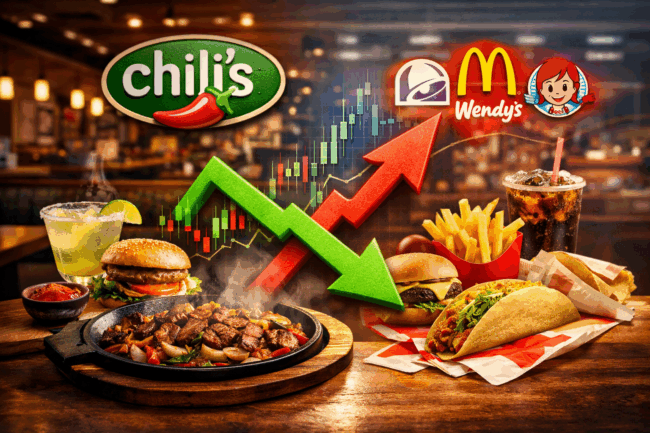
Chili’s Grill & Bar is mounting a competitive challenge that few in the fast food world saw coming. With 19 consecutive quarters of same-store sales growth, its parent company Brinker International is now using Chili’s value positioning and traffic gains to undercut quick-service rivals, increase market share, and boost earnings guidance in a slowing restaurant economy.
Brinker International reported that Chili’s delivered an 8.6 percent rise in comparable restaurant sales in its latest quarter, outpacing broader casual dining peers and signaling a shift in consumer behavior. With inflationary pressure still affecting discretionary spending, diners are choosing restaurants that offer more for less. Chili’s strategy of full-meal value deals, simplified menus, and improved operational efficiency is drawing attention not just from Wall Street but from fast food executives trying to defend their traffic base.
The restaurant industry is entering a new phase where traditional category lines are blurring. Casual dining chains like Chili’s are offering compelling alternatives to quick-service restaurants in both pricing and perceived value. What once was a clear divide between sit-down and drive-thru is becoming a battleground for middle-income consumer loyalty.
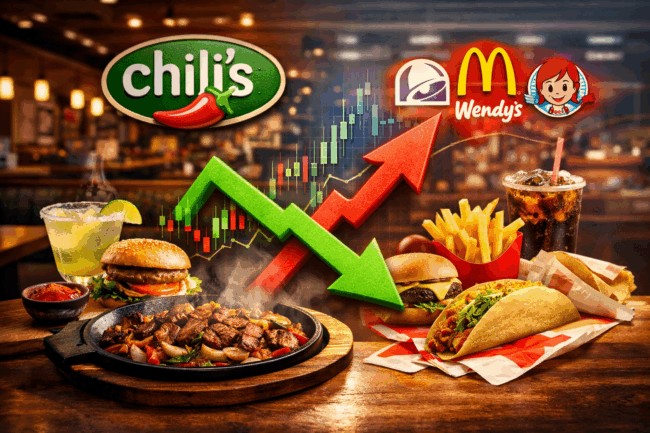
How is Chili’s Grill & Bar gaining share while the rest of the restaurant sector slows?
The standout figure from Brinker International’s earnings was Chili’s sustained momentum, which continues to defy broader traffic softness across the U.S. restaurant sector. While many chains have resorted to discounts or loyalty program tweaks to shore up visitations, Chili’s is capturing share through a strategic repositioning centered on simplicity and value.
Executives at Brinker International have emphasized that this is not a flash-in-the-pan promotional surge. The growth reflects consistent improvements across Chili’s core operations. Over the past several years, the company has streamlined the menu to focus on high-margin, high-demand items, removed operational complexity in the kitchen, and invested in speed and consistency of service.
These internal shifts have allowed Chili’s to respond more nimbly to market conditions while staying true to its casual dining roots. The result is a dining experience that feels closer to a full-service restaurant but competes directly with fast food on price and convenience. Chili’s value meals and bundles are being pitched not just as promotions but as baseline offerings, repositioning the brand in the eyes of budget-conscious families and younger diners.
Why is Brinker International’s strategy proving effective in the current inflationary cycle?
The timing of Chili’s repositioning is a major factor in its success. As food-at-home inflation begins to moderate but still remains above pre-2021 norms, consumers are more selective about where they eat out. Value perception has become the defining metric of success. Chili’s is meeting this moment with a menu that offers portion size, perceived quality, and price competitiveness all at once.
By focusing on “everyday value” and keeping price points under psychological thresholds like $10 or $12 for full meals, Chili’s is luring customers away from fast food chains that have gradually raised prices over the last 18 months. With limited-time offers like the “3 for Me” bundles, which include an entrée, drink, and appetizer, Chili’s presents a compelling challenge to quick-service price hikes.
Unlike fast food chains that rely heavily on low-margin traffic volume, Chili’s is structurally able to drive higher per-visit spend while still maintaining attractive unit economics. This hybrid model — combining fast food pricing psychology with casual dining experience — is proving resilient even as restaurant industry comps flatten or decline.
What are the implications for fast food giants like McDonald’s, Wendy’s, and Taco Bell?
The success of Chili’s value strategy is placing real competitive pressure on fast food incumbents. For players like McDonald’s Corporation, The Wendy’s Company, and Yum! Brands Inc. (which owns Taco Bell), the core competitive advantage has historically been convenience, low price points, and high-frequency visitation. But that model has begun to strain under labor and input cost pressures.
Consumers are noticing the narrowing price gap between quick-service combos and casual dining meals. As Chili’s blurs the line by offering table service and larger portions at near-identical price points, the value proposition of a drive-thru burger or taco meal becomes less compelling. This dynamic is even more acute for families or groups who seek more satisfying dining experiences without materially higher spend.
If Chili’s continues on this trajectory, fast food brands may be forced to reassess their promotional calendars, revisit menu engineering, or even consider physical remodels to enhance perceived experience. Already, chains like McDonald’s have launched value bundles and subscription models to defend traffic. Whether these moves will be enough to retain consumer loyalty in the face of rising casual dining competition remains uncertain.
How has operational discipline strengthened Chili’s market position?
Behind the scenes, Brinker International has implemented several measures that have improved Chili’s execution. Labor management systems, kitchen automation, and order process streamlining have allowed Chili’s locations to improve table turnover and deliver faster service — two areas where casual dining often lags fast food. The company has also leveraged digital ordering, customer engagement tools, and loyalty programs to boost repeat visitation.
Critically, the company has done this without adding back the complexity that previously bloated costs. The leaner back-of-house operations not only control labor expenses but also reduce error rates, improving guest satisfaction. At a time when customer tolerance for poor service has declined and reviews can instantly influence brand reputation, this is a key differentiator.
These changes have also enabled consistent nationwide execution. One of the historical criticisms of casual dining chains has been variability in service and food quality across locations. By tightening operational standards and enforcing repeatable processes, Brinker has reduced the friction points that often derail scale in the casual dining segment.
Could Chili’s momentum shift broader restaurant investment trends?
Investors are taking notice. Brinker International raised its full-year revenue and earnings guidance following the latest quarterly results, citing strong Chili’s traffic and menu performance. This signals growing confidence that the value-led strategy has structural legs, not just cyclical tailwinds.
In contrast, several quick-service names have reported flat or negative traffic trends despite promotions and new product introductions. The divergence is fueling a rethink of what counts as a “growth brand” in foodservice. Chili’s, long viewed as a mature asset with limited upside, is suddenly attracting attention from institutional investors looking for defensible margin expansion and consumer loyalty at scale.
This could lead to portfolio rebalancing among foodservice investors who previously overweighted fast casual and QSR names. If casual dining continues to deliver margin-accretive growth while offering resilience in the face of pricing pressures, firms like Brinker International may find themselves back in favor on both growth and income investing screens.
What comes next for Chili’s and its fast food competitors?
The next phase of Chili’s evolution will depend on its ability to maintain value perception while incrementally building pricing power. This will require ongoing menu innovation, clear brand communication, and precision in execution across hundreds of locations.
Fast food chains, meanwhile, are unlikely to cede ground quietly. Expect more aggressive pricing moves, loyalty program enhancements, and potential new store formats that blur the drive-thru–dine-in divide. In a sector where switching costs are low and promotions drive trial, retaining share will require constant reinvention.
Yet the broader takeaway is clear: the fast food–casual dining battleground is no longer divided by service format. It is now a fight over total perceived value. And in that fight, Chili’s is showing that with the right strategy, a casual dining brand can punch far above its historical weight.
What are the key takeaways for investors, competitors, and the restaurant industry?
- Chili’s Grill & Bar has delivered 19 straight quarters of same-store sales growth, driven by value positioning and menu simplicity.
- Brinker International has raised guidance, reflecting confidence in Chili’s continued momentum amid broader sector softness.
- The brand’s full-meal value bundles offer a compelling alternative to fast food in terms of pricing and experience.
- Operational streamlining has improved consistency, lowered cost, and enhanced guest satisfaction across Chili’s locations.
- Fast food chains are facing pricing and format challenges as Chili’s narrows the value gap and attracts budget-conscious consumers.
- Quick-service incumbents may need to revisit value strategies and innovate to defend market share from encroaching casual dining formats.
- Investors are watching the shift in consumer preference closely, with Brinker’s traffic gains seen as a potential signal for portfolio rotation.
- The redefinition of value in foodservice is altering legacy assumptions about where consumers will spend amid ongoing inflation.
- Sustained success for Chili’s will depend on execution discipline, menu relevance, and marketing that reinforces everyday value.
- The competitive line between fast food and casual dining is becoming increasingly blurred, with value perception driving share shifts.
Discover more from Business-News-Today.com
Subscribe to get the latest posts sent to your email.


