As consumer expectations around health, sustainability, and clean-label food accelerate, one of the world’s largest ingredient distributors is quietly repositioning itself—not as a middleman, but as a hands-on innovation partner. Brenntag SE’s new Innovation and Application Center in Leeds isn’t just another R&D facility. It’s a signal of how the €17 billion German group plans to win the next decade in functional foods and nutraceuticals.
Instead of merely moving ingredients from warehouse to production floor, Brenntag SE is investing in a future where co-creation, formulation intelligence, and regulatory agility drive growth. With more than 80 such centers globally—and over 30 focused on life sciences—the Leeds facility now becomes a frontline node in the company’s effort to embed itself deeper into its customers’ product pipelines.
From alternative proteins to sugar-reduced beverages and fiber-enriched snacks, the real value is no longer in supply alone. It’s in helping food and nutraceutical brands solve their next formulation challenge—fast.

What strategic role will the Leeds center play in supporting UK and Irish food manufacturers?
The new Leeds Innovation and Application Center is built to serve one of Europe’s most dynamic food innovation corridors. With UK and Irish consumers embracing wellness, plant-based eating, and transparency in labelling, the formulation bar has never been higher. And many small-to-midsize food and beverage companies lack the in-house capability to test novel ingredients or develop shelf-stable health-positioned products.
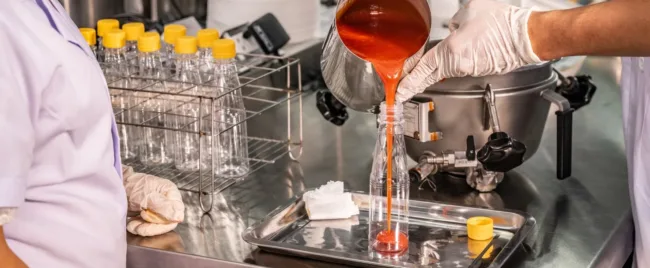
Brenntag SE’s answer is to bring lab-grade prototyping and co-development infrastructure closer to these customers. The Leeds center offers technical support across bakery, dairy, beverages, savory categories, and plant-based alternatives—delivering not just samples, but science. It enables customers to collaborate with Brenntag’s application technologists on everything from mouthfeel optimization to nutrient fortification and emulsification performance under real-world conditions.
In an increasingly competitive landscape where reformulation cycles are shrinking and launch timelines are compressing, this kind of high-touch support can be the difference between market traction and costly delays.
How is Brenntag SE using application centers to evolve from distributor to strategic development partner?
For decades, ingredient distribution was a scale and logistics game. But Brenntag SE has been systematically shifting toward technical services—especially in its life sciences portfolio, where margins are higher and product complexity demands deeper involvement. Innovation centers are now a core part of that transformation.
Each of these centers acts as a collaborative sandbox—where customers can develop new concepts, test formulations, and troubleshoot functionality alongside in-house experts. The value proposition is no longer just “we deliver ingredients”—it’s “we help you deliver winning products.”
By operating these labs in close proximity to customer clusters, Brenntag Specialties builds stickier relationships and stronger influence in the final product development cycle. It also earns a larger slice of project value by being involved in ingredient selection, regulatory advice, and sensory validation from the start.
Why is localization of technical services a competitive differentiator in the European nutrition market?
Food innovation may be global, but product requirements remain deeply local—from taste profiles and dietary preferences to labeling laws and marketing claims. Brenntag SE’s Leeds center gives the distributor regional technical muscle in a geography where “health halo” claims are both highly sought after and tightly regulated.
In the UK, for example, sugar and salt reduction targets are supported by public policy. Meanwhile, consumer interest in “no artificial preservatives,” “high protein,” “gut friendly,” and “vegan certified” formulations continues to rise. Having an innovation lab on the ground allows Brenntag SE to help clients navigate these demands in real time—advising on ingredient substitution, taste masking, solubility, and clean-label trade-offs.
In short, localization is no longer just about logistics. It’s about insight—and speed.
What are the commercial and margin implications of Brenntag’s shift toward co-development?
Investing in formulation infrastructure is not just a scientific decision—it’s a strategic one. By embedding itself earlier into the customer value chain, Brenntag SE positions itself as a solution provider rather than a commodity supplier. That opens the door to multi-project engagements, upselling of specialty ingredients, and advisory services that can command premium margins.
This is particularly true in nutrition, where demand for specialty ingredients—such as functional fibers, natural emulsifiers, botanicals, and microencapsulated actives—is soaring. But with that demand comes formulation complexity. Manufacturers are increasingly leaning on distributors for guidance on how to integrate these ingredients into scalable, consumer-ready formats.
The Leeds center serves that exact purpose—and gives Brenntag SE a defensible edge in an increasingly crowded European ingredients market.
How does the UK expansion tie into Brenntag SE’s broader life sciences strategy?
The Leeds launch is part of a wider playbook. Over the last five years, Brenntag SE has been aggressively building its Innovation and Application Center footprint to support growth in nutrition, pharma, personal care, and industrial specialties. Life sciences is now one of its highest-margin divisions—and technical services like these centers are a key lever in growing it further.
Rather than rely solely on volume or exclusive supplier agreements, the German group is betting on formulation expertise, regional proximity, and customer intimacy to deepen share of wallet. It’s also a strategic hedge against commoditization risk in base chemicals and bulk distribution.
For the UK specifically, the Leeds site cements Brenntag SE’s presence in a post-Brexit regulatory landscape where local compliance, labelling nuances, and fast R&D cycles require in-country support. The center also positions Brenntag to partner more closely with universities, food accelerators, and plant-based startups based in Northern England—a fast-emerging innovation zone.
Will Brenntag’s co-creation model become the new standard for ingredient distribution?
The answer may lie in how quickly competitors follow suit. While other major distributors such as IMCD Group, Azelis, and Univar Solutions have also invested in technical service networks, Brenntag SE’s approach stands out for its scale and specialization. Each new center is not a generic lab—it’s tailored to specific end markets, customer types, and regional trends.
The Leeds center doesn’t just represent infrastructure—it symbolizes a philosophical shift. One where distributors move upstream into customer innovation cycles, leveraging formulation insights to win loyalty and outmaneuver pricing pressure. It’s a model that may soon become the cost of entry in high-growth categories like personalized nutrition, plant-based protein, and gut health.
And as more brands seek turnkey innovation partners rather than just ingredient quotes, Brenntag SE appears well-positioned to lead that charge.
What are the key takeaways from Brenntag SE’s UK nutrition innovation center strategy?
- Brenntag SE has opened a new Innovation and Application Center in Leeds, United Kingdom, focused on food and nutrition formulation support for customers in the UK and Ireland.
- The Leeds lab is part of Brenntag SE’s broader shift from traditional distribution toward value-added services, including co-development, formulation, regulatory advisory, and pilot-scale prototyping.
- The facility supports product innovation across categories such as bakery, dairy, beverages, plant-based foods, and functional wellness products, with an emphasis on clean-label, fortified, and allergen-free formulations.
- The investment enhances Brenntag Specialties’ positioning in the high-growth UK and Ireland food-tech markets, enabling it to localize R&D support and respond faster to regional consumer and regulatory trends.
- This expansion is a core component of Brenntag SE’s global life sciences strategy, which includes over 80 innovation centers worldwide and aims to deepen margins, customer stickiness, and technical influence in formulation-heavy verticals.
- By embedding technical services early in the product development cycle, Brenntag SE is differentiating itself from commodity ingredient suppliers and strengthening its role as a strategic innovation partner.
Discover more from Business-News-Today.com
Subscribe to get the latest posts sent to your email.