




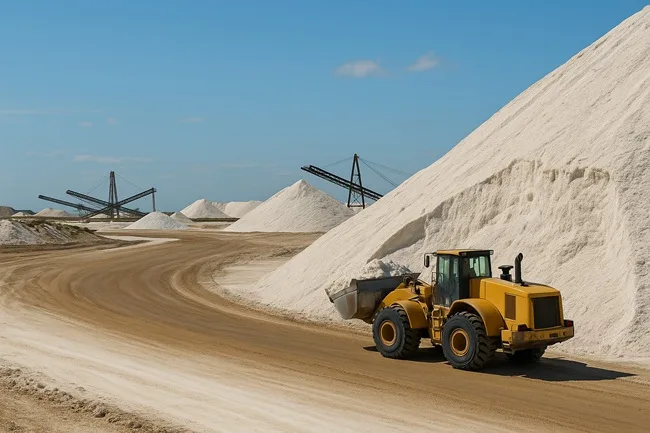
Africa’s emerging potash assets are beginning to move from speculative interest to serious strategic consideration. Kore Potash Plc, listed on the AIM, ASX, and JSE under the ticker KP2, has launched a formal sale process following non-binding acquisition interest from two undisclosed parties. This move places the Kola Project in the Republic of Congo at the center of investor attention. At the same time, Danakali Limited’s Colluli asset in Eritrea, long recognized for its shallow mineralization and proximity to export infrastructure, continues to represent a potential first-mover opportunity in African potash. These two projects—one seeking a strategic lifeline, the other having already secured partial exit—frame the current narrative: Can Africa deliver the next chapter in global potash supply?
The stakes are high, particularly in a world recalibrating its fertilizer strategies amid geopolitical disruptions and a shrinking pool of reliable exporters. Investors, off-takers, and mining strategists are watching to see whether African deposits can overcome financing, infrastructure, and governance hurdles to become globally relevant sources of potassium chloride.
Why are Kore Potash and Danakali seen as Africa’s top contenders in the global potash race?
Kore Potash’s Kola Project is positioned within the Sintoukola permit area in the Republic of Congo, boasting a reported Measured and Indicated Mineral Resource of over 500 million tonnes with high potassium chloride content. The asset lies at depths between 200 and 400 meters and sits less than 35 kilometers from the coast, suggesting strong logistical potential. Kore Potash has marketed the Kola Project as capable of becoming one of the world’s lowest-cost potash suppliers due to the combination of high ore grade and logistical proximity.
Danakali Limited’s Colluli asset in Eritrea presents a similarly attractive proposition. Its potash salts lie at some of the shallowest depths globally and are located close to planned export infrastructure. The project has been promoted as a long-life, low-cost source of sulphate of potash and other salt-based fertilizers, with a development plan geared toward modular construction. Its total resource base is also substantial, exceeding one billion tonnes.
Together, Kore Potash and Danakali represent the two most advanced African potash developers with significant geological advantages. Both companies have positioned their assets as strategically important in the race to diversify global fertilizer supply away from traditional centers like Canada, Russia, and Belarus.
What makes African potash deposits geologically competitive but financially challenging to develop?
Africa’s potash deposits stand out geologically. Both the Kola Project and the Colluli Project benefit from shallow mineralization and high grades, providing a compelling technical case for extraction and cost-efficiency. However, the transition from resource to production has been slowed by considerable capital intensity and a challenging financing landscape. Large upfront capital expenditure is required for mining development, export corridors, processing plants, and port infrastructure.
Kore Potash has highlighted its need for a qualified contract operator and strategic investor with experience in potash processing. The absence of such partnerships has prevented the project from reaching final investment decision. Similarly, Danakali Limited, while having made significant progress on feasibility and permitting, has faced delays in securing full-scale development capital. The need for tailored financial instruments, risk guarantees, and offtake agreements has made traditional funding paths more difficult, particularly in jurisdictions where political risk or regulatory opacity remains a concern.
Despite this, the core value proposition remains intact: the geology is sound, the logistics are superior to many inland competitors, and the market fundamentals for potassium chloride continue to support long-term development.
How are geopolitical shifts and Russia’s disruption reshaping global potash supply chains?
The global potash sector has historically been concentrated among a few players, with Canada’s Nutrien, Russia’s Uralkali, and Belarusian Potash Company controlling a significant portion of global exports. Since 2022, geopolitical tensions, including sanctions on Belarus and reduced Russian export access in some markets, have disrupted global trade patterns. These supply interruptions have led many countries, particularly in Asia and Africa, to search for new, less politically entangled sources of fertilizer.
This shift has elevated the profile of untapped or underdeveloped assets, especially in regions previously considered peripheral. African potash assets, including those of Kore Potash and Danakali Limited, now fit into a global strategy of supply diversification. Policymakers and buyers are no longer solely driven by cost efficiency but by the need for resilient and geopolitically neutral supply chains.
However, interest does not automatically translate into investment. The requirement for robust governance, infrastructure readiness, and ESG compliance remains high. African projects may provide long-term supply stability, but only if execution risk is managed across technical, regulatory, and geopolitical domains.
What types of investors are showing interest in African fertilizer assets in 2025?
Danakali Limited previously secured a strategic partnership with Africa Finance Corporation, which committed approximately USD 150 million toward the Colluli Project. This marked a pivotal shift, signaling that large-scale infrastructure-oriented institutions were willing to back early-stage fertilizer plays in Africa.
Kore Potash’s announcement that two potential acquirers have entered its formal sale process suggests a different investor profile—likely strategic operators or industry participants already active in potash. While names have not been disclosed, such players could include fertilizer majors or mining companies seeking geographic diversification.
Beyond strategic partners, private equity funds, sovereign wealth entities, and infrastructure financiers are also assessing African fertilizer opportunities. The appetite has moved away from early-stage retail speculative capital and toward larger, patient capital pools seeking exposure to hard assets with commodity-linked upside.
Institutional appetite in 2025 is highly pragmatic. Investors want technically de-risked projects, transparent governance, and credible exit routes, either via production, merger, or off-take monetization. For African developers, aligning project timelines with investor expectations remains a critical hurdle.
Can infrastructure, ESG risk, and export hurdles delay Africa’s potash breakout?
Despite favorable geology, African potash assets face significant non-technical risks. Infrastructure gaps such as inadequate roads, rail lines, or ports can significantly increase capital expenditure and timeline uncertainty. While both Kore Potash and Danakali Limited have logistics plans tied to coastal access, actual implementation remains contingent on funding and permitting.
Environmental, social, and governance risks are also under intense scrutiny. Eritrea, home to the Colluli Project, has a history of international sanctions and human rights concerns. The Republic of Congo, where the Kola Project is located, faces investor wariness due to prior corruption scandals in the resource sector. While governments in both jurisdictions have shown interest in resource development, global capital now demands stronger ESG compliance than ever before.
Export hurdles, including licensing bottlenecks, customs regimes, and political influence in foreign currency repatriation, also weigh heavily on investor confidence. For Kore Potash to succeed in its sale process or funding drive, these risks must be mitigated through transparent agreements and structured development frameworks.
What is the long-term outlook for potash prices and African developer valuations?
The long-term demand outlook for potash remains positive. With global population growth, soil nutrient depletion, and increasing pressure to improve crop yields, potassium chloride continues to play a critical role in modern agriculture. Demand growth is expected to remain steady, especially in developing countries investing in food security and domestic agriculture.
Potash prices, after spiking in 2022, have stabilized but remain well above pre-pandemic levels. This creates a window of opportunity for new entrants to position themselves for the next supply wave. African developers such as Kore Potash and Danakali Limited, if they can de-risk their projects and secure credible development paths, may see upward valuation pressure.
However, market participants remain cautious. Execution timelines, capital availability, and geopolitical alignment will ultimately determine whether these assets are priced as strategic future producers or discounted speculative plays. The difference will depend on delivery, not just resource size.
What are the key takeaways from Kore Potash and Danakali’s journey and Africa’s potash potential?
Africa’s top potash assets are no longer fringe considerations. The Kola Project and the Colluli Project offer meaningful scale, attractive grades, and logistical advantages that align with shifting global supply strategies. However, their success depends on more than geology. Investors are demanding clarity on execution, risk-sharing mechanisms, and long-term offtake economics.
Kore Potash’s current formal sale process will serve as a bellwether. If a credible buyer emerges, it could signal renewed interest in African potash as a legitimate strategic asset class. If the process fails to produce a deal and funding gaps remain, the continent’s potash potential may again be postponed.
Either way, investor appetite has shifted. African potash is on the map, and the next 12 to 24 months will determine whether it becomes a viable part of the global fertilizer frontier.
Discover more from Business-News-Today.com
Subscribe to get the latest posts sent to your email.

