




When reports surfaced on October 8, 2025, that Civitas Resources Inc. (NYSE: CIVI) was evaluating a potential merger with SM Energy Company (NYSE: SM), the news sent an immediate ripple through U.S. energy markets. The story, first reported by Bloomberg, said the two Denver-based oil and gas producers had held preliminary merger discussions, exploring what could become a $17 billion combination—and one of the largest independent shale mergers since the industry’s pandemic-era reset.
While neither company confirmed the talks, the market reaction spoke volumes. SM Energy shares surged nearly 5 percent in intraday trade, while Civitas gained about 2 percent, signaling investors’ cautious optimism that another “merger of equals” could emerge in a sector still defined by capital discipline and consolidation logic.
Why would Civitas Resources and SM Energy consider merging when the shale sector is already rationalized?
For much of the last decade, both Civitas and SM Energy have followed a similar playbook—growing through selective acquisitions while keeping leverage low and shareholder payouts steady. A merger between the two would not be about scale for scale’s sake, but rather about asset alignment and operational efficiency in the Permian Basin and Denver-Julesburg (DJ) Basin, two of the most lucrative oil regions in North America.
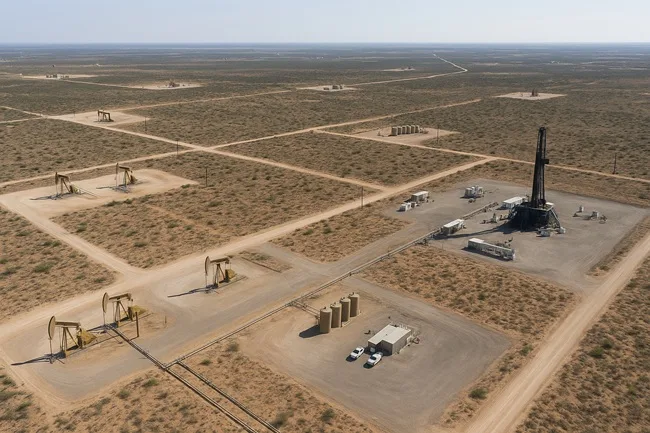
Analysts following the deal say the attraction lies in shared geography and strategy. Civitas has spent the past two years expanding its Permian presence through the purchases of Hibernia Energy III and Tap Rock Resources, while SM Energy’s footprint complements those assets with contiguous acreage in the Midland Basin. A merger could therefore unlock synergies in infrastructure, field services, and drilling logistics, driving down per-barrel costs in a period when oil prices are hovering near USD 80.
Industry observers point out that both producers are among the few mid-caps maintaining double-digit free-cash-flow yields, supported by conservative hedging programs and tight capital spending. Combining these models could produce a financially stronger independent with the resilience of an integrated major but the agility of a regional operator.
How does this potential deal fit into the broader wave of U.S. shale consolidation in 2025?
The possible Civitas–SM Energy transaction follows a flurry of mid-cap mergers that have reshaped the U.S. exploration and production (E&P) landscape. 2025 has already seen Marathon Oil agree to merge with Devon Energy, Diamondback Energy complete its acquisition of Endeavor Energy Resources, and APA Corporation consolidate acreage across the Permian.
The driver behind all of these deals is clear: growth through optimization rather than expansion. With drilling inventory maturing and service costs rising, U.S. shale producers are no longer racing to add barrels but to extract value from what they already own. Consolidation has become the de facto capital-discipline strategy—a method of stabilizing returns while satisfying dividend-focused investors.
In this sense, Civitas and SM Energy would be acting not out of desperation but out of design. The combined company would potentially rival ConocoPhillips and Pioneer Natural Resources in contiguous Permian acreage, while retaining a strong Rocky Mountain presence. The deal could also send a signal to Wall Street that the next phase of shale growth is about operational density, not geographic expansion.
Why Wall Street views the potential Civitas–SM Energy merger as a logical next step in U.S. shale consolidation
Market sentiment toward both companies remains constructive but cautious. Analysts at Raymond James described the merger rumor as “strategically sensible,” noting that SM Energy’s cash-rich balance sheet could complement Civitas’s proven acquisition integration record. At the same time, they warned that execution risk remains high—particularly around asset rationalization and cultural integration, given that both companies operate from Denver.
From an investor standpoint, the short-term reaction was driven more by speculation than fundamentals. According to data compiled by Seeking Alpha, hedge-fund positioning in SM Energy increased by 2 percent week-over-week following the report, while Civitas saw mild institutional inflows. The sector’s exchange-traded funds—particularly the SPDR S&P Oil & Gas E&P ETF (XOP)—also benefited modestly, reflecting renewed interest in consolidation plays.
Analysts at Truist Securities noted that if the deal materializes, the pro forma market capitalization could exceed USD 17 billion, with a combined production profile above 450,000 barrels of oil equivalent per day. That would firmly position the merged entity among the top five independent U.S. producers, alongside EOG Resources, Devon, and Occidental.
Could regulatory or capital-market hurdles slow down such a shale merger?
While shale mergers have generally faced minimal regulatory resistance, any Civitas–SM Energy deal would likely draw scrutiny under the Federal Trade Commission’s evolving merger guidelines, especially regarding local market concentration in Colorado and West Texas. Both companies have active drilling programs in counties that already host multiple overlapping leases.
However, industry experts argue that the FTC’s recent focus has shifted toward consumer-facing industries, not upstream consolidation. The larger obstacle might instead be valuation alignment. Both Civitas and SM Energy trade at relatively low earnings multiples—about 4× forward EBITDA—leaving limited room for premium offers without diluting shareholder value. A merger of equals could therefore emerge as the only realistic structure, balancing governance representation and equity conversion ratios.
Financing conditions also matter. With oil prices stable and debt markets receptive, investment banks have resumed underwriting acquisition-linked bridge loans. Yet the emphasis remains on cash neutrality and accretive dividend potential—themes that have defined investor sentiment since 2023.
How might this deal reshape competitive dynamics in the Permian and DJ Basin?
If completed, the merger would give the combined firm an unmatched acreage contiguity across key unconventional zones—particularly the Wolfcamp and Niobrara formations. That operational scale could reduce drilling cycle times and enhance the use of next-generation completion technologies such as simul-frac operations and AI-driven reservoir modeling.
Competitors would be forced to respond. Companies like Ovintiv Inc., Pioneer Natural Resources, and Devon Energy are already leveraging automation and multi-well pad efficiencies. A larger Civitas–SM Energy could join this elite peer set, gaining negotiating power with oilfield-service providers and pipeline operators.
Furthermore, both companies have marketed themselves as low-emission producers. Civitas is one of the few independents to achieve certified “net-zero scope 1 and 2 emissions,” while SM Energy has prioritized methane-leak detection and flaring minimization. A merger could create one of the most ESG-compliant independents in the shale patch, appealing to institutional funds that re-entered hydrocarbons after the 2024 ESG correction.
What does this potential merger signal about the next phase of shale evolution?
Whether or not the Civitas–SM Energy talks lead to a formal agreement, the underlying message is unmistakable: U.S. shale is entering a maturity phase where scale, efficiency, and shareholder yield trump growth metrics.
Civitas has long branded itself as “the new model for modern E&P”—a company designed for stable returns rather than explosive expansion. SM Energy, once viewed as a mid-cap growth name, has similarly pivoted toward balance-sheet strength and variable dividends. Together, they embody a new breed of American oil company: profitable, disciplined, and technologically adaptive.
Investors appear to recognize this shift. As of early October 2025, both stocks have outperformed the S&P Oil & Gas E&P Index year-to-date—Civitas by 9 percent and SM Energy by 12 percent—reflecting confidence in management discipline and cash-flow reliability even before any merger premium is priced in.
Why the rumored Civitas–SM Energy merger signals maturity, not aggression, in the next phase of U.S. shale consolidation
Energy-sector strategists frame the potential deal as “pragmatic consolidation,” not a land grab. The sector’s post-pandemic discipline remains intact; companies are merging to preserve capital, not deploy it recklessly. In that context, the Civitas–SM Energy rumor reinforces Wall Street’s view that shale producers are finally behaving like traditional industrial firms—measured, predictable, and shareholder-aligned.
Even if no definitive transaction emerges, the fact that such discussions are occurring at all underscores the market’s new normal: consolidate or stagnate.
Discover more from Business-News-Today.com
Subscribe to get the latest posts sent to your email.