


Bharat Sanchar Nigam Limited (BSNL) has signed strategic Memoranda of Understanding (MoUs) with four global technology leaders — Ericsson India Pvt. Ltd., Qualcomm Technologies Inc., Cisco Systems, and Nokia Solutions and Networks India Pvt. Ltd. The aim is to launch an advanced skilling initiative at the Bharat Ratna Bhim Rao Ambedkar Institute of Telecom Training (BRBRAITT) in Jabalpur. This move is positioned to reshape India’s telecom talent pipeline.
The programme will focus on creating industry-ready talent in 5G, artificial intelligence (AI), machine learning (ML), networking, and cybersecurity. It is part of a broader plan by the Department of Telecommunications (DoT) to establish the Telecom Innovation, Research and Training Centre (TIRTC) at BRBRAITT — a national hub for telecom research, innovation, and skill development.
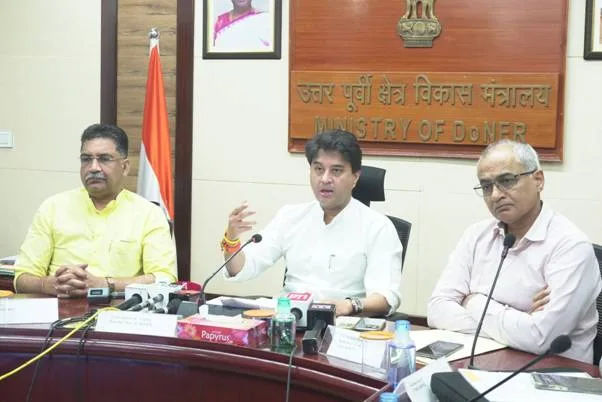
Announcing the partnerships in New Delhi on August 11, Union Minister of Communications and DoNER Shri Jyotiraditya M. Scindia described the effort as “a landmark step in building a skilled and future-ready telecom workforce through collaboration between BSNL and leading global technology companies.” He added that with Phase 1 investments exceeding ₹1 crore, the initiative aims to train more than 2,000 students annually through a combination of short two-week modules and intensive 84-hour programmes.
How will the new industry-led TIRTC transform telecom skilling and research in India?
The proposed TIRTC at BRBRAITT is envisioned as an industry-led Centre of Excellence that will go beyond traditional classroom training. It will integrate research, prototyping, product innovation, and entrepreneurship support, aligning closely with the Prime Minister’s Skill India and Atmanirbhar Bharat missions.
By bringing together public sector capacity through BSNL and the R&D expertise of global telecom leaders, the centre aims to serve as both a training hub and a catalyst for indigenous technology development. According to the DoT, the facility will host state-of-the-art labs for 5G, AI, ML, and cybersecurity, while also offering virtual and hybrid learning modules to extend its reach across India.
Dr. Neeraj Mittal, Secretary (Telecom), emphasised the collaborative model as a key differentiator. He noted that the programme is designed not only for BSNL staff and trainers, but also for students and employees of other telecom service providers, with a mix of short-, medium-, and long-term courses. “We hope that this will provide a fillip to employment and the economy, not only in Madhya Pradesh but across the country,” he said.
What each technology partner will bring to the collaboration
Ericsson India will establish a dedicated 5G Centre of Excellence at BRBRAITT, combining hands-on training with access to the global Ericsson Educate Program. Over 2,000 students are expected to benefit annually from classroom sessions supported by BSNL infrastructure and online modules featuring Ericsson’s international curriculum, trainers, and lab facilities. The intent is to create a learning environment benchmarked to global industry standards.
Qualcomm Technologies Inc. will set up a Qualcomm Institute at BRBRAITT, delivering advanced training in 5G and AI to students, BSNL trainers, and government stakeholders. The offering will include premium online content, live expert sessions, and internships, with Qualcomm sponsoring the first 100 participants in its inaugural year. The company sees this as a way to position BRBRAITT as a scalable, high-quality digital skills hub.
Cisco Systems will integrate its globally recognised Cisco Networking Academy Program to build capabilities in networking, cybersecurity, and IT infrastructure. Cisco will offer free online curriculum and digital tools, while BSNL will coordinate rollout across non-profit educational institutions nationwide to promote inclusive access to digital learning. The goal is to nurture a digitally enabled, job-ready youth workforce capable of meeting domestic and global industry needs.
Nokia Solutions and Networks India Pvt. Ltd. will help set up a 5G Centre of Excellence and AI/ML Lab at BRBRAITT. The programme will train 300 students annually in 5G radio and core networks, as well as AI/ML applications. A joint certification programme by Nokia and BRBRAITT, with support from the Telecom Sector Skill Council, will add industry credibility to the training.
Why Jabalpur is being positioned as a national telecom skilling hub
Union Minister Jyotiraditya Scindia framed the initiative as a way to put Jabalpur on the global telecom map. “From local to global — India will not just make in India, but make for the world. Jabalpur will be at the heart of this transformation,” he said, urging stronger government-industry partnerships to translate youth aspirations into career opportunities.
The choice of BRBRAITT is strategic. As BSNL’s apex training institute, it already has extensive infrastructure, experienced trainers, and a nationwide network of trainees. By integrating advanced technology labs and industry-designed courses, the centre could quickly scale its reach, particularly to regions and institutions with limited access to emerging tech education.
How the BSNL–global tech partnership supports Digital India, Atmanirbhar Bharat, and other national technology missions
The partnerships directly support national initiatives such as Digital India, Skill India, Make in India, Startup India, and Atmanirbhar Bharat. By building deep capabilities in next-generation telecom technologies, the initiative aims to create a self-reliant workforce capable of contributing to both domestic projects and global markets.
Industry observers note that this public-private model could also enhance India’s export potential in telecom services, software, and equipment, particularly as global operators look for skilled resources in 5G and AI-driven networks. In the long term, DoT aims to expand the consortium beyond the initial four companies, bringing in additional Indian and international players to further strengthen training, research, and product development efforts.
What success could mean for India’s digital economy
If the initiative meets its training and R&D goals, it could have far-reaching effects. A steady pipeline of skilled professionals in 5G, AI, ML, and cybersecurity would not only strengthen India’s telecom sector but also support adjacent industries such as manufacturing, healthcare, and smart cities.
The integration of hands-on labs with global curricula could help bridge the persistent gap between academic learning and industry requirements — a gap that has often slowed technology adoption in India. With the right execution, BRBRAITT could evolve into a model for other sector-specific training and research hubs.
Institutional sentiment on the move has been positive. Analysts highlight that the combined brand credibility of Ericsson, Qualcomm, Cisco, and Nokia provides an assurance of quality and industry relevance, while BSNL’s national footprint ensures scalability. The challenge will be sustaining momentum, keeping curricula current, and ensuring graduates are absorbed into the job market.
Discover more from Business-News-Today.com
Subscribe to get the latest posts sent to your email.