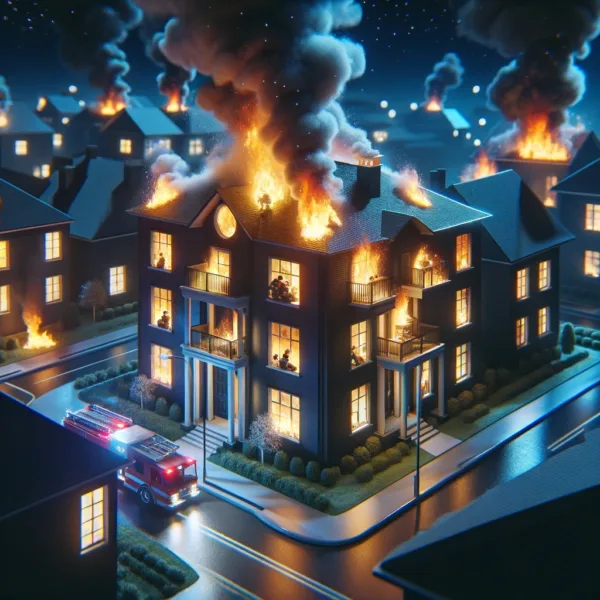
A partial collapse at a Bronx high-rise on October 1, 2025, shook one of New York City’s largest public housing complexes but miraculously spared lives. A towering brick chimney, stretching from the roof of the 20-story Mitchel Houses apartment block down to the ground, crumbled in seconds after what investigators suspect was an explosion. Within moments, a corner of the structure was reduced to rubble, spilling bricks, air conditioners, and twisted metal onto a nearby sidewalk and playground. For the families living inside, the experience was terrifying. For city officials, the incident immediately raised difficult questions about the state of New York’s public housing infrastructure.
Emergency responders cordoned off the area as residents were evacuated and utilities shut down. Firefighters, inspectors, and engineers converged on the site to assess whether the collapse was an isolated failure or a warning sign of larger systemic neglect. Although no one was injured, the scene of a corner ripped open in a densely populated complex drew attention across the city.
Why did the Bronx high-rise chimney collapse and what are investigators looking for?
Initial reports suggest that a boiler-room explosion may have triggered the collapse. The chimney, built as part of the building’s mid-20th-century design, toppled from roof to ground in a vertical free-fall, bringing down much of the outer shaft in one cascade. Investigators are considering multiple factors: whether there was a gas leak, whether the structure had preexisting cracks or weakened mortar, and whether decades of deferred maintenance compromised its integrity.
The Department of Buildings and the New York City Housing Authority (NYCHA), which manages the complex, have begun structural reviews of adjacent buildings. Engineers are using radar imaging and on-site inspections to ensure no additional risk remains hidden in other components. While the chimney itself was not a load-bearing element, the collapse illustrates how ancillary infrastructure—boilers, flues, and incinerator shafts—can pose serious hazards if overlooked.
How does this incident highlight the challenges facing New York’s aging public housing stock?
The Bronx collapse has reignited criticism of NYCHA’s long-standing maintenance backlog. Many of its 177,000 apartments were built between the 1940s and 1970s, and years of underfunding have left them vulnerable. Leaks, mold, heating failures, and vermin infestations have been routine tenant complaints. Structural elements, particularly those not visible to residents, are often last in line for repairs.
Observers note that the chimney collapse, though not fatal, is a stark reminder that the infrastructure crisis is not confined to cosmetic issues but includes life-safety risks. Federal monitors appointed in recent years have already flagged deficiencies in inspection practices. Now, calls for an accelerated overhaul of NYCHA’s safety priorities are growing louder.
What parallels can be drawn from past New York building disasters and gas explosions?
This collapse echoes the 2014 East Harlem tragedy, where a gas explosion flattened two buildings, killed eight residents, and injured dozens. That incident spurred reviews of gas line safety and utility inspection standards across the city. In contrast, the Bronx collapse caused no casualties, yet the parallels are striking: an explosion, aging infrastructure, and a vulnerable community.
History suggests that without systemic reforms, these episodes repeat. From the 1995 East Village explosion to more recent Bronx fires caused by space heaters, New York’s building safety record is punctuated by preventable tragedies. Each time, the public conversation intensifies but momentum for reform fades as headlines move on. Whether this latest incident prompts lasting policy action remains to be seen.
Could renewed inspections and funding reform change NYCHA’s approach to safety?
The incident places a spotlight on NYCHA’s inspection and funding model. With capital needs estimated at more than $78 billion over the next two decades, NYCHA faces a monumental challenge. Critics argue that reactive maintenance—fixing what breaks—has replaced proactive safety programs. If chimneys, flues, and similar elements are structurally unsound, the agency may need to implement emergency inspection rounds across hundreds of sites.
Political leaders now face the question of whether to channel more federal and state resources into public housing. The collapse could strengthen arguments for larger infrastructure packages that go beyond cosmetic upgrades to address fundamental risks. Advocates point out that residents of public housing, often low-income and minority families, deserve the same structural safety standards as wealthier communities.
How are residents reacting and what does this mean for community trust in housing authorities?
Although no one was physically harmed, the psychological toll is considerable. Residents spoke of the terror of hearing the thunderous collapse and seeing bricks rain down. Even though city officials moved quickly to declare the rest of the building safe, trust is fragile. Tenants are questioning whether NYCHA has adequately monitored hidden structural elements and whether their homes are genuinely secure.
Community leaders have warned that without transparency and regular updates, confidence in NYCHA could further deteriorate. Legal action and advocacy campaigns are possible outcomes if residents feel safety has been compromised. The episode may also energize tenant associations citywide to demand more detailed inspections and public disclosure of risk assessments.
What broader lessons does the Bronx collapse offer for urban infrastructure resilience?
Beyond NYCHA, the collapse raises a broader alarm for urban housing infrastructure. Many private high-rises across the city are also aging, with boilers, gas lines, and chimneys that date back decades. As climate pressures increase heating and cooling demands, strain on these systems intensifies. If neglected, they pose risks not only to residents but also to surrounding communities.
From a resilience perspective, the lesson is clear: urban infrastructure requires continuous investment, not reactive patchwork. For policymakers, the Bronx collapse is not just a housing issue but a test of whether New York can sustain safe living standards across income levels.
Why cautious relief from officials may not be enough to restore housing safety confidence
In the immediate aftermath, sentiment from financial and risk circles has been one of cautious relief. With no lives lost and no disruption to markets, Wall Street and property insurers have avoided ringing alarm bells. Still, analysts monitoring municipal bonds and housing authority debt caution that the incident underscores structural risks that cannot be ignored. If similar failures emerge elsewhere, credit rating agencies may be forced to reevaluate the long-term profile of New York City Housing Authority obligations.
For policymakers, the collapse presents an inflection point. Transparent reporting, swift allocation of emergency resources, and visible safety upgrades could strengthen confidence. But hesitation or lack of clarity risks eroding public trust and could ultimately draw in federal oversight. In this sense, the absence of casualties should not lull city leaders into complacency; the reputational stakes remain high, and so does the pressure to prove that housing safety is being taken seriously.
What is the long-term outlook for safety reforms and housing policy after the Bronx collapse?
The outlook depends on whether this partial collapse is treated as an isolated accident or as a systemic warning. If it prompts comprehensive inspections and funding for structural safety, it could mark a turning point in New York’s approach to public housing. If not, it risks being remembered as another near-tragedy in a cycle of recurring infrastructure failures.
Ultimately, the Bronx collapse is a case study in the consequences of deferred maintenance. It underlines that the cost of neglect is not just measured in repairs but in the fear and uncertainty imposed on communities. The challenge for New York’s leadership is to prove that this near-miss will be the moment that finally drives meaningful reform.
Discover more from Business-News-Today.com
Subscribe to get the latest posts sent to your email.