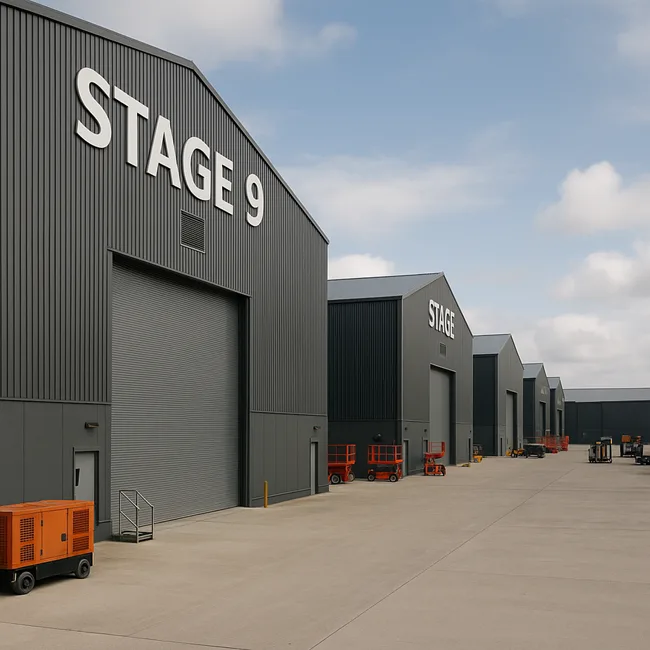
Bridge Logistics Properties (BLP), a subsidiary of Bridge Investment Group Holdings Inc. (NYSE: BRDG), has expanded its Southern California footprint with the acquisition of a 450,000-square-foot, two-building industrial portfolio in the City of Industry. The fully leased assets further strengthen BLP’s position in one of the nation’s most supply-constrained logistics markets, where tenant demand continues to outpace available space by a wide margin.
The company described the acquisition as a “meaningful discount to peak pricing and current replacement cost,” emphasizing that the transaction aligns with its infill-industrial strategy targeting high-function logistics assets in mature, land-restricted urban corridors. The City of Industry, part of the San Gabriel Valley submarket, remains one of the tightest industrial markets in the U.S., posting a vacancy rate near 2 % and a development pipeline below 1 % of total inventory.
Why the City of Industry remains one of the most supply-constrained industrial markets in America
The City of Industry’s appeal lies in its strategic proximity to Los Angeles, the Ports of Long Beach and Los Angeles, and major freeway arteries linking to Inland Empire distribution centers. Yet unlike its inland counterparts, the city faces physical and regulatory barriers that limit new construction. These constraints have created sustained upward pressure on rents and property values, even amid broader economic cooling.
BLP’s acquisition, located at 18305 and 18501 San Jose Avenue, includes buildings with 24-foot and 27-foot clear heights, multiple dock-high and grade-level doors, and expansive truck courts. Such features cater to high-throughput logistics and last-mile distribution operations. Market data from CoStar and CBRE suggest that similar infill assets in the San Gabriel Valley command rents exceeding $1.70 per square foot monthly on a triple-net basis—up nearly 10 % year-over-year despite elevated interest rates.
For institutional owners, this market dynamic offers rare dual appeal: stable income streams from long-term tenancy and embedded capital-appreciation potential through scarcity. BLP’s move reflects an understanding that, in core logistics markets, the real risk lies not in paying too much, but in being priced out of assets altogether as urban-logistics space tightens further.
How the transaction aligns with Bridge Logistics Properties’ broader infill-industrial investment thesis
Bridge Logistics Properties was established to capture opportunities in “last-touch” logistics and high-barrier infill markets across major U.S. metros. The platform has acquired or developed more than 30 million square feet of industrial space nationally, emphasizing gateway and port-proximate regions where e-commerce, cold-chain logistics, and near-shoring trends sustain long-term demand.
The latest acquisition in the City of Industry continues that pattern. BLP has already executed similar plays in the Inland Empire West and Northern California, often pursuing fully leased Class A or B + buildings with stable tenants and limited lease-roll risk. In 2024, the company closed on an $83.5 million deal for a newly constructed 332,000-square-foot property in Fontana, signaling appetite for scale and operational synergy across Southern California submarkets.
The City of Industry portfolio complements those holdings by giving BLP deeper access to infill tenants operating closer to urban end-users. While pricing terms were undisclosed, comparable Class B+ assets in the area trade between $200 and $260 per square foot, implying a transaction value potentially above $100 million for the two-building complex.
What this acquisition reveals about investor sentiment toward industrial real estate amid macro uncertainty
The industrial sector has weathered the recent recalibration in commercial real estate better than office or retail segments, yet institutional investors have grown more selective as borrowing costs remain high. BLP’s ability to transact at a discount to replacement cost underscores the liquidity advantage of well-capitalized buyers and signals continued confidence in industrial fundamentals.
Bridge Investment Group’s industrial arm has become a key growth driver for the parent company, which reported $49 billion in assets under management as of June 2025. Analysts tracking BRDG stock note that the firm’s pivot toward specialized real-estate verticals—industrial, multifamily, and affordable housing—has helped offset headwinds from private-equity real-estate revaluations. Although shares have traded in the $9 to $11 range for much of 2025, the acquisition pipeline in logistics could bolster both earnings visibility and investor confidence going into 2026.
Market sentiment remains cautiously optimistic. Institutional flows show that capital is rotating back into logistics, particularly into coastal and port-adjacent regions. The scarcity of developable land in Los Angeles County continues to justify compressed yields, while rental spreads remain wide enough to sustain mid-single-digit returns even under tighter cap-rate conditions.
How Bridge Logistics Properties’ acquisition strategy positions it for sustained value creation and competitive advantage
From an operational perspective, this acquisition gives BLP access to long-term, credit-quality tenants in a submarket where lease-renewal probability is high and tenant relocation options are minimal. It also allows Bridge to leverage its vertically integrated asset-management platform, using economies of scale across leasing, property management, and capital improvements.
Moreover, BLP’s broader strategy is designed to capture upside not through speculative development but through disciplined acquisition and repositioning. As e-commerce companies rationalize logistics footprints, assets within 30 miles of major population centers become irreplaceable. That focus on “function over flash” has allowed BLP to outperform peers who chased ground-up developments in less proven geographies.
The company’s leadership has emphasized that each infill acquisition enhances operational resilience and portfolio liquidity—two critical attributes for navigating cyclical downturns. Should interest rates decline in 2026, these stabilized infill assets could also become refinancing catalysts, allowing the firm to recycle capital into new growth markets.
Why this deal could set new benchmarks for Southern California industrial valuations and investor expectations
Beyond its immediate financial impact, the City of Industry transaction could reshape valuation benchmarks in the San Gabriel Valley. Recent transactions have hovered around $250 per square foot for stabilized properties, but BLP’s “discount to peak pricing” entry could push competitors to re-evaluate bid strategies in a market where quality product rarely trades.
For landlords, this tightening cycle means renewed pricing leverage. For tenants, it signals limited bargaining power and rising occupancy costs. Given current absorption rates, industry analysts project that the San Gabriel Valley could experience effective rent growth exceeding 6 % annually through 2026 if supply remains stagnant.
Institutional investors will likely interpret this acquisition as evidence that infill industrial remains one of the few real-estate asset classes offering both defensive stability and inflation-linked upside. The move strengthens Bridge Investment Group’s credibility as an active consolidator in a fragmented logistics market and suggests further acquisition momentum across other gateway cities such as Miami, Seattle, and Chicago.
How are institutional investors interpreting Bridge Logistics Properties’ latest acquisition as a signal of confidence in Southern California’s industrial market?
Market observers note that while capital markets remain uneven, the ability of players like BLP to execute accretive acquisitions in constrained markets demonstrates strong underwriting discipline. The focus on fully leased, income-producing assets reduces exposure to speculative development cycles and positions the company favorably against macro volatility.
From an institutional-portfolio standpoint, this strategy echoes a broader shift toward “core-plus” logistics investments—assets that provide steady yield but retain upside potential through market scarcity. With vacancy rates below 3 % and replacement costs climbing, the City of Industry deal exemplifies how well-capitalized investors are prioritizing operational certainty over speculative growth.
If current leasing trends persist, Bridge Logistics Properties could see compounding value as tenants renew at higher rents and cap rates stabilize. The firm’s continued discipline in targeting infill markets rather than greenfield development underscores a pragmatic long-term view of industrial demand.
Discover more from Business-News-Today.com
Subscribe to get the latest posts sent to your email.