





Brad-Jay Investments Ltd., the long-time steward of Toronto’s Jane Finch Mall, has officially partnered with urban real estate firm Hullmark to spearhead a generational redevelopment of the iconic retail center. Announced on July 7, 2025, the strategic alliance marks a pivotal next step in the planned transformation of the mall into a dynamic, multi-use district. Hullmark has acquired a minority interest in the site and will assume the role of Master Development Manager for the project, which envisions a phased mix of housing, retail, and public amenities over the next two decades.
This collaboration builds on the City of Toronto’s August 2024 approval of Brad-Jay’s rezoning application, which paves the way for the site’s evolution from a single-use retail complex to a vibrant, inclusive neighborhood hub. The redevelopment is expected to unfold over a 15–20-year horizon, with a strong emphasis on ongoing community engagement and tenant continuity during initial phases.
What are the long-term redevelopment plans for Jane Finch Mall under the Brad-Jay and Hullmark partnership?
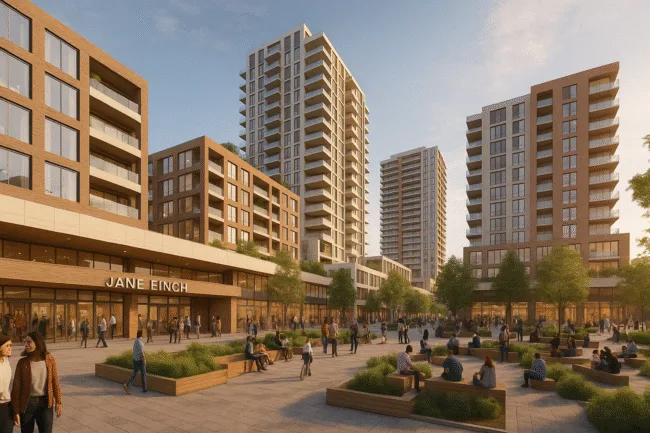
The long-term vision for Jane Finch Mall centers on converting the mid-century commercial plaza into an inclusive, future-forward neighborhood complete with residential towers, retail corridors, green space, and cultural infrastructure. According to the development framework approved by the City of Toronto in August 2024, the plan prioritizes a phased approach to minimize disruption, maintain mall operations during early construction, and engage local residents at every stage.
The real estate collaboration aims to preserve the mall’s community-serving character while diversifying its functions through the addition of new housing—potentially including affordable and rental stock—alongside modernized retail and community services. Hullmark’s appointment as Master Development Manager signals a strong design-led focus, informed by the developer’s track record in revitalizing culturally significant urban sites.
Importantly, the Jane Finch redevelopment is not envisioned as a top-down overhaul but rather an incremental transformation rooted in place-making. Brad-Jay launched the “jfm+” community engagement platform in 2021, ensuring local stakeholders have a voice in shaping the future of the site. Over 2,000 community members have participated through one-on-one interviews, walking tours, collaborative workshops, and townhall-style meetings.
How does Hullmark’s strategic role reflect its historical and community connection to Jane Finch?
Hullmark’s entry as a minority partner in the redevelopment is deeply symbolic. Jeff Hull, president of the Toronto-based development firm, emphasized that his grandfather, Murphy Hull, played an instrumental role in establishing critical institutions in the area such as York Finch General Hospital. That legacy of community-building continues to inspire Hullmark’s modern-day mission, which focuses on curating place-sensitive, culturally anchored urban developments.
By acquiring a minority stake instead of majority control, Hullmark is signaling its respect for Brad-Jay’s long-term stewardship and the Jane Finch community’s vision. The move underscores a broader philosophy that prioritizes joint value creation over unilateral transformation. According to Hullmark’s executive vice president Noah Rechtsman, the new partnership represents “the culmination of a long-standing relationship” grounded in mutual respect and shared values.
Hullmark brings to the table deep expertise in mixed-use intensification and urban infill projects across Toronto. The firm is known for fostering cultural clusters and working closely with grassroots organizations in neighborhoods such as Liberty Village and Queen Street West. In this context, Jane Finch offers a unique opportunity to implement Hullmark’s urban strategy in an underserved but rapidly evolving corridor of the city.
What were the key regulatory and civic milestones enabling this development to proceed?
The redevelopment’s regulatory foundation was established in August 2024, when the City of Toronto formally approved Brad-Jay’s rezoning proposal for the Jane Finch Mall site. This approval followed an extensive consultation process that included city planners, housing experts, tenant groups, and local residents. The rezoning enables a gradual transition of the site’s use from strictly commercial to a more flexible urban typology incorporating residential, retail, institutional, and public spaces.
The zoning amendments allow for a series of mid- and high-rise buildings to be constructed around and potentially above portions of the existing mall. This “layered density” approach ensures continuity of mall operations, particularly for anchor tenants and essential services, while laying the groundwork for vertical growth.
Another civic milestone came through the integration of the redevelopment plan with Metrolinx’s nearby Finch West LRT station infrastructure. The transit-oriented development (TOD) principles guiding this project align with broader city objectives for sustainable, walkable communities that reduce reliance on private vehicles.
What are analysts and urban development observers saying about the partnership’s significance?
Urban analysts and institutional investors have largely welcomed the Brad-Jay–Hullmark partnership, viewing it as a model for equity-driven and community-led redevelopment. Given the rising scrutiny of gentrification in Toronto’s real estate market, the deal’s emphasis on continuity, minority equity participation, and public engagement stands out as a case study in inclusive urbanism.
Real estate observers also note that Jane Finch Mall represents one of the few remaining large-parcel redevelopment opportunities in North York that combines both scale and civic importance. Institutional sentiment points to the potential for this project to create a precedent for other suburban mall transformations across the Greater Toronto Area, especially as retail centers face declining foot traffic and rising land value pressures.
From an investment standpoint, the move offers Hullmark an opportunity to generate long-term value through phased equity appreciation rather than short-term sales margins. For Brad-Jay, it brings operational muscle, urban design capabilities, and a trusted partner without ceding majority control—a rare alignment in large-scale real estate ventures.
How will the redevelopment impact current Jane Finch Mall tenants and operations during transition?
Both Brad-Jay and Hullmark have committed to maintaining mall operations during the initial phases of the redevelopment, expected to span 15 to 20 years. The first stages are anticipated to focus on underutilized portions of the property and parking lots, allowing core retail functions to continue uninterrupted. This phased strategy is designed to minimize tenant displacement, a major concern among community stakeholders.
In tandem with the jfm+ engagement program, tenant-specific consultations are underway to address questions around leasing terms, construction impacts, and relocation assistance if needed. The partners have emphasized a desire to preserve local businesses that form part of the mall’s unique character, especially those serving culturally diverse populations in the area.
Over the long term, the redevelopment will offer tenants enhanced infrastructure, improved pedestrian access, and integration with new residential foot traffic. It also holds potential to attract a broader retail mix, including lifestyle and experiential offerings that complement rather than replace existing businesses.
What does the long-term urban development outlook look like for the Jane Finch corridor?
The redevelopment of Jane Finch Mall signals a broader shift in how Toronto addresses mid-century commercial zones in need of revitalization. As part of the Jane-Finch initiative, this project is expected to catalyze further investment in the surrounding neighborhood, including improvements to public infrastructure, parks, schools, and transit.
Urban planners view this as a potential linchpin for equitable densification in a historically underserved district. With Toronto’s housing supply under pressure and public land scarce, leveraging private sites like Jane Finch Mall becomes a strategic imperative. Brad-Jay and Hullmark’s model of inclusive, community-integrated development could influence upcoming projects in other suburban pockets, including Scarborough Town Centre and Cloverdale Mall.
While the full buildout may extend into the 2040s, key planning, design, and permitting stages are expected to accelerate in the near term. Analysts anticipate future filings to include detailed site plan applications, affordable housing breakdowns, and public amenity commitments tied to Section 37 or community benefit charges.
Discover more from Business-News-Today.com
Subscribe to get the latest posts sent to your email.


