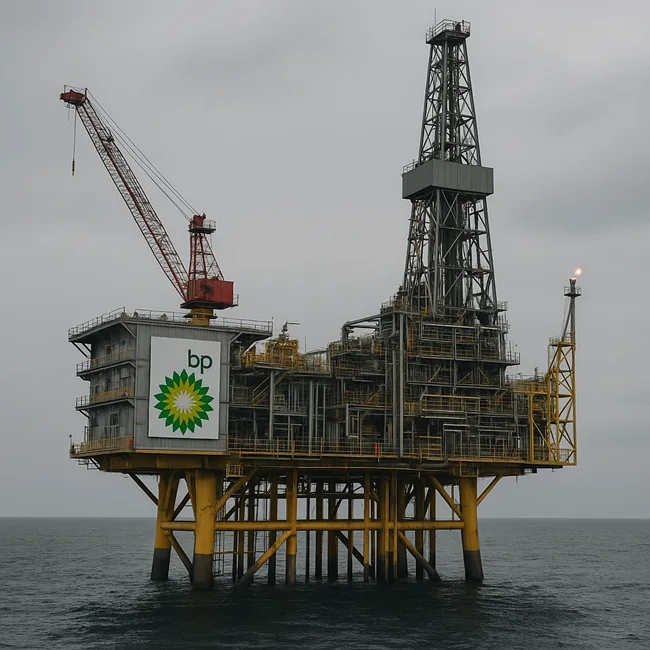
BP p.l.c. (LSE: BP.) gained 3.42% to close at 402.05 GBX on July 12, 2025, as investors reacted to its second quarter trading update released the previous day. The energy major signaled stronger upstream volumes and solid refining margins, but also warned of impairments up to $1.5 billion and weaker realization values in both oil and gas production. While the early market response appears positive, questions remain around how well refining strength can balance upstream price headwinds through the rest of 2025.
Can refining gains and trading profits continue to support BP’s stock as upstream margin pressure builds?
BP’s second quarter guidance outlined a mixed picture. Output in oil production and operations, particularly from bpx energy in the U.S., was expected to increase versus Q1. However, price lags and lower Brent levels—averaging $67.88 per barrel, down from $75.73—are expected to reduce earnings from upstream oil production by as much as $800 million. Realizations in gas and low carbon energy also saw pressure, though to a lesser extent.
The downstream side of BP’s business offered more encouraging signals. The energy major highlighted stronger refining margins, likely contributing an uplift of $300 million to $500 million in the quarter. Its products segment also saw a boost from a “strong” oil trading result. These were complemented by seasonally stronger volumes in the customers business, which includes retail fuels and TravelCenters of America. However, the company also acknowledged a significantly higher level of turnaround activity in 2Q25, which could partially offset these gains.
Market participants appear to be pricing in optimism that these downstream positives will stabilize earnings when final results are released on August 5. Still, the forecasted $0.5 billion to $1.5 billion in impairment charges, categorized as adjusting items, has raised concerns about how BP is managing asset value under a volatile energy pricing environment. Investors will likely be watching closely for details on which segments these impairments are tied to.
How does this update fit into broader energy and investor trends?
BP’s modest share price rebound aligns with broader investor appetite for oil majors with downstream resilience. Amid softening crude prices and a mild decline in U.S. gas benchmarks—Henry Hub dropped to $3.44/MMBtu in Q2 from $3.65 in Q1—investors have gravitated toward integrated energy firms that can weather commodity cycles through diversified income streams. BP’s strong internal refining marker margin (RMM), which rose to $21.1/bbl in Q2 from $15.2/bbl in Q1, is a standout in this regard.
This trading update also comes at a time when many global oil and gas companies are repositioning their portfolios to emphasize capital discipline, asset efficiency, and energy transition alignment. While BP’s update does not explicitly tie impairments to low-carbon project realignments, institutional investors have been anticipating such portfolio pruning as part of broader emissions and returns balancing.
What comes next for BP shares ahead of Q2 earnings day on August 5?
As BP prepares to publish its detailed financials in early August, investors will be closely focused on segmental performance breakdowns, cash flow data, and net debt trends. The company expects a modest reduction in net debt for the quarter, which could reinforce investor confidence in its capital strategy despite lower commodity prices. Final figures on refining performance, turnaround impacts, and oil trading profits may ultimately determine whether BP’s stock can maintain its upward momentum—or face renewed pressure if impairments weigh more heavily than expected.
Discover more from Business-News-Today.com
Subscribe to get the latest posts sent to your email.