


IQM Finland Oy, the Espoo-headquartered developer of full-stack superconducting quantum computers trading publicly through its announced merger vehicle Real Asset Acquisition Corp (Nasdaq: RAAQ), has secured a EUR 50 million financing package from funds and accounts managed by BlackRock, the world’s largest asset manager. The facility, equivalent to approximately USD 57.6 million at current exchange rates, was structured and agreed before IQM’s February 2026 announcement of its plan to merge with RAAQ and list on a major US exchange, with a potential secondary listing on the Helsinki Stock Exchange under consideration. The transaction assigns IQM a pre-money equity valuation of approximately USD 1.8 billion and is expected to close around June 2026, at which point IQM would become the first European quantum computing company to trade publicly on a leading US market. The BlackRock facility reinforces IQM’s capital base ahead of that listing, lowering overall cost of capital and diversifying funding sources at a time when institutional appetite for quantum computing exposure is intensifying.
Why did BlackRock commit EUR 50 million to IQM Quantum Computers before its planned Nasdaq listing in 2026?
The timing and source of this facility carry at least as much signal as the quantum itself. BlackRock is not a typical venture backer for early-stage hardware companies, and the fact that the facility was structured before the RAAQ merger announcement, rather than as part of it, points to a deliberate decision to build balance-sheet strength independently of the SPAC transaction. IQM now enters the public markets with a capital base that has been validated by a major institutional asset manager before a single share of the post-merger entity begins trading. That sequencing matters for investor perception. It separates the company from the broader SPAC cohort, which has historically struggled with credibility given its reliance on redemption-sensitive trust mechanics.
BlackRock’s positioning in this deal also echoes a broader institutional shift in how the world’s largest capital allocators are viewing quantum technology. In a social media communication coinciding broadly with the announcement period, BlackRock described quantum computing as representing the next era of computing, a framing that moves the technology from speculative lab fixture to infrastructure-grade investment thesis. For IQM, having that imprimatur attached to its balance sheet before the listing process reaches its critical phase is a meaningful commercial and reputational asset.
How does the RAAQ SPAC merger structure work and what cash does IQM expect to hold after the deal closes?
The merger with Real Asset Acquisition Corp combines several funding streams into a single capital event. RAAQ currently holds approximately USD 175 million in its trust account, assuming no investor redemptions, which represents the ceiling of that component. The deal also includes approximately USD 134 million in private investment in public equity (PIPE) financing priced at USD 10 per share, secured from a mix of new and existing institutional investors. An estimated USD 24 million is expected from the exercise of outstanding IQM warrants prior to closing. Combined with IQM’s existing unaudited cash balance of approximately USD 172 million as of the end of 2025, the post-merger entity is expected to hold more than USD 450 million in cash at close. The BlackRock EUR 50 million facility, which sits outside the SPAC mechanics, improves the capital structure further by reducing IQM’s dependence on trust proceeds and PIPE commitments that are subject to redemption and market conditions.
The critical variable in the RAAQ transaction is shareholder redemption behaviour. SPACs have frequently seen trust accounts drain significantly as investors redeem ahead of closing, compressing the actual cash transferred to the operating company well below headline figures. IQM’s combined structure mitigates that risk somewhat. With USD 172 million already on its balance sheet, PIPE commitments locked in, and now a EUR 50 million BlackRock facility in place, the company retains meaningful liquidity optionality even if redemptions reduce the trust contribution materially. That is a more resilient funding architecture than most SPAC-route companies have presented at the equivalent stage.
What is IQM’s on-premises deployment model and how does it differentiate the company from cloud-first quantum rivals?
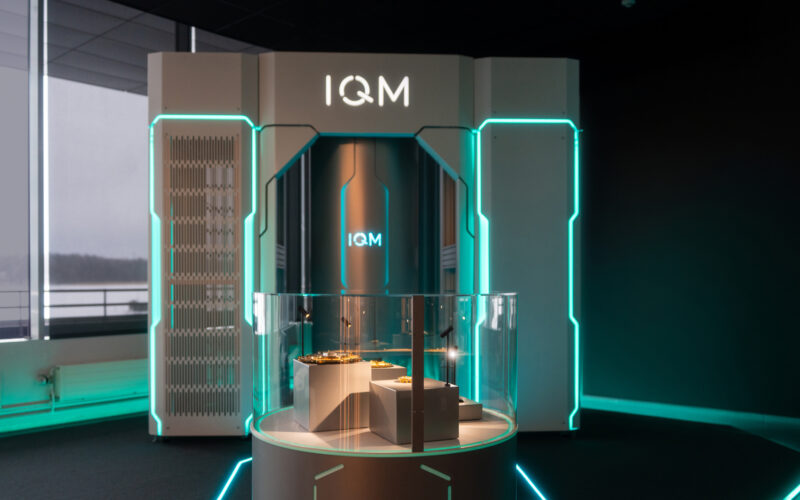
IQM has built its commercial model around a philosophy that diverges sharply from the dominant approach of US quantum incumbents. IBM and Google primarily offer quantum access through cloud platforms, renting compute time on shared hardware to researchers, enterprises, and government labs. IQM sells and delivers physical quantum systems that customers own, operate, and control on their own premises. The company has delivered 21 systems to 13 customers to date, including four of the ten largest supercomputing centres globally, and counts institutions such as CINECA in Italy, CESGA in Spain, and the Leibniz Supercomputing Centre in Germany among its installed base. Its Radiance platform currently operates a 54-qubit superconducting processor, with a 150-qubit system planned for delivery by the end of 2026.
The on-premises model creates a different revenue and margin profile from cloud-accessible competitors. System sales generate upfront capital and create long-term relationships anchored in hardware ownership and support agreements, rather than consumption-based billing. For government labs, defence establishments, and national supercomputing centres that require data sovereignty, physical access, and full infrastructure control, the cloud-first model of IBM or Amazon Braket is simply not appropriate. IQM occupies a structural niche within the quantum market that the hyperscalers are not positioned to compete in directly, at least not without fundamentally changing their operating model. That niche is expanding as more governments invest in national quantum infrastructure and seek domestically controlled or directly operated hardware. The company reported at least USD 35 million in unaudited 2025 revenue and over USD 100 million in bookings, figures that suggest the commercial pipeline has moved well beyond proof-of-concept.
How does IQM’s superconducting technology roadmap compare to the quantum computing field’s broader progress toward fault tolerance?
IQM’s technology roadmap targets fault-tolerant quantum computing by 2030, a timeline broadly consistent with the ambitions of its larger rivals but predicated on a different scaling philosophy. The company has demonstrated 99.9 percent two-qubit gate fidelity and logical fidelities exceeding 96 percent, benchmarks that sit at the threshold considered necessary for meaningful progress toward error-corrected systems. Its flagship Star and Crystal architectures are designed to enable advanced error correction and high qubit connectivity, parameters that become increasingly important as the industry approaches the fault-tolerant regime.
The broader competitive field is extraordinarily well resourced. IBM’s 156-qubit Heron R2 processor achieves 99.5 percent two-qubit gate fidelity and the company has a manufacturing infrastructure and open-source ecosystem that dwarfs IQM’s current scale. Google’s Willow chip continues to push the boundaries of error-correction benchmarking, while Microsoft is pursuing a topological qubit approach that, if proven, could offer superior stability over superconducting architectures. Quantinuum, backed by Honeywell, has consistently emphasised qubit quality over quantity and raised USD 800 million in 2025 to support its trapped-ion approach. IQM’s path to relevance in this environment runs through differentiation, specifically the on-premises model, European sovereign quantum positioning, and full-stack system delivery at a scale and ownership structure that the hyperscale competitors do not offer.
What does BlackRock’s quantum investment signal about institutional sentiment and capital flows into the sector in 2026?
BlackRock’s commitment to IQM arrives at a moment when quantum computing’s transition from research to commercial infrastructure is attracting serious institutional scrutiny. The sector is not without its skeptics. Nvidia chief executive Jensen Huang publicly stated in early 2025 that a practically useful quantum computer was at least fifteen years away, a comment that caused temporary volatility across quantum computing equities. That scepticism has not dissipated entirely, and IQM’s post-listing stock performance will face the same scrutiny as listed peers such as IonQ and Rigetti Computing, both of which carry steep valuations relative to current revenue.
Despite that backdrop, capital continues to flow into the sector from sophisticated allocators. Quantinuum attracted USD 800 million across two rounds in 2025. Spain’s Multiverse Computing raised EUR 189 million in a Series B. IQM itself closed a USD 320 million Series B in September 2025, the largest European quantum venture round on record, bringing its total capital raised to over USD 600 million. BlackRock’s facility adds a debt or credit layer on top of that equity base, a structural signal that at least one major institutional manager views IQM’s balance sheet as creditworthy rather than purely venture-speculative. That is a meaningful maturation marker for a company that only began commercial deliveries within the past few years.
How is RAAQ stock trading as IQM’s Nasdaq listing approaches and what does price behaviour say about merger confidence?
Real Asset Acquisition Corp (Nasdaq: RAAQ), the SPAC through which IQM will list, traded at USD 10.46 as of the most recent market close on March 26, 2026, within a 52-week range of USD 9.62 to USD 10.83. The stock has fallen marginally over the past week, down approximately 1.2 percent, and is roughly flat over the past month, broadly consistent with typical SPAC holding behaviour ahead of a transaction where institutional investors manage position around the trust value. The narrow trading range around the USD 10 trust floor reflects the mechanics of SPAC arbitrage rather than any strong directional view on IQM’s post-merger equity value, which will only become visible once the combined company begins trading under its new identity.
RAAQ’s market capitalization of approximately USD 240 million is a function of the trust value rather than any forward earnings multiple applied to IQM’s business. Once the merger closes, expected around June 2026, the pricing dynamic shifts entirely. The post-merger entity will be assessed against the USD 1.8 billion pre-money valuation on metrics including revenue trajectory, bookings, customer count, and progress toward fault-tolerant system delivery. At USD 35 million in 2025 revenue, a USD 1.8 billion entry valuation implies a revenue multiple of roughly 50 times, consistent with how publicly listed quantum peers trade but reliant on continued commercial scaling to sustain that pricing. The BlackRock facility, by reducing cost of capital and demonstrating institutional confidence, modestly improves the conditions under which that multiple can hold.
What execution risks does IQM face in scaling from 21 delivered systems to a post-IPO growth trajectory that justifies a USD 1.8 billion valuation?
Selling 21 quantum systems to 13 customers is a genuine commercial milestone, but it is not a sufficient base from which to sustain a USD 1.8 billion equity valuation without demonstrable acceleration. IQM will need to expand its customer footprint beyond research institutions and supercomputing centres into enterprise and government procurement channels that carry larger contract values and longer engagement timelines. The company’s plans to enter additional markets, supported by the BlackRock facility, suggest awareness of this requirement, but execution in new geographies and sectors introduces integration, logistics, and regulatory complexity that on-premises hardware vendors face more acutely than cloud-native competitors.
The 150-qubit system planned for late 2026 is another execution variable. Hardware roadmap delays are endemic in quantum computing across all modalities, and investor tolerance for such delays at public market valuations is considerably lower than at the venture stage. IQM’s founding team, which traces its academic lineage to Aalto University and VTT Technical Research Centre of Finland, brings scientific depth, but the transition from research spinout to publicly accountable enterprise is a management challenge that will be watched closely from the moment of listing. The over USD 450 million in expected cash at close provides a runway that most quantum competitors cannot match, giving IQM the balance-sheet buffer to absorb setbacks without immediate capital pressure. Whether that runway translates into commercial and technical progress at the pace necessary to justify the valuation is the central question hanging over the listing.
Key takeaways on what IQM’s BlackRock financing means for the company, its competitors, and the quantum computing sector
- IQM Finland Oy secured a EUR 50 million (approximately USD 57.6 million) financing facility from funds and accounts managed by BlackRock, arranged before the company’s February 2026 announcement of its SPAC merger with Real Asset Acquisition Corp (Nasdaq: RAAQ).
- The facility lowers IQM’s overall cost of capital and diversifies its funding structure ahead of a planned Nasdaq listing, reducing dependence on SPAC trust redemption mechanics that have eroded IPO proceeds for numerous prior transactions.
- The merged entity is expected to hold more than USD 450 million in cash at closing around June 2026, drawing on RAAQ’s trust account, a USD 134 million PIPE at USD 10 per share, USD 24 million in warrant exercises, IQM’s existing USD 172 million cash balance, and the BlackRock facility.
- IQM would become the first European quantum computing company listed on a major US exchange, with a potential secondary listing on the Helsinki Stock Exchange, at a pre-money equity valuation of approximately USD 1.8 billion.
- The company’s on-premises full-stack deployment model differentiates it from cloud-first rivals including IBM and Google, targeting sovereign quantum customers, national supercomputing centres, and government labs that require direct infrastructure ownership.
- IQM has delivered 21 systems to 13 customers, reported at least USD 35 million in 2025 revenue and over USD 100 million in bookings, and plans to deliver a 150-qubit system by late 2026, up from the current Radiance platform at 54 qubits.
- BlackRock’s commitment signals growing institutional appetite for pre-IPO quantum computing exposure and places IQM in a more mature capital structure category than the typical SPAC-route company, where funding credibility remains a persistent concern.
- Key execution risks include SPAC shareholder redemptions reducing trust proceeds, hardware roadmap delays on the 150-qubit system, competition from IBM’s manufacturing scale and Google’s error-correction benchmarks, and sustaining a roughly 50 times revenue multiple in public markets.
- The European quantum sector continues to attract substantial capital, with IQM’s USD 600 million raised to date the largest total in the region, but the company faces global competition from Quantinuum (USD 800 million raised in 2025 alone), IonQ, Rigetti, and hyperscale cloud platforms.
- The RAAQ stock price around USD 10.46, hugging its trust floor, reflects SPAC arbitrage dynamics rather than any market pricing of IQM’s post-merger equity value, which will only be established once the combined company begins trading under its new listing identity.
Discover more from Business-News-Today.com
Subscribe to get the latest posts sent to your email.