




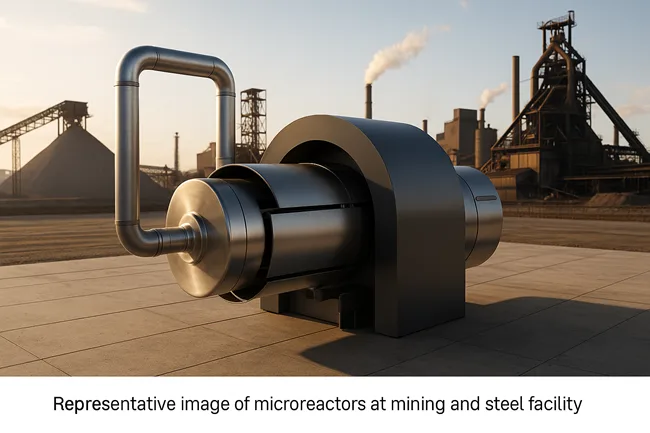
How can modular microreactor technology replace fossil‑fuel heat generation in mining and metals production at scale?
Industrial heat used in steelmaking, mineral refining, and chemical processes drives nearly 25 percent of global CO₂ emissions. Modular microreactors—small nuclear reactors producing 1–20 megawatts of clean heat and electricity—offer a transformative alternative to diesel, coal, and gas-fired boilers. Factory-built and transportable, these units can operate autonomously for years, generating consistent thermal output ideal for remote mining sites and high-temperature industrial processes. Analysts note that when paired with furnaces or hydrogen systems, microreactors can deliver a compelling pathway to deep industrial decarbonization, improving energy efficiency and cutting carbon intensity across heavy sectors.
What are the main technical and regulatory barriers to deploying microreactors on-site at steel and mining facilities?
Despite their promise, microreactors face significant technical and regulatory challenges. Many existing nuclear rules were designed for large-scale light-water plants and therefore hinder compact, mobile systems. Although the U.S. has introduced Part 53 licensing reforms and Canada has launched vendor design reviews, regulators must further streamline frameworks for remote microreactor siting. HALEU availability and TRISO fuel fabrication remain constrained, with priority currently given to defense and space programs. Industrial sites must navigate complex safety buffer, waste management, and certification regulations. Analysts argue that without coordinated site-specific approvals and integration with industry-specific codes, commercial rollouts may remain limited to isolated pilot deployments.
Which reactor vendors and industrial operators are forming partnerships for heavy‑industry microreactor demonstrations?
Leading reactor suppliers are actively forming partnerships with mining, steel, and petrochemical operators. BWX Technologies, in collaboration with the U.S. Department of Defense and Idaho National Laboratory, is developing a transportable high-temperature microreactor for clean process heat at remote industrial and defense sites. Westinghouse Electric Company’s eVinci reactor, approved by the U.S. Department of Energy for industrial use, is slated for test deployments at mining and hydrogen production locations in 2027. The U.S. Air Force and Oklo Inc. are launching a microreactor pilot at a base in Alaska—offering a model that could be replicated at off-grid industrial communities. Last Energy is exploring containerized reactors at steel mills and mining facilities, aiming to integrate thermal output with core industrial operations.
How must HALEU fuel supply, containment systems, and workforce training evolve to support industries using microreactors?
Deploying microreactors at scale in heavy sectors requires expanding HALEU enrichment, accelerating TRISO fuel pellet production, and certifying containment systems tailored to industrial environments. U.S. Department of Energy investments totaling more than $2.7 billion are targeting fuel supply chain resilience, while TRISO pellet manufacturers and hot cell providers aim to ramp output. Vendors are also designing modular containment modules compatible with mining or steel sites. Workforce development is underway: Idaho National Laboratory and industry partners offer certification programs for operators and site safety teams. In Wyoming, state authorities and BWX Technologies are exploring a regional TRISO production hub to support industrial adoption of microreactors.
What financing mechanisms and policies are enabling heavy‑sector microreactor deployments?
Hybrid financing models are emerging as core enablers for industrial microreactor projects. These combine public funding (such as Department of Energy grants and provincial clean energy incentives) with concessional debt, ratepayer-backed bonds, and industry offtake agreements. Industrial partners, such as mines and steel producers, are exploring long-term power and heat contracts that anchor project revenue. Infrastructure and climate-focused investment funds are investigating vehicles that bundle HALEU-enriched fuel contracts, factory-built reactors, and industrial end-users, allowing modular nuclear to compete economically with high-emission boiler systems. This blended capital approach reduces upfront risk and aligns project timelines with regulatory milestones.
Could microreactors integrated with heat, power, and hydrogen systems become standard in heavy‑industry hubs by 2030?
The integration of microreactors with hydrogen generation systems, high-temperature steam loops, and process heat delivery platforms is emerging as a viable path toward clean industrial baseload. Unlike intermittent renewables or fossil-fired boilers, microreactors offer a stable, dispatchable source of high-grade heat essential for continuous operations in mineral refining, steel casting, and ammonia or methanol production. These next-generation systems can co-locate power and heat generation within plant boundaries, eliminating the inefficiencies of long-distance transmission or fuel logistics.
Key pilot programs are already testing this tri-generation potential. For instance, Westinghouse Electric Company’s eVinci microreactor, which is designed to generate both 5 MW of electricity and more than 13 MW of thermal energy, is being evaluated for use in hydrogen production and high-temperature steam refining. Similarly, Oklo Inc.’s Aurora reactor platform, if proven at its planned demonstration in Alaska, could serve as a scalable blueprint for coupling small modular fission with electrolysis for clean hydrogen.
Industrial operators are also exploring microreactor integration within their existing process flows. Mining companies are evaluating microreactors as localized power centers to run electrolyzers for green hydrogen, which can then be used in ore reduction or heavy vehicle fleets. Steelmakers, including stakeholders in Eastern Europe and North America, are assessing whether modular units can anchor electric arc furnaces or direct reduction processes powered by hydrogen, supporting both net-zero goals and energy resilience.
Analysts believe that if pilot units demonstrate performance consistency and if HALEU fuel logistics can be standardized under U.S. Department of Energy and international nuclear agency oversight, the 2030s could witness rapid replication. Standardized site layouts, digital reactor controls, and modular containment designs will allow vendors to deploy reactors in parallel across geographically diverse but process-similar industrial hubs.
Another key advantage lies in land use and emissions compliance. Many industrial plants operate in constrained zoning environments or areas subject to carbon border adjustment mechanisms. Microreactors’ small footprint and zero on-site emissions make them well-suited for deployment within emissions-regulated economic zones, particularly where carbon pricing is a barrier to traditional fuels.
If these integrated deployments are successful, microreactors could become the standard platform for “on-premise” clean energy infrastructure—serving as thermal anchors, hydrogen generators, and power hubs all in one. As regulatory clarity, financing models, and supply chain resilience improve, industry watchers expect a growing number of public-private partnerships across the U.S., Canada, Poland, Australia, and other resource-heavy nations to scale these solutions beyond demonstration phase.
In summary, microreactor integration into heavy industry is not just technologically feasible—it is becoming operationally and economically rational. With the right policy alignment, demonstration outcomes, and investment flows, the 2030s could witness microreactors functioning as the core energy spine of decarbonized industrial production zones worldwide.
Discover more from Business-News-Today.com
Subscribe to get the latest posts sent to your email.