

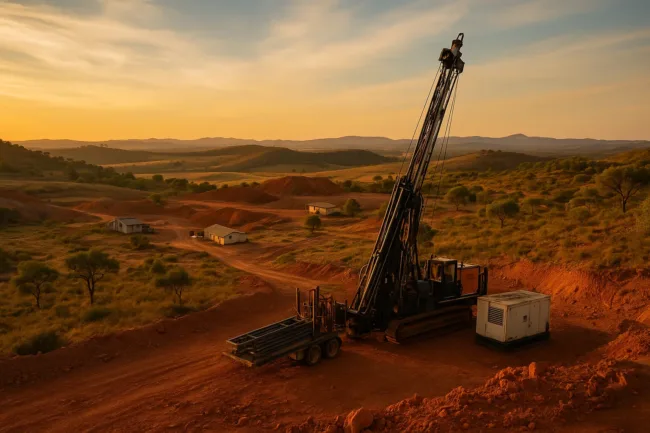
Arc Minerals Ltd (LSE: ARCM) witnessed a dramatic market collapse on 20 October 2025, with shares plunging by 52.38% to just 0.50 GBX following confirmation that Anglo American has officially withdrawn from their copper joint venture in Zambia. The news sent shockwaves through the AIM market, with Arc’s market capitalization slashed to £15.21 million and investor confidence shaken by the sudden breakdown of a once-promising strategic alliance.
The sharp drop followed a volatile trading session in which Arc shares opened at 0.85 GBX before collapsing to intraday lows of 0.49 GBX. Bid-offer spreads widened to 0.45/0.55 GBX, signaling weak liquidity and heightened volatility. The stock had previously closed at 1.05 GBX on 17 October, making the fall one of the most severe single-day declines for a junior copper explorer this year.
Trading volume exploded to over 144 million shares on the day of the announcement. Despite this, turnover remained nominal at just £490, underscoring the highly speculative nature of the stock and its microcap status. The current price sits well below the 52-week low of 0.90 GBX, indicating a complete breakdown of market support in the wake of the joint venture termination.
Why did Anglo American walk away from Arc Minerals’ Zambia copper venture after months of silence?
Arc Minerals confirmed that the withdrawal was agreed mutually between both parties and stems from a prolonged period of inactivity, with no drilling conducted throughout 2025. The venture was housed under a shared entity, Handa Resources Limited, in which Arc Minerals held a 66% stake through its subsidiary Unico Minerals Ltd, and Anglo American held the remaining interest. As part of the termination arrangement, Anglo American has surrendered its shares in Handa, effectively exiting the project and severing operational ties with the Zambian copper initiative.
This decision comes amid broader strategic shifts at Anglo American, which has been refining its exposure to early-stage exploration projects amid global cost pressures and complex jurisdictional risks. While Arc did not attribute blame directly, the company did allude to an ongoing legal dispute in Zambia that had disrupted operational progress. According to Arc Minerals’ executive chairman Nick von Schirnding, an individual had attempted to obstruct the company through what he described as ransom-like behavior, with court proceedings underway to address the matter.
The termination marks a major reversal of fortunes for Arc Minerals, which had pitched the Anglo American partnership as a game-changing validation of its asset base in Zambia. With drilling at a standstill and legal uncertainties unresolved, Anglo American’s exit reflects a loss of confidence that the asset could be rapidly advanced under the current circumstances.
What does the Anglo American exit mean for Arc Minerals’ control of the Zambian copper assets?
Despite the setback, Arc Minerals has regained full operational control over Handa Resources, the JV entity, along with approximately US$800,000 left in its bank account by Anglo American. This provides the company with working capital and decision-making authority to determine the next phase of exploration.
Nick von Schirnding noted that while parting ways with Anglo American was unfortunate, Arc Minerals is pleased to be returning to a controlling position in what it considers to be one of Africa’s most prospective copper tenement zones. He reiterated that only a small fraction of the property has been drilled to date, leaving significant upside potential for future exploration.
The company emphasized that it will now evaluate all strategic options for the project. These may include seeking another joint venture partner, advancing exploration on its own, or exploring funding alternatives that do not involve immediate equity dilution. Arc Minerals also stated that, based on current cash resources and the capital left in Handa, there is no need for an equity raise in the foreseeable future to support ongoing operations. This statement is likely designed to stabilize shareholder sentiment after the sharp stock price collapse.
How are investors reacting to Arc Minerals’ return to full ownership—and what does it signal for future funding?
Investor reaction to the news was swift and overwhelmingly negative. The stock plummeted more than 50% within hours of the announcement, erasing months of steady gains and sending Arc Minerals shares to their lowest level in over a year. The selloff was accompanied by extremely high trading volume, suggesting panic selling rather than orderly repositioning.
The primary concern among investors appears to be Arc Minerals’ ability to drive exploration and unlock value without a heavyweight partner like Anglo American. Given the strategic importance of copper and growing investor focus on the metal’s role in the global energy transition, Arc Minerals’ assets remain theoretically valuable. However, the burden of funding and execution now falls entirely on Arc Minerals, which must balance ambition with fiscal prudence amid volatile commodity markets and tight capital conditions.
The company’s claim that no new capital raise is needed may offer short-term reassurance, but market participants will be closely watching its cash burn rate in the coming quarters. If legal disputes in Zambia continue to delay progress or if exploration restart costs exceed expectations, Arc Minerals may yet be forced to tap equity markets or dilute its assets to new partners.
What legal and operational overhangs are still weighing on Arc Minerals’ development path?
The most immediate non-financial challenge for Arc Minerals is resolving the legal issues surrounding its Zambian licenses. While details remain limited, the company has described an ongoing court battle involving an individual accused of attempting to block operations through unethical tactics. This dispute has already delayed drilling and appears to have factored into Anglo American’s decision to step away from the joint venture.
Until the legal matter is resolved, Arc Minerals is likely to face continued scrutiny from investors, potential partners, and regulators. The lack of progress in 2025 and the absence of an operational timeline for resumption only add to the uncertainty. While the company remains committed to seeing the court case through, delays in legal resolution could impair the company’s ability to attract new partners or secure exploration permits in a timely manner.
Operationally, Arc Minerals will need to realign its technical and logistical resources to manage exploration activities independently. Without Anglo American’s infrastructure, Arc Minerals will have to rely on its internal team and local partnerships to execute future drilling and site evaluations, a significant challenge given the complexities of operating in Zambia’s Copperbelt region.
How does Arc Minerals’ 52% share price crash reflect changing investor sentiment and the market’s confidence in its copper exploration value?
The steep drop in Arc Minerals’ share price has effectively priced in a worst-case scenario for the near term. From a technical perspective, the stock has breached key support levels and is now trading at less than half of its 52-week low. With sentiment battered and the strategic partnership dissolved, the market appears to be valuing Arc largely on its cash reserves and the speculative upside of its tenement portfolio.
That said, the presence of US$800,000 in Handa’s account and the lack of an immediate funding gap could offer a temporary floor for valuation. However, this buffer will only remain credible if Arc Minerals can quickly communicate a revised operational plan, begin fresh exploration activities, or announce a new partnership that replaces the Anglo American tie-up.
The fact that volume surged on the day of the announcement could also signal a shift in the shareholder base, with retail speculators replacing more risk-averse institutional investors. As such, volatility may remain elevated in the weeks ahead, especially if Arc Minerals fails to deliver near-term updates to restore narrative control.
How can Arc Minerals rebuild investor confidence and project momentum after Anglo American’s exit from its Zambia copper joint venture?
Over the coming year, several key developments will determine whether Arc Minerals can recover its market standing. Chief among them is the outcome of the court proceedings in Zambia, which must be resolved for the company to resume exploration and reduce regulatory risk. Any positive verdict could serve as a catalyst for share price recovery and attract fresh investor interest.
Investors will also be watching for signs of resumed drilling activity, either self-funded or through a new partnership. A detailed operational roadmap could go a long way in restoring credibility and providing the market with tangible progress markers. Furthermore, if Arc Minerals can demonstrate prudent use of its existing cash and avoid unnecessary dilution, it may re-enter conversations among long-term copper bulls and frontier resource investors.
Despite the severe blow dealt by Anglo American’s exit, Arc Minerals now has an opportunity to reposition itself. Whether it succeeds will depend not only on geology, but on governance, transparency, and execution in one of Africa’s most geopolitically nuanced mining jurisdictions.
Key takeaways: Why Arc Minerals’ joint venture breakdown triggered a 52% stock collapse
- Arc Minerals Ltd (LSE: ARCM) shares plunged over 52% after Anglo American formally exited their Zambian copper joint venture.
- The JV entity, Handa Resources Ltd, is now fully under Arc’s control, with US$800,000 in retained cash to support near-term operations.
- No drilling occurred during 2025, and legal disputes in Zambia involving a local actor were cited as a major operational roadblock.
- Arc Minerals stated it does not anticipate an equity raise “in the foreseeable future,” aiming to stabilize funding concerns post-JV collapse.
- Investor sentiment deteriorated rapidly, with over 144 million shares traded and the stock falling below its 52-week low to 0.50 GBX.
- Analysts and market watchers are concerned about Arc’s ability to secure new strategic partners and resume exploration independently.
- Legal uncertainties in Zambia remain unresolved, casting doubt on project timelines and permitting.
- The stock is now viewed as high-risk, speculative, and highly sensitive to upcoming court outcomes, drill updates, and partnership news.
- A clear operational roadmap and new JV announcement could be key to rebuilding investor confidence in 2026.
Discover more from Business-News-Today.com
Subscribe to get the latest posts sent to your email.