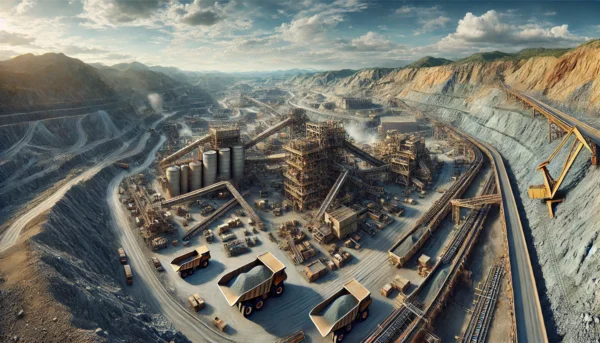
Apple Inc. (NASDAQ: AAPL) has announced a landmark $500 million multiyear partnership with MP Materials Corp. (NYSE: MP), reinforcing the United States’ effort to rebuild its rare earth magnet supply chain. The deal will see Apple sourcing neodymium-iron-boron (NdFeB) magnets manufactured at MP Materials’ Independence facility in Fort Worth, Texas, using 100 percent recycled rare earth feedstock processed at its Mountain Pass mine and refining complex in California. Shipments are expected to begin in 2027, supplying magnets for hundreds of millions of Apple devices annually.
The investment is part of Apple’s wider commitment to spend $500 billion in the United States over the next four years. For MP Materials, the agreement signifies a strategic leap in its transformation from a rare earth miner to a fully integrated producer of high-value finished magnet products. The deal also reflects the growing urgency among U.S. technology and manufacturing companies to diversify away from Chinese rare earth supply chains.

How does Apple’s $500 million deal with MP Materials build on previous U.S. efforts to restore rare earth magnet production capacity?
The United States has spent more than two decades trying to revive its rare earth industry after losing dominance to China in the 1990s. MP Materials has been at the forefront of this revival since acquiring the Mountain Pass mine in 2017 and restarting operations in 2020. The site, located in California’s Mojave Desert, remains the country’s only operational rare earth mining and processing facility.
The Independence facility in Fort Worth, launched in 2022 with a $700 million investment, was designed to close the downstream gap in rare earth magnet production. It began commercial production of neodymium-praseodymium (NdPr) metal in early 2025 and has since initiated trial runs for automotive-grade sintered magnets. The Apple partnership is the first commercial-scale agreement for magnets made entirely from recycled materials in the United States. For nearly five years, Apple and MP Materials have collaborated on pilot recycling technologies to ensure that recycled rare earth feedstock meets the strict performance and durability standards required for Apple’s devices.
Industry observers see this deal as a pivotal step in establishing a fully integrated U.S. rare earth supply chain, encompassing mining, refining, magnet manufacturing, and end-of-life recycling. It signals that domestic production is now commercially viable with long-term customer commitments in place.
What are analysts and institutional investors saying about the Apple–MP Materials rare earth magnet partnership?
Institutional investors have reacted positively, with MP Materials’ stock rising sharply following the announcement. Analysts generally view the deal as a transformative milestone for the U.S. rare earth sector. By securing a high-profile customer like Apple, MP Materials has demonstrated that U.S.-made magnets can achieve both scale and commercial competitiveness.
Analysts highlight that the deal strengthens MP Materials’ vertically integrated business model, which has long been seen as essential to breaking China’s near-monopoly on rare earth magnet production. Institutional sentiment suggests that Apple’s public commitment could trigger similar long-term supply agreements from automakers, defence contractors, and other technology manufacturers seeking to de-risk their supply chains. Some investors also note that the deal may help MP Materials attract further public-private funding, given the Pentagon’s prior financial support for the Independence facility.
For Apple, the partnership aligns with its ongoing environmental and supply chain initiatives, which focus on increasing recycled content in components and reducing reliance on imported raw materials. Analysts believe this collaboration enhances Apple’s ESG credentials and could resonate with environmentally conscious investors.
What are the key financial and operational terms of the Apple and MP Materials agreement?
The $500 million commitment involves both long-term supply arrangements and infrastructure expansion. MP Materials will dedicate new manufacturing lines at the Independence facility specifically for Apple, significantly boosting its production capacity. These lines will produce magnets tailored to Apple’s design and performance specifications.
At Mountain Pass, MP Materials will build a commercial-scale recycling line capable of processing post-industrial magnet scrap and components recovered from end-of-life electronics. This feedstock will be converted into high-purity rare earth oxides and metals, forming the basis for the new magnets. The facility will also innovate in processing technologies aimed at improving yield and reducing waste.
While neither company has disclosed projected revenue figures, analysts expect the agreement to generate hundreds of millions of dollars in annual revenue for MP Materials once shipments ramp up. The company’s Independence facility is forecast to supply magnets for hundreds of millions of Apple devices each year, starting in 2027.
How could this $500 million partnership change the rare earth supply chain and challenge China’s dominance in magnets?
China currently controls more than 80 percent of global rare earth magnet production, a dominance that has raised geopolitical and economic concerns in the United States and allied countries. The Apple–MP Materials partnership directly supports U.S. government efforts to diversify supply chains. Washington has already introduced a pricing floor for domestically produced neodymium-praseodymium and awarded tax credits under programs such as the Section 48C clean energy manufacturing incentive.
Industry experts believe this deal will encourage additional investments from Western manufacturers, potentially shifting part of the global supply chain away from China. The partnership also aligns with broader initiatives in allied countries to develop alternative hubs, such as Lynas Rare Earths’ Texas-based processing facility.
Apple’s high-profile involvement is expected to influence other technology and automotive manufacturers to secure domestic sources, accelerating the build-out of rare earth magnet production in North America. Analysts predict that such demand signals will encourage further innovation in recycling technologies, ultimately lowering production costs and making U.S.-made magnets more competitive globally.
What is the production outlook for MP Materials and how much financial upside could this deal create?
By 2028, MP Materials expects its Independence facility to produce approximately 10,000 metric tons of rare earth magnets annually. A significant portion of this capacity will be allocated to Apple, but the expanded production lines will also serve electric vehicle, renewable energy, and defence markets. Analysts have revised MP Materials’ earnings projections upward, with 2027 EBITDA forecasts now exceeding $500 million—substantially higher than pre-announcement estimates.
For Apple, the deal secures a stable, environmentally sustainable supply of critical components for its devices. The company has already achieved 100 percent use of recycled rare earth elements in its magnets since the iPhone 11, but this partnership allows it to scale that commitment across more product lines while ensuring long-term supply security.
Institutional investors see this agreement as a potential blueprint for future vertical integration in critical materials. Many expect additional partnerships between MP Materials and major technology or automotive companies, particularly as recycled feedstock processing improves and costs decline.
Discover more from Business-News-Today.com
Subscribe to get the latest posts sent to your email.