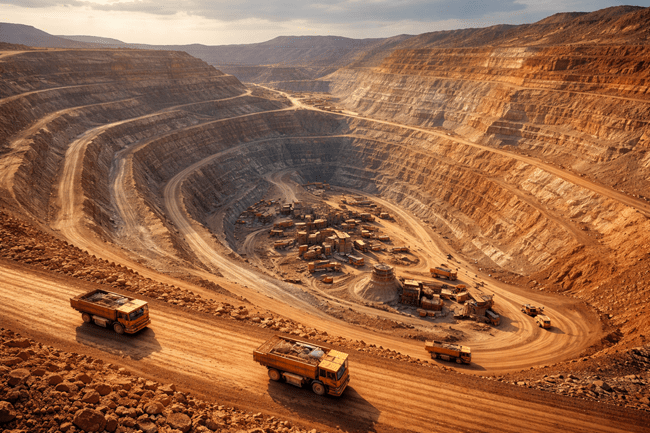
Anglo Asian Mining plc (AIM: AAZ) on January 15 reported full-year 2025 copper production of 7,915 tonnes and gold production of 25,061 ounces, capping a turnaround year that saw the company transition from a single-asset operator to a multi-asset producer with active mines at Gedabek, Demirli, and Gilar. Despite narrowly missing revised copper guidance due to mill maintenance at Demirli, the company delivered record quarterly copper output in Q4 and returned to net cash position, underlining operational resilience and execution progress ahead of its ambitious 2030 copper roadmap.
This strategic inflection follows the commissioning of Demirli in July 2025 and Gilar in May 2025, supported by plant upgrades at Gedabek and the opening of a dedicated logistics center for copper concentrate sales. Anglo Asian Mining now aims to scale production fivefold by the end of the decade, with planned development at Xarxar, Garadag, and Zafar mines targeting 50,000 to 55,000 tonnes of annual copper output by 2030.
How did Anglo Asian Mining perform in Q4 and FY 2025 across copper, gold, and cash flow metrics?
The fourth quarter of 2025 delivered a breakthrough for Anglo Asian Mining’s copper business, with Q4 output surging to 4,439 tonnes—up 94 percent from the previous quarter—driven by the first full quarter of Demirli operations and steady contributions from Gedabek. Sales proceeds for Q4 reached USD 57.3 million, generating a USD 16.7 million cash inflow and swinging the company back to a net cash position of USD 2.5 million by year-end, reversing a USD 14.2 million net debt in Q3.
Full-year copper production rose to 7,915 tonnes, exceeding 2024’s 377-tonne figure by a wide margin, although it came in just below the revised 8,100–9,000 tonne guidance. The shortfall was largely due to an unplanned spindle replacement at the Demirli ball mill, which constrained ore throughput in Q4. Demirli still delivered 3,128 tonnes in its first five months, while Gedabek produced 4,787 tonnes for the year.
Gold output totaled 25,061 ounces in 2025, near the lower bound of revised guidance, while silver production climbed to 153,332 ounces, up nearly 5.4 times from the previous year. Total sales proceeds for the year hit USD 125.7 million, up 215 percent year-on-year, supported by higher volumes and favorable pricing across metals. Notably, copper concentrate sales grew from just USD 2.8 million in 2024 to USD 64.7 million in 2025.
The company’s copper inventory, now valued at USD 12,504 per tonne, includes 2,457 tonnes of contained metal, translating to a significant unbooked asset base heading into 2026.
What does the 2025 transition mean for Anglo Asian’s mid-tier copper ambitions by 2030?
This was the year Anglo Asian Mining crossed the psychological and operational threshold from single-asset gold producer to diversified copper-centric growth play. The successful ramp-up of Demirli and Gilar has created an operating platform that management believes can support fivefold growth in copper volumes by 2030.
Demirli, which faced minor mechanical delays in Q4, is now expected to return to full capacity by the end of Q1 2026 with the installation of a new spindle. Gilar has already stockpiled over 53,000 tonnes of ore grading 1.8 grams per tonne of gold and 3.58 percent copper, ready to be processed once flotation plant upgrades at Gedabek are completed.
Operationally, 2025 saw key investments in plant debottlenecking, logistics, and process streamlining. The addition of a second filter press and the start of flotation circuit upgrades at Gedabek are designed to support higher grade ore from Gilar and future mines. The commissioning of a logistics center enabled the first sales of Demirli copper concentrate, improving working capital velocity and sales execution.
Looking ahead, the company is aligning operations and capital deployment toward its three upcoming assets—Xarxar, Garadag, and Zafar—with the goal of scaling to 50,000–55,000 tonnes of copper output annually. These new mines are expected to come online between 2027 and 2030, providing a multi-year development runway that aligns with global energy transition demand tailwinds.
How does investor sentiment stack up against Anglo Asian’s execution and capital discipline?
Despite falling short of revised copper guidance, sentiment around Anglo Asian Mining has notably improved due to its return to net cash, successful commissioning of new mines, and stronger revenue conversion on concentrate sales. The turnaround from USD 14.2 million in net debt to USD 2.5 million in net cash over just one quarter demonstrates cash discipline, while also signaling increased confidence in the company’s ability to manage costs and working capital.
Copper inventory value and metal prices remain favorable heading into 2026, creating a buffer for revenue visibility and potentially improving margins in Q1 and Q2. That said, operational risk remains tied to the full ramp-up of Demirli and completion of the Gedabek plant upgrades, which are prerequisites to unlocking the full value of Gilar stockpiles.
From a capital market perspective, Anglo Asian’s relatively modest production base keeps it below the radar of many institutional copper investors. However, the 2030 roadmap, if de-risked successfully over the next 12–18 months, could elevate the company into mid-tier relevance—particularly if copper prices continue to reflect structural supply deficits tied to energy transition demand.
What should institutional investors and sector peers watch as Anglo Asian scales its copper strategy?
The next phase of Anglo Asian Mining’s transition will be judged not on whether it can operate multiple mines, but whether it can scale them cohesively across geographies, logistics, and capital cycles. Investors will closely watch three execution flashpoints in 2026.
First is the full operational recovery at Demirli, which must meet or exceed the lower end of its guided throughput to maintain cash momentum. Second is the processing of Gilar ore contingent on timely flotation upgrades at Gedabek, which could unlock near-term copper volume upside. Third is the early-stage development work at Xarxar and Garadag, where permitting, infrastructure, and cost discipline will shape investor conviction around the 2030 goal.
Geopolitically, operating exclusively in Azerbaijan requires ongoing monitoring of country-specific risks, particularly around infrastructure stability, commodity taxation, and regulatory clarity. While current conditions remain stable, risk diversification via jurisdictional expansion could become a longer-term question if Anglo Asian Mining achieves scale.
What does Anglo Asian Mining’s 2025 copper turnaround signal for its mid-tier ambitions and regional peers?
- Anglo Asian Mining reported record Q4 copper production of 4,439 tonnes, driving full-year output to 7,915 tonnes in 2025.
- The company returned to a net cash position of USD 2.5 million at year-end, reversing a USD 14.2 million net debt position in Q3.
- FY25 copper output narrowly missed revised guidance due to maintenance at Demirli but was offset by strong pricing and sales execution.
- First full-year of operations at Demirli and Gilar establishes Anglo Asian as a true multi-asset producer for the first time.
- Inventory at year-end includes 2,457 tonnes of copper valued at USD 12,504 per tonne, providing embedded revenue upside in 2026.
- Upgrades at Gedabek flotation plant will enable high-grade ore from Gilar to be processed at scale once completed.
- The company is targeting copper production of 50,000–55,000 tonnes annually by 2030 via new mines at Xarxar, Garadag, and Zafar.
- Key 2026 milestones include full operational recovery at Demirli, Gilar processing start-up, and pre-construction activities at Xarxar.
- Investor sentiment has improved on operational execution, but multi-asset integration risk and regional exposure remain areas to watch.
- Anglo Asian’s ability to scale from a regional copper play to a mid-tier global producer will depend on disciplined execution and predictable capex cycles.
Discover more from Business-News-Today.com
Subscribe to get the latest posts sent to your email.