




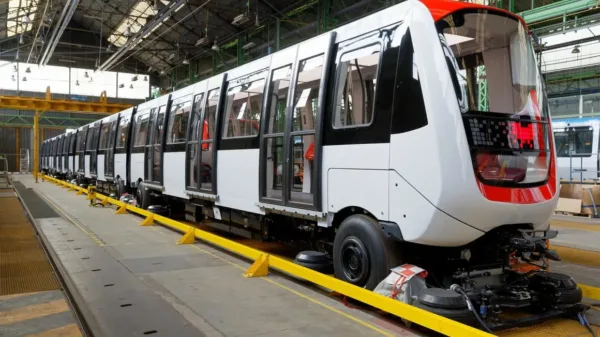
In a strategic move to enhance urban mobility, Alstom, a global leader in smart and sustainable transport solutions, has secured a €210 million contract from the Métropole Européenne de Lille (MEL) to supply 15 new automated metro trainsets. This order builds on a previous commitment for 27 trainsets, bringing the total fleet to 42 and reinforcing the MEL’s goal of modernizing its metro system.
Scheduled to replace the aging VAL-208 trainsets by 2028, the new metros will operate exclusively on line 1 of the Lille metro network. Equipped with Alstom’s Urbalis Fluence technology, these trains are set to revolutionize automated metro operations through direct train-to-train communication, reducing delays and improving service reliability.

How will these upgrades improve passenger experience?
The introduction of these next-generation metros promises a host of enhancements for passengers. The 52-metre trainsets feature a “boa” configuration, which eliminates separations between carriages, allowing seamless movement throughout the train. With a capacity of up to 545 passengers, the design prioritizes comfort and accessibility.
Each train will include:
- Dedicated spaces for passengers with reduced mobility, ensuring inclusivity.
- Advanced multimedia information systems, providing real-time updates and enhanced communication.
- Integrated video surveillance, improving safety across trains and platforms.
Alstom’s focus on energy-efficient designs further bolsters the network’s environmental credentials. High-performance traction systems will minimize energy consumption, aligning with MEL’s sustainability goals.
What makes Urbalis Fluence a game-changer for metro automation?
The Lille metro system will showcase the world’s first deployment of Urbalis Fluence, Alstom’s state-of-the-art automated train control solution. Unlike traditional systems, Urbalis Fluence embeds intelligence directly into the trains, enabling faster, safer, and more autonomous operations.
This innovative technology will reduce train intervals to an industry-leading 66 seconds during peak hours, solidifying Lille’s position as the most frequent metro system globally. With enhanced automation, the system promises to boost efficiency, cut waiting times, and streamline operations.
According to Frédéric Wiscart, President of Alstom France, “These new metros are a significant asset for improving the network and passenger experience. They represent a step forward in sustainable and efficient urban mobility.”
Why is Lille’s modernization effort significant for French manufacturing?
The project highlights Alstom’s commitment to French industrial expertise, with six of its sites across France contributing to the initiative:
- Valenciennes-Petite Forêt: Design, assembly, and validation of the trainsets.
- Le Creusot: Production of bogies.
- Ornans: Development of motors.
- Tarbes: Powertrain equipment manufacturing.
- Saint-Ouen: Development of Urbalis Fluence systems.
- Villeurbanne: Onboard computing and passenger information technology.
By leveraging local production capabilities, the project not only bolsters France’s industrial sector but also ensures high standards of quality and innovation.
What does this mean for the future of urban transport in Lille?
With this contract, MEL is positioning Lille as a benchmark for modern, efficient, and sustainable urban transit. The fully automated trainsets will provide a superior commuter experience while reducing environmental impact. By adopting cutting-edge technologies like Urbalis Fluence, Lille reinforces its commitment to advancing smart mobility solutions.
The upgraded metro system will address increasing passenger demand, streamline peak-hour operations, and contribute to the city’s long-term sustainability goals. With Alstom at the helm, the Lille metro project exemplifies how public transport can be both innovative and environmentally conscious.
Discover more from Business-News-Today.com
Subscribe to get the latest posts sent to your email.
