


The Akkuyu Nuclear Power Plant is the first nuclear energy facility in Türkiye and one of the most geopolitically significant infrastructure projects in the country’s modern energy history. Located in the coastal town of Büyükeceli in Mersin Province, the plant comprises four Russian-designed VVER-1200 pressurized water reactors, each with a capacity of 1,200 megawatts. When fully commissioned, Akkuyu will provide 4,800 megawatts of electricity annually, accounting for up to 10 percent of Türkiye’s power demand.
This $20 billion mega-project was formalized through a 2010 intergovernmental agreement between the Republic of Türkiye and the Russian Federation. The project operates under a build-own-operate model, with Russia’s state nuclear energy company Rosatom financing, constructing, and owning the facility through its project subsidiary Akkuyu Nuclear JSC. The model is rare globally and has positioned Akkuyu as a test case for long-term international nuclear ownership in a non-nuclear nation. For Türkiye, it represents not only a diversification of the national energy mix but also a signal of industrial self-determination, as the country moves away from fossil fuel import dependence.
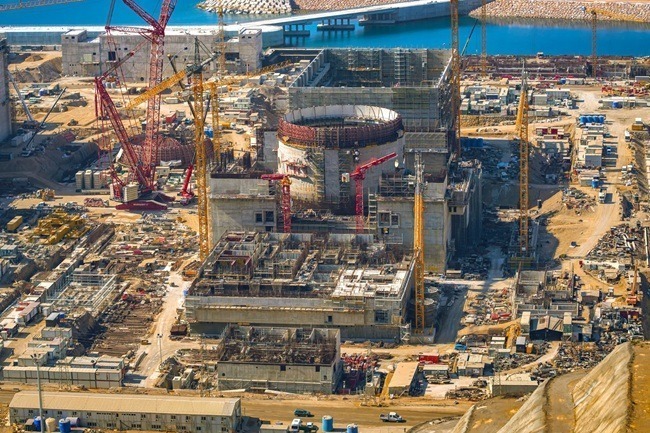
Who operates the Akkuyu Nuclear Power Plant and which companies are contracted across the supply chain
Rosatom is the sole operator and financier of the Akkuyu Nuclear Power Plant through its dedicated project company Akkuyu Nuclear JSC. The shareholder composition of the project company includes Rusatom Energy International JSC as the majority owner, alongside affiliated Rosatom firms such as Atomstroyexport CJSC and Rosenergoatom JSC. While there were previous efforts to allocate up to 49 percent of the project to Turkish investors, those efforts did not materialize into finalized ownership transitions.
Early-stage site preparation contracts were awarded in 2013 to Atomstroyexport and Turkish construction company Ozdogu Insaat for excavation and ground leveling. Over time, the civil and engineering work saw several reassignments, including the termination of a joint venture with IC İçtaş due to performance disagreements. In 2022, Rosatom awarded full engineering, procurement, and construction responsibilities to TSM Enerji, a firm established by a consortium of Russian contractors to continue building work on all four reactor units.
International supplier agreements have also played a critical role. Steam turbines for the reactors were sourced through a major deal involving GE Steam Power, which supplied Arabelle turbine components from its manufacturing base in Belfort, France. These turbines are among the most advanced used in civilian nuclear plants worldwide and reflect the integration of Western technology into a Russian-led build.
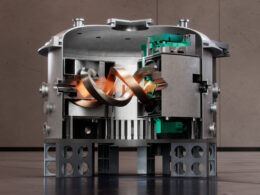
Reactor pressure vessels and internals have been manufactured by Atomenergomash and shipped from Russia under separate logistics and delivery contracts. Additional components, including coolant systems and auxiliary nuclear equipment, are being supplied under framework agreements with Taprogge and other European vendors. Across the board, Rosatom’s contracting strategy for the Akkuyu Nuclear Power Plant has blended localized procurement with international high-value suppliers for mission-critical equipment.
What is the expected output of Akkuyu Nuclear Power Plant and when will power generation begin
Each VVER-1200 reactor at the Akkuyu Nuclear Power Plant is designed to deliver 1,200 megawatts of net electric output. Combined, the facility will provide 4,800 megawatts of baseload power, with an expected annual output of approximately 35 to 40 billion kilowatt-hours. This output is equivalent to the electricity needs of more than 10 million households and will significantly reduce Türkiye’s reliance on natural gas and coal-fired generation.
The construction of Unit 1 began in 2018 and was initially scheduled to be operational by 2023 to coincide with Türkiye’s Republic centennial. However, delays related to supply chain disruptions, contractor realignment, and global geopolitical tension have pushed the operational target to mid-2026. Units 2, 3, and 4 are scheduled to follow in successive years through 2028, each reaching commissioning once previous unit integration is complete. As of late 2025, Unit 1 of the Akkuyu Nuclear Power Plant has entered the cold commissioning phase, including hydraulic testing, with reactor fuel loading expected in early 2026.
What infrastructure is connected to Akkuyu Nuclear Power Plant and how will the power reach Türkiye’s grid
The Akkuyu plant’s output will be integrated directly into Türkiye’s national grid through a network of high-voltage transmission infrastructure operated by the Turkish Electricity Transmission Corporation, also known as TEİAŞ. A grid connection agreement was finalized in 2019, with transmission corridors now built out to multiple regional substations. These transmission systems are designed to evacuate electricity from the plant and distribute it across key industrial and urban demand centers.
Unlike fossil fuel projects that rely on pipelines or terminals, nuclear power projects depend on robust electrical infrastructure. Akkuyu’s grid interface includes specialized transformer stations and real-time dispatch management to handle baseload generation. Civil works for transmission integration were contracted to local Turkish engineering firms under subcontracts administered by Rosatom and TEİAŞ. The grid connection and transmission logistics have also required approval from Türkiye’s Energy Market Regulatory Authority and Nuclear Regulatory Authority.
How the Akkuyu Nuclear Power Project evolved from idea to near commissioning: A timeline of contracts, licenses, and delays
The Akkuyu Nuclear Power Project was first proposed in the 1970s but gained real momentum in 2010 following the Türkiye-Russia intergovernmental agreement. This foundational legal document granted Rosatom exclusive rights to finance, build, own, and operate the plant. Following site licenses, the first construction permit for Unit 1 was granted in April 2018, with construction permits for Units 2, 3, and 4 issued between 2020 and 2022.
Milestones were achieved through a combination of licensing, contractor selection, and financial structuring. A key moment in the financing narrative occurred in 2019, when Russian bank Sberbank extended a $400 million credit line to Akkuyu Nuclear JSC, marking the first external funding injection into the project. Turkish regulatory approval for fuel importation, safety procedures, and seismic tolerance were also finalized during this period.
In late 2025, Türkiye confirmed that Russia had extended an additional $9 billion in project financing to sustain contracted procurement and construction activity. The new financing round, which reportedly includes deferred interest repayment and state guarantees from Rosatom affiliates, is designed to carry the project through commissioning and early-stage operations. Contractual compliance with IAEA safety rules and Turkish regulatory bodies has been maintained, despite pressure from climate activists and political opposition in the Mediterranean region.
Why contracts tied to the Akkuyu Nuclear Power Plant carry geopolitical and environmental weight
The Akkuyu Nuclear Power Plant’s contract structure reflects a high degree of geopolitical interdependence between Türkiye and the Russian Federation. Rosatom’s long-term ownership of the asset, along with exclusive nuclear fuel supply and waste takeback contracts, gives Russia a durable presence in Türkiye’s energy ecosystem. Critics argue that the build-own-operate model introduces sovereignty risk by allowing a foreign power to control core infrastructure.
At the same time, Türkiye has carefully structured regulatory contracts to mitigate risk. The Turkish Nuclear Regulatory Authority maintains full licensing oversight, while environmental contracts under the Ministry of Environment and Urbanization require that the project adheres to stringent ecological and marine standards. Cooling system design, seismic risk planning, and waste management contracts were all subject to public review, although many environmentalists continue to warn that the region remains vulnerable to climate-linked coastal impacts.
Opposition parties and civil society groups have protested the lack of Turkish ownership, and some have called for future nuclear projects to shift to different financing models. Nonetheless, the Akkuyu Nuclear Power Project has remained a bipartisan strategic project due to its energy implications.
What impact Akkuyu has on Rosatom, Turkish suppliers, and global nuclear supply chains
The Akkuyu Nuclear Power Plant is arguably Rosatom’s most significant export achievement to date. The project showcases the Russian state nuclear corporation’s ability to execute large-scale nuclear projects under complex BOO financing arrangements. It also allows Rosatom to validate the VVER-1200 reactor design in a foreign grid, which strengthens its global reference plant portfolio for deals in Egypt, India, and Southeast Asia.
For Türkiye, the project has catalyzed the development of a domestic nuclear industrial base. Local companies have been integrated into the project under procurement contracts for construction materials, civil works, logistics, concrete, and instrumentation. According to the Ministry of Energy and Natural Resources, over 400 Turkish companies have now supplied goods or services to Akkuyu, many of which are expected to compete for future projects in Sinop or Trakya.
Globally, the Akkuyu Nuclear Power Project underscores how nuclear supply chains now depend on an interlocking web of contracts that mix geopolitical boundaries. Despite Western sanctions on Russian energy entities, companies like GE Steam Power were permitted to supply non-dual-use turbine technology under previously grandfathered agreements.
What are the most recent updates on Akkuyu’s construction, contracts, and funding as of 2025
As of December 2025, construction on Unit 1 of the Akkuyu Nuclear Power Plant is nearing the final stage of commissioning. Key milestones achieved include the completion of cold and hot hydraulic testing, installation of automated control systems, and final delivery of reactor internals from Russia. Unit 1 is scheduled for fuel loading in the first quarter of 2026, with grid synchronization expected later in the year.
A second critical development has been the confirmation of the $9 billion financing package from Russia. This funding will be used to sustain payments to contractors, equipment suppliers, and logistics providers through 2027. It also reflects Rosatom’s continued strategic investment in the project, despite global constraints on capital flow and asset transfers.
Meanwhile, groundwork on Units 2, 3, and 4 continues. Unit 2 has completed its containment dome structure and is now in mechanical assembly. Units 3 and 4 are still in the concrete and structural steel phase, but remain on track for 2027 and 2028 commissioning, respectively.
What comes next for the Akkuyu Nuclear Power Plant and nuclear power in Türkiye
With the Akkuyu Nuclear Power Plant on track for its first power generation in 2026, Türkiye is poised to become the 33rd country in the world to operate commercial nuclear power. The plant’s license will cover 60 years of operation, with a potential 20-year extension. Fuel supply for the first decade will come directly from Rosatom, under a long-term delivery contract. There are active discussions underway about establishing a domestic fuel assembly or enrichment capability, which would mark a major step toward Turkish nuclear sovereignty.
Türkiye is also preparing to expand its nuclear ambitions with proposed new plants in Sinop and the European part of Thrace. These future projects may include contracts with South Korea, China, or U.S.-based companies, breaking away from the Russia-centric model used in Akkuyu. To this end, Türkiye Nükleer Enerji AŞ has been established as a coordinating entity to manage future bidding processes, partnerships, and industrial development.
If successfully commissioned and operated, Akkuyu could serve as the foundation for Türkiye’s rise as a regional nuclear energy hub. Its supplier contracts, licensing experience, and public-private balance will likely be used as templates for projects well into the 2030s and beyond.
Key takeaways: Akkuyu Nuclear Power Plant project at a glance
- The Akkuyu Nuclear Power Plant is Türkiye’s first commercial nuclear facility, located in Mersin Province and built under a 2010 Türkiye–Russia intergovernmental agreement.
- Rosatom fully owns, finances, and operates the plant through its project company Akkuyu Nuclear JSC under a long-term build-own-operate (BOO) model.
- The plant will consist of four VVER-1200 reactors with a combined capacity of 4,800 MW, supplying up to 10 percent of Türkiye’s electricity once all units are operational.
- Steam turbines are supplied by GE Steam Power using Arabelle technology, while core reactor components are manufactured by Atomenergomash in Russia.
- Unit 1 is scheduled for commissioning in 2026 after multiple delays; Units 2, 3, and 4 are expected to follow by 2028.
- TEİAŞ has completed high-voltage grid integration contracts to transmit power from Akkuyu to the national grid.
- In late 2025, Türkiye confirmed an additional $9 billion financing package from Russia to maintain construction and supplier payments through 2027.
- TSM Enerji is currently the main construction contractor after a previous Turkish partnership was terminated over project management issues.
- The Akkuyu project has attracted over 400 Turkish subcontractors and is serving as a springboard for future nuclear builds in Sinop and Trakya.
- Long-term power purchase agreements are in place, and nuclear fuel will be supplied by Rosatom under exclusive contracts.
- The Akkuyu Nuclear Power Project faces scrutiny over energy sovereignty, foreign ownership, and environmental risks, but remains central to Türkiye’s energy transition goals.
Discover more from Business-News-Today.com
Subscribe to get the latest posts sent to your email.