




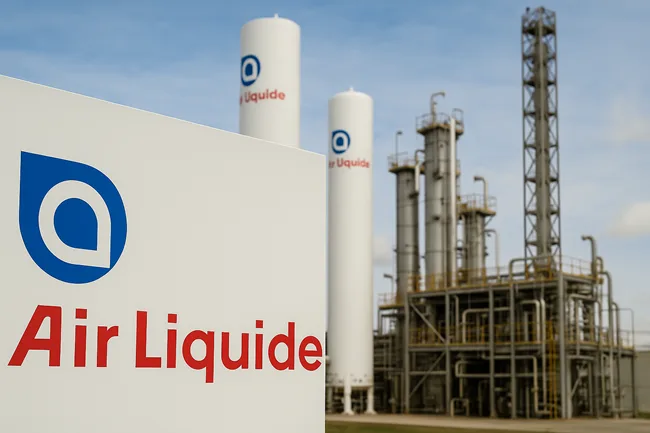
Why is Air Liquide acquiring DIG Airgas and what does the €2.85 billion valuation mean for its South Korea presence?
Air Liquide (EPA: AI), the Paris-listed world leader in industrial gases, has signed a binding agreement to acquire DIG Airgas, one of South Korea’s largest integrated gas providers, in a deal that values the target at €2.85 billion (₩4.6 trillion). The agreement, announced on August 22, 2025, marks one of Air Liquide’s largest transactions in Asia in recent years and underscores its ambition to deepen its footprint in one of the fastest-growing industrial economies.
The transaction, expected to close in the first half of 2026 pending regulatory clearances, will see Air Liquide acquire DIG Airgas from Macquarie Asia-Pacific Infrastructure Fund 2. The French industrial gas multinational said the acquisition is immediately earnings-accretive, with synergies and a strong order backlog expected to drive profit contribution within a year of completion.
This move significantly expands Air Liquide’s presence in South Korea, which ranks as the world’s sixth-largest manufacturing economy by GDP and the fourth-largest industrial gas market. The country is also recognized as the second-highest spender on innovation globally, positioning it as an attractive destination for long-term investment in advanced manufacturing, semiconductors, clean energy, and biopharmaceutical sectors.
How does DIG Airgas strengthen Air Liquide’s positioning in electronics, clean energy, and mobility?
Founded in 1979, DIG Airgas has grown into a national leader in South Korea’s industrial gas market. With annual revenues of €510 million (₩752 billion) in 2024, the company operates more than 60 plants and 220 kilometers of pipeline networks while employing nearly 550 people. Its customer portfolio spans electronics, semiconductors, secondary batteries, and other high-growth sectors central to South Korea’s economic future.
Under Macquarie Asset Management’s six-year ownership, DIG Airgas successfully diversified its client base and expanded into industries that underpin Korea’s innovation economy. Institutional observers note that DIG Airgas’ nearly 20 secured projects in its backlog provide a tangible growth pipeline, making the acquisition strategically timed to capture demand in semiconductors and renewable energy value chains.
For Air Liquide, already a long-standing partner in South Korea with more than three decades of operations, DIG Airgas complements its existing footprint in advanced gas solutions, electronics, and home healthcare. Analysts suggest that the integration will create a stronger reference player in Korea’s industrial ecosystem, aligning with the nation’s high-value growth sectors such as clean energy transition and mobility innovation.
What synergies and financial metrics make this deal attractive to institutional investors?
The acquisition is priced at an enterprise value of €2.85 billion, translating into an EBITDA multiple of 20.2x based on DIG Airgas’ 2024 earnings. However, when accounting for its backlog of secured projects and potential cost synergies, the multiple drops to 14.8x, a more competitive valuation in line with regional industrial gas transactions.
For investors, the transaction is underpinned by Air Liquide’s robust balance sheet and proven record of integrating acquisitions. Management highlighted that the deal will be financed through a structured bridge loan, later refinanced via bond issuances. This signals confidence in Air Liquide’s ability to generate stable cash flows from its expanded South Korean operations.
Institutional sentiment is cautiously optimistic, with many viewing the acquisition as a long-term play that diversifies Air Liquide’s revenue base in Asia and reduces exposure to slower-growing European markets. The Korean industrial gas market’s linkages to semiconductors and clean energy also align with broader investor enthusiasm for future-ready industries.
How does the acquisition compare with global consolidation trends in the industrial gas sector?
The industrial gas sector has seen waves of consolidation over the past decade, from Linde’s merger with Praxair to Air Products’ aggressive capital deployment in hydrogen projects. Air Liquide itself has historically pursued bolt-on acquisitions but has also executed larger-scale deals, such as the 2016 acquisition of Airgas in the United States.
The DIG Airgas transaction mirrors that strategy, allowing Air Liquide to secure density in a strategically important geography while capitalizing on local complementarities. Unlike North America and Europe, where growth rates are relatively mature, South Korea offers dynamic expansion opportunities in electronics, mobility, and biotech.
For Air Liquide, the acquisition reinforces its ADVANCE 2025 strategic plan, which focuses on global performance by combining financial strength with contributions to the climate transition, healthcare, and high-tech markets. The ability to lock in growth from DIG Airgas’ existing projects provides immediate momentum, while synergies across electronics and healthcare position the group to capture incremental demand in coming years.
What role does South Korea’s industrial ecosystem play in Air Liquide’s long-term strategy?
South Korea is more than just a manufacturing hub—it is a nexus of global technology supply chains. The semiconductor industry alone, led by Samsung Electronics and SK Hynix, accounts for a significant portion of global chip supply. Industrial gases, particularly nitrogen, oxygen, and hydrogen, are essential in semiconductor fabrication, display technology, and emerging battery applications.
Air Liquide’s decision to double down on South Korea positions it at the heart of global supply chains undergoing strategic realignment. With Western governments emphasizing semiconductor sovereignty and Asian nations ramping up production capacity, industrial gas suppliers like Air Liquide play a vital enabling role.
In addition, South Korea’s ambitious clean energy and hydrogen roadmaps align with Air Liquide’s global expertise in hydrogen production and infrastructure. The acquisition therefore does more than just expand market share—it embeds Air Liquide deeper into the country’s long-term industrial and energy strategy.
How are investors and markets reacting to Air Liquide’s acquisition of DIG Airgas?
Shares of Air Liquide (EPA: AI), which closed 2024 with revenues exceeding €27 billion, have shown resilience in 2025 amid broader European industrial headwinds. While immediate market reaction to the announcement has been neutral, institutional investors are weighing the medium-term earnings impact. The deal is expected to be accretive from the first year post-closing, driven by DIG Airgas’ backlog and complementary positioning.
Buy-side sentiment reflects cautious optimism, with some funds seeing the acquisition as a growth catalyst in Asia while others flag integration risks in Korea’s competitive industrial gas market. Sell-side views broadly suggest that Air Liquide’s strong track record and balance sheet provide confidence in successful execution.
Foreign institutional investors are expected to monitor regulatory clearances in South Korea closely, as well as the financing structure via bonds. Domestic investors, meanwhile, are likely to view the acquisition as a vote of confidence in Korea’s innovation economy, with potential positive spillover effects for local industrial partners.
What is the future outlook for Air Liquide after this acquisition?
The DIG Airgas deal positions Air Liquide as a stronger Asian player, complementing its already dominant positions in Europe and North America. With Asia expected to account for an increasing share of global electronics and clean energy growth, Air Liquide is strategically aligning its portfolio to tap into long-term megatrends.
If synergies materialize as projected, analysts expect the acquisition to provide not only incremental revenue but also operational efficiency through shared infrastructure, procurement optimization, and enhanced project delivery. Furthermore, the integration strengthens Air Liquide’s ability to serve multinational customers operating across regions, from semiconductors to biopharma.
Looking ahead, the group’s visibility in South Korea may also support its ambitions in hydrogen and energy transition projects, aligning with global ESG-driven investment flows. As governments and corporations intensify decarbonization commitments, Air Liquide’s expanded South Korean platform could become a launchpad for regional innovation in green hydrogen, battery materials, and low-carbon industrial processes.
Discover more from Business-News-Today.com
Subscribe to get the latest posts sent to your email.


