


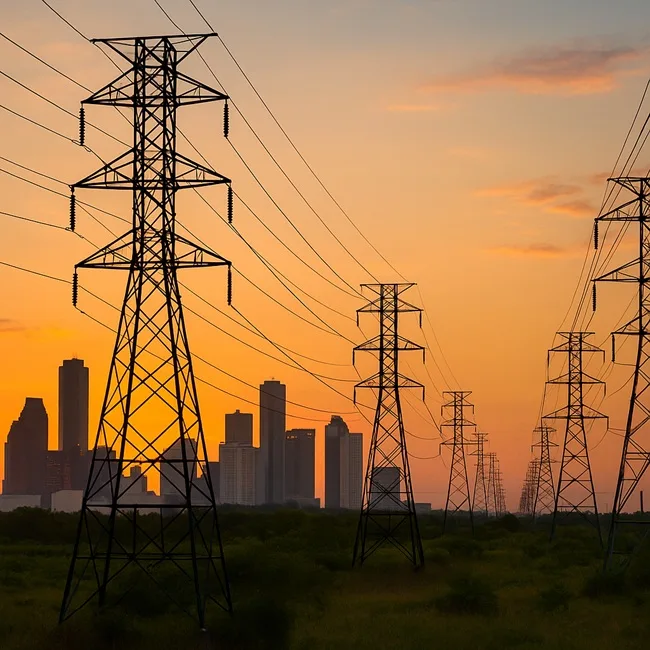
Adani Power Limited is India’s largest private thermal power producer, operating 18,150 MW of generation capacity across 13 assets in eight states. The stock has returned roughly 50% over the past twelve months, yet it sits nearly 18% below its 52-week high of ₹182.70, trading around ₹155 to ₹160 as of early April 2026. Two things are drawing fresh retail attention right now: a landmark 2,500 MW renewable energy contract awarded by Maharashtra State Electricity Distribution Co. on April 1, and a Q4 FY26 earnings date on April 28, 2026, that will be the first opportunity for management to address the near-term profit decline that has weighed on sentiment through the second half of FY26.
How does Adani Power make money and why is its business model different from NTPC or Tata Power?
Adani Power generates and sells electricity primarily through coal-based thermal plants, with a 40 MW solar facility at Bitta, Gujarat representing the only operational renewable asset in the current fleet. The scale is significant: 18,150 MW of installed capacity accounts for roughly 3.82% of India’s total installed base of 475,000 MW. Critically, around 84% of revenue flows through long-term Power Purchase Agreements with state electricity boards, giving the company a largely contracted revenue base that insulates it from short-term merchant price swings.
What separates Adani Power from peers is the combination of scale-driven cost advantages, captive coal logistics, and an unusually aggressive acquisition track record. Over the past two years, the company has absorbed financially stressed assets through the Corporate Insolvency Resolution Process, including Coastal Energen (1,200 MW, now amalgamated into Moxie Power Generation Limited) and Lanco Amarkantak (600 MW, now Korba Power Limited). These distressed acquisitions added capacity at a fraction of greenfield cost and expanded the company’s geographic footprint into Tamil Nadu and Chhattisgarh.
The Godda plant in Jharkhand, with 1,600 MW, adds another differentiating layer: it was built partly to serve Bangladesh under a cross-border supply agreement, making Adani Power the only Indian private generator with an active power export mandate. This diversification into neighbouring markets introduces a revenue stream that is structurally uncorrelated with domestic PPA dynamics.
What does the Q4 FY26 earnings date on April 28 mean for investors watching ADANIPOWER right now
The April 28 results will be watched closely because the last two quarters told a difficult story on the bottom line. Net profit fell 15.4% year on year in Q3 FY26 to around ₹2,479 crore, and revenue declined 12.4% year on year over the same period. The EPS dropped to ₹1.29 in Q3, well below the ₹7.67 recorded in Q3 FY25, though the comparison is complicated by the 1:5 stock split completed in September 2025, which inflated the share count from 2,480 crore to 12,400 crore and mechanically reduced per-share metrics.
The core question for April 28 is whether higher plant load factors in the seasonally stronger winter quarter, combined with the commencement of the Moxie Power supply contract to Tamil Nadu Power Distribution Corporation from April 1, 2026, have begun to stabilise margins. The Moxie contract, awarded at a tariff of ₹5.910 per unit, is notable because it means over 95% of Adani Power’s total operating capacity is now tied to medium or long-term agreements, significantly reducing exposure to volatile merchant markets.
Analysts tracking the stock will also be listening for any update on debt trajectory. The debt-to-equity ratio has risen to around 0.83 at the last reported period, the highest in recent history, reflecting the cost of inorganic acquisitions and brownfield expansions. A credible FY27 deleveraging path would likely provide a more durable catalyst than the contract newsflow alone.
Why did Adani Power just win a 2,500 MW renewable energy round-the-clock contract from MSEDCL and what does RTC power actually mean?
On April 1, 2026, Adani Power received a Letter of Award from Maharashtra State Electricity Distribution Co. Limited following a successful bid in an electronic reverse auction. The contract covers 2,500 MW of Renewable Energy Round-the-Clock power for 25 years from the Scheduled Commencement Date of Supply. This follows a separate 1,600 MW thermal power Letter of Award from MSEDCL in March 2026.
The Round-the-Clock structure is worth understanding. Standard renewable energy contracts, whether solar or wind, carry an inherent intermittency problem: generation depends on sunlight and wind availability, not on when consumers actually need power. RTC contracts address this by bundling renewable generation with storage or complementary dispatchable assets, ensuring a consistent power supply regardless of weather conditions. For a distributor like MSEDCL, which serves Maharashtra’s industrial and residential load, a 25-year RTC supply at a competitive tariff is a long-duration de-risking exercise.
For Adani Power, the significance is strategic rather than immediately financial. The company’s legacy is thermal. Winning a large-scale RTC renewable contract signals to the market, and to regulators, that it intends to participate in the clean energy transition alongside its thermal expansion, not in place of it. This matters for ESG-linked capital, for access to green financing, and for long-term PPA credibility with state distributors increasingly under pressure to clean up their procurement mix.
Is the plan to build 41.87 GW by FY32 credible, and what is the timeline that investors should track between now and the first capacity additions?
Adani Power has revised its long-term installed capacity target upward to 41.87 GW by FY32, stepping up from the previous plan of 30.67 GW by FY30. The company is committing approximately ₹2 lakh crore (roughly USD 22 billion) in capital expenditure to support this build-out, which it describes as the largest private-sector thermal investment programme in Indian history. The 23.72 GW of additional pipeline beyond the current 18.15 GW is described as secured with land in possession and key equipment orders placed.
The commissioning sequence matters for investors trying to understand when this capex translates into earnings. Projections from research coverage suggest around 2.9 GW of new capacity additions in FY27, with phased commissioning through FY31 and a substantial 8 GW expected in FY30 alone. Key projects under construction include 1,600 MW ultra-supercritical units at Mahan, Raipur, and Raigarh, brownfield expansions that benefit from existing infrastructure and coal logistics.
The Uttar Pradesh greenfield project represents the most visible single commitment: a 2×800 MW ultra-supercritical plant tied to a 1,500 MW supply agreement with the state government, with an expected commissioning by FY30 and a capital outlay of around USD 2 billion. The Bihar plant, carrying a contract for 2,400 MW and a USD 3 billion investment, adds to the pipeline of state-backed demand that reduces merchant risk for future capacity.
For investors, the milestone to watch first is FY27 commissioning delivery. If 2.9 GW comes online broadly on schedule, it will validate management execution credibility ahead of the far larger FY30 step-up.
How does the macro environment for coal, electricity demand, and India’s energy security policy affect the investment case for ADANIPOWER?
Global brokerage Bernstein initiated coverage on Adani Power in late March 2026 with an outperform rating and a target price of ₹177, framing its thesis around India’s energy security imperative. The firm argued that India’s heavy dependence on imported oil and gas, combined with disruptions from geopolitical events including the Iran conflict and earlier Russian oil supply shocks, has accelerated the case for domestic electricity generation from coal and solar, resources where India is relatively well endowed. Bernstein placed thermal and nuclear power capacity alongside grid infrastructure as the most attractive investment opportunities in India’s energy sector, explicitly downrating pure-play renewables like NTPC Green Energy.
India’s electricity consumption is projected to grow by roughly 27% through 2030 on the back of rapid industrialisation, the expansion of air conditioning penetration, and EV adoption. India’s Nifty Energy index has underperformed broader markets over the past month, but the structural demand narrative remains intact. Adani Power’s plant load factor has run at around 91% fleet-wide O&M availability, which reflects the efficiency of a young, largely supercritical fleet that carries lower heat rates and fuel consumption per unit of output compared with older state-owned plants.
Coal price dynamics are the main macro swing factor for margins. Adani Power sources coal through a mix of domestic procurement, captive imports at its coastal Mundra plant, and a coal trading subsidiary. The Mundra plant’s position on the Gujarat coast, with direct port access, has historically given it an import cost advantage relative to inland generators. An environment of easing seaborne coal prices benefits Mundra disproportionately, while sustained high domestic coal prices create pressure on inland plants like Tiroda and Kawai.
What is the valuation debate around ADANIPOWER, and how does the stock compare to NTPC and Tata Power on current metrics?
At around ₹155 to ₹160, Adani Power trades on a trailing PE of roughly 26 to 30 times, depending on the earnings base used. Consensus analyst targets from platforms tracking the stock average around ₹177 to ₹182, implying 15 to 19% upside from current levels. The range of broker targets spans ₹173 to ₹187 across the analyst community currently covering the name.
By comparison, NTPC trades on a trailing PE of around 14 to 15 times, reflecting its government-owned status, regulated returns framework, and lower growth optionality. Tata Power sits at approximately 30 times trailing earnings, roughly similar to Adani Power, but with a different revenue mix that skews toward renewables and distribution rather than large-scale thermal generation.
The valuation premium Adani Power commands over NTPC is partly a function of the private sector growth story, the aggressive capacity expansion pipeline, and the higher merchant power optionality embedded in non-contracted capacity. It is also partly a function of brand and group dynamics: Adani Power trades within the broader Adani Group conglomerate, which means its market re-rating is sensitive to developments across the group, not just its own fundamentals. The Hindenburg Research controversy of 2023, since subsided, and subsequent US Department of Justice attention on the Adani Group remain historical context points that some institutional investors continue to factor into discount rates, even as the company’s domestic operations show no material disruption.
What do the new F&O inclusion and the September 2025 stock split mean for retail investors tracking ADANIPOWER liquidity?
Two corporate actions have materially changed the trading dynamics of ADANIPOWER for retail participants. The 1:5 stock split in September 2025 converted each ₹10 face value share into five shares of ₹2 each, reducing the per-share price from the pre-split range of around ₹600 to ₹800 to the current ₹150 to ₹180 range. The mechanical effect is a lower ticket size for retail buyers building positions through SIP-style purchasing, while the total economic interest is unchanged.
The second change is inclusion in the NSE Futures and Options segment from April 1, 2026. SEBI-approved F&O inclusion requires a stock to rank in the top 500 by average daily market capitalisation and traded value, with a market-wide position limit of at least ₹1,500 crore and an average daily delivery value of at least ₹35 crore. Adani Power’s inclusion signals that it meets all these liquidity thresholds comfortably. The immediate practical consequence is that hedging is now available for cash market holders: investors with long positions can buy puts for downside protection, and derivative traders can express views through futures contracts rather than outright share purchases.
Historically, F&O inclusion increases average daily volumes and tightens bid-ask spreads in the cash market. For a stock that was already registering volumes exceeding 8 crore shares in a single session during periods of elevated activity, the incremental liquidity from derivatives participation may be modest at the margin. What it does confirm is institutional recognition of Adani Power as a liquid large-cap utility, which strengthens its candidacy for index-linked fund flows.
What are the execution risks that retail investors in ADANIPOWER need to understand before sizing a position?
The most immediately visible risk is the earnings trajectory. Profit after tax has declined year on year for two consecutive quarters in FY26, driven by a combination of lower merchant tariffs, elevated operating expenses following inorganic acquisitions, and higher financing costs on an expanded debt book. The company is growing its top line while shrinking its bottom line, a pattern that is tolerable if investors believe the margin recovery is a matter of timing rather than structure. If Q4 FY26 results on April 28 show a further year-on-year contraction, sentiment could weaken ahead of what should be a stronger FY27 as new capacity comes online.
The balance sheet carries a debt-to-equity ratio of around 0.83, its highest recent level. A ₹2 lakh crore capex programme over six years implies sustained leverage, and the company’s ability to fund this without dilutive equity raises will depend heavily on cash flows from operations and access to favourable debt markets. CRISIL has assigned an AA Stable rating to Adani Power’s ₹12,000 crore term loan facilities and reaffirmed existing bank facilities and proposed non-convertible debentures at the same level, providing some comfort on cost of capital.
Regulatory risk is structural to any Indian power utility. Tariff resets, state government payment delays, and changes to coal allocation policy from Coal India can all affect realised revenue. Adani Power’s strategy of locking long-term PPAs at fixed or indexed tariffs mitigates but does not eliminate this exposure. The Adani Group’s ongoing political and regulatory scrutiny, while not directly linked to Adani Power’s operating performance, remains a factor in how foreign institutional investors size their exposure to the stock, which in turn affects liquidity and valuation multiples in periods of group-level news flow.
Key takeaways: What retail investors should know about ADANIPOWER before the Q4 earnings
- Adani Power is India’s largest private thermal power producer with 18,150 MW of operating capacity and a 1-year return of approximately 50%, though the stock remains 18% below its 52-week high of ₹182.70.
- The next major catalyst is Q4 FY26 results on April 28, 2026, where investors will assess whether profits have stabilised after two quarters of year-on-year declines driven by lower merchant tariffs and higher acquisition-related costs.
- The company has recently secured two large contracts from MSEDCL in the same month: 1,600 MW of thermal power in March 2026 and 2,500 MW of Renewable Energy Round-the-Clock supply on April 1, 2026, both on 25-year terms, lifting contracted capacity coverage to above 95% of the operational fleet.
- The revised long-term capacity target of 41.87 GW by FY32, backed by ₹2 lakh crore in planned capex, positions Adani Power as the most ambitious private capacity builder in Indian thermal power. The first milestone to watch is approximately 2.9 GW of new commissioning in FY27.
- Bernstein initiated coverage with an outperform rating and a ₹177 target in late March 2026, framing Adani Power as a beneficiary of India’s electrification drive and the geopolitical push toward domestic energy security over imported hydrocarbons.
- The 1:5 stock split in September 2025 and F&O inclusion from April 1, 2026, have improved liquidity and retail accessibility, though F&O inclusion also raises derivative-driven volatility risk.
- Key risks to monitor are: sustained profit margin pressure into FY27, rising debt-to-equity ratios from the expansion programme, coal cost volatility, state distributor payment reliability, and Adani Group-level headline risk that has historically triggered correlated selling across group stocks regardless of company-specific fundamentals.
Discover more from Business-News-Today.com
Subscribe to get the latest posts sent to your email.