

Adani Power Limited has moved closer to full contract coverage of its operating fleet after its subsidiary, Moxie Power Generation Limited, received a Letter of Award for a 558 MW power purchase agreement from Tamil Nadu Power Distribution Corporation Limited. The five-year agreement, commencing April 1, 2026, further reduces the company’s exposure to short-term power market volatility and reinforces medium-term cash flow visibility at a time when investors are increasingly prioritising stability over pure capacity growth.
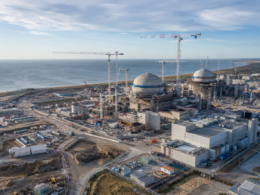
The contract will be serviced from Moxie Power’s 1,200 MW coal-based power plant in Tuticorin, Tamil Nadu, where both units are now tied up under power supply agreements. Adani Power stated that it emerged as the lowest bidder in a competitive tender by quoting a tariff of ₹5.91 per unit, securing offtake for the majority of the plant’s remaining uncontracted capacity.
Why the 558 MW Tamil Nadu power purchase agreement materially alters Adani Power’s risk profile
The strategic importance of the new agreement lies less in incremental megawatts and more in incremental certainty. With over 95 percent of Adani Power Limited’s operating capacity now covered under medium- to long-term PPAs, the company has substantially de-risked earnings from merchant power price fluctuations, which have historically introduced volatility into thermal power valuations.
For capital-intensive generators, predictable offtake translates directly into improved cash flow planning, smoother debt servicing, and stronger negotiating leverage with lenders. In an environment where interest rate sensitivity and balance-sheet resilience remain under scrutiny, incremental contract coverage carries disproportionate strategic weight.
The five-year tenure also bridges an important gap between short-term spot exposure and ultra-long PPAs, allowing Adani Power to maintain operational flexibility while still anchoring revenue streams.
How competitive tariff discovery reflects operating discipline rather than pricing aggression
Winning the Tamil Nadu tender at ₹5.91 per unit suggests a calibrated bidding strategy rather than a race to the bottom. In recent years, overly aggressive tariffs have strained margins for several thermal generators as fuel costs, logistics, and regulatory compliance expenses fluctuated.
Adani Power’s ability to price competitively without materially undercutting sector economics points to confidence in plant efficiency, coal sourcing arrangements, and operating cost controls at the Tuticorin facility. It also indicates that the company is prioritising sustainable utilisation over headline capacity wins that could erode returns.
This approach aligns with a broader shift among private power producers toward disciplined bidding, particularly in states where distribution companies are increasingly price-sensitive but still demand reliability.
What the agreement means for Tamil Nadu’s grid stability and procurement strategy
From the buyer’s perspective, the additional 558 MW strengthens Tamil Nadu Power Distribution Corporation Limited’s ability to manage peak demand and industrial load requirements without relying excessively on short-term market purchases. Long-term contracted supply reduces procurement uncertainty and supports grid stability, especially in a state with a large manufacturing base and rising electricity consumption.
By securing power at a known tariff, the distribution utility can also better plan subsidy requirements and tariff structures for end consumers. This reinforces the continued relevance of medium-term PPAs even as renewable penetration increases.
Why thermal power continues to attract PPAs despite India’s energy transition goals
The Tamil Nadu award highlights a structural reality of India’s power transition: renewable energy alone cannot yet deliver consistent base-load reliability. Coal-based plants remain essential for balancing intermittent generation and meeting industrial demand, particularly during peak hours.
As a result, well-located, efficient thermal assets with established infrastructure continue to attract contracts from state utilities. For Adani Power Limited, maintaining high utilisation across its thermal fleet ensures that legacy assets remain economically productive even as the energy mix evolves.
This dynamic helps explain why PPAs for thermal capacity are still being signed, despite long-term decarbonisation targets.
How Adani Power’s contract coverage stacks up against rivals
Relative to peers, Adani Power’s near-full PPA coverage places it toward the more defensive end of the thermal power spectrum. NTPC Limited, while benefiting from sovereign backing and long-dated contracts, carries significantly larger absolute exposure and policy-linked constraints. Tata Power Company Limited has diversified aggressively into renewables and distribution, reducing dependence on coal but also diluting pure generation economics.
JSW Energy Limited, meanwhile, maintains a mixed portfolio with selective merchant exposure that can enhance upside during favourable cycles but introduces volatility during downturns.
Against this backdrop, Adani Power’s strategy emphasises steady utilisation and earnings visibility rather than optionality. This positioning may not maximise upside during power price spikes, but it offers more predictable compounding over time.
Why the stock reaction remains muted despite strategic progress
Despite the announcement, Adani Power Limited’s shares traded marginally lower in early dealings, reflecting broader market caution rather than company-specific deterioration. The stock remains below its recent 52-week high, suggesting that investors are currently more focused on valuation multiples, sector rotation, and near-term earnings visibility.
However, longer-term performance metrics tell a different story. Over three- and five-year horizons, the stock has delivered substantial absolute returns, significantly outperforming broader indices. This divergence highlights a common market pattern: incremental improvements in risk profile and cash flow stability often take time to be reflected in price.
For institutional investors, contract coverage ratios and earnings resilience typically matter more than daily price movement, particularly in infrastructure-heavy sectors.
Why full PPA tie-up matters more than capacity expansion right now
Adani Power Limited’s emphasis on securing offtake for existing assets is strategically sound. In the current environment, incremental capacity additions without assured offtake risk creating stranded or under-utilised assets.
By contrast, moving toward near-100 percent PPA coverage reduces downside risk, improves return predictability, and supports balance-sheet discipline. This strategy also positions the company to weather regulatory changes, fuel price volatility, and demand fluctuations more effectively than peers with higher merchant exposure.
Over time, such stability can support a lower risk premium and more consistent investor interest, even if near-term sentiment remains cautious.
What happens next as Adani Power approaches full contract coverage
With most operating capacity now tied up, the next phase of Adani Power Limited’s strategy will likely focus on optimising plant performance, managing fuel sourcing efficiency, and selectively pursuing new contracts where risk-adjusted returns are attractive.
The company has articulated an ambition to achieve nearly 100 percent PPA coverage across operational and under-commissioning assets. If executed successfully, this would further insulate earnings and reinforce the company’s positioning as a steady cash-flow generator within India’s power sector.
Key takeaways: What Adani Power’s Tamil Nadu PPA means for investors and the power sector
- Adani Power Limited has secured a five-year, 558 MW power purchase agreement starting April 2026 through Moxie Power Generation Limited
- The agreement lifts PPA coverage to over 95 percent of operating capacity, enhancing revenue visibility
- Competitive tariff discovery reflects operational discipline rather than aggressive pricing risk
- Tamil Nadu Power Distribution Corporation Limited gains dependable base-load supply and improved grid planning certainty
- The deal underscores the continued role of thermal power in supporting grid stability during energy transition
- Near-term stock movement appears disconnected from long-term cash flow fundamentals
- Peer comparison shows Adani Power favouring stability over merchant-driven upside
- High contract coverage reduces exposure to power price volatility and earnings swings
- Full PPA tie-up strengthens balance-sheet resilience and long-term investor confidence
Discover more from Business-News-Today.com
Subscribe to get the latest posts sent to your email.