



How is Saudi-based ACWA Power accelerating Kazakhstan’s renewable energy goals with its first $1.5B wind and battery project?
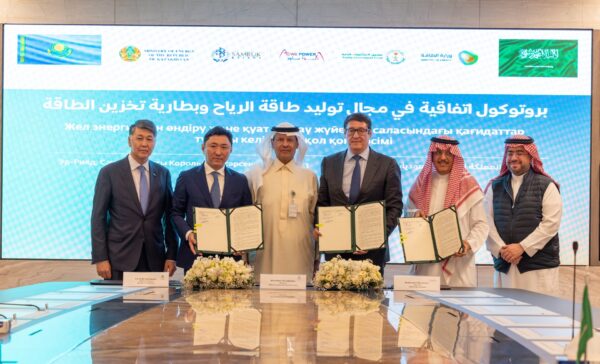
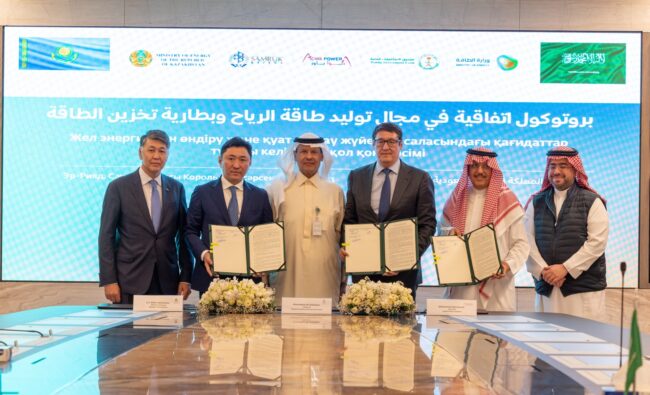
Saudi Arabian utility-scale energy developer ACWA Power has announced a landmark agreement with the Ministry of Energy of the Republic of Kazakhstan and sovereign wealth fund Samruk-Kazyna to develop a 1GW wind power and battery energy storage facility in Kazakhstan. Valued at $1.5 billion, the project represents the largest Saudi investment in Kazakhstan’s energy sector to date and marks the entry of ACWA Power into the Central Asian country’s power market.
The announcement was made public following a formal signing ceremony that underscores Saudi Arabia’s growing presence in global clean energy development. With the planned project expected to be completed by 2027, it is being positioned as a foundational pillar in Kazakhstan’s long-term decarbonization and renewable energy roadmap.
What makes this ACWA Power project a strategic milestone in Central Asia’s clean energy shift?
The 1GW wind and battery energy storage system (BESS) facility is expected to directly support Kazakhstan’s national strategy to generate 50% of its energy mix from alternative and green sources by 2050. By providing clean baseload capacity from wind power and grid stability via battery storage, the project will serve as a key mechanism for transitioning away from the fossil-fuel-heavy electricity mix currently dominating Kazakhstan’s grid.
Kazakhstan, one of the largest economies in Central Asia and a major coal consumer, has publicly committed to increasing its share of renewables through its “Kazakhstan 2050 Strategy,” a government-backed framework that prioritizes sustainability, energy diversification, and carbon emission reductions.
ACWA Power’s entry, via this project, brings both foreign capital and technical expertise to Kazakhstan’s evolving energy landscape. The Saudi developer is globally recognized for its high-efficiency utility-scale renewable projects, including hybrid installations that integrate solar, wind, hydrogen, and battery storage components across Asia, Africa, and the Middle East.
Why is Kazakhstan attracting large-scale foreign investment in renewables?
Kazakhstan’s geography and energy potential have long made it a promising location for wind and solar energy development. According to data from the International Renewable Energy Agency (IRENA), Kazakhstan has more than 760,000 square kilometers of territory with high wind potential. However, much of the country’s electricity generation still relies on aging thermal power plants powered by coal, which not only produce high emissions but also strain domestic air quality.
The government, through partnerships with entities such as Samruk-Kazyna, is actively promoting foreign investment in renewables as a means to diversify the economy and enhance national energy security. Samruk-Kazyna, Kazakhstan’s sovereign wealth fund established through the merger of Samruk and Kazyna in 2008, holds equity in major state-owned enterprises across the energy, transportation, and industrial sectors. It plays a critical role in facilitating foreign-backed infrastructure projects, including clean energy.
By involving ACWA Power—an international developer with deep experience in renewable deployment across the Global South—Kazakhstan is signaling its intention to scale up clean energy projects while tapping into sovereign-to-sovereign partnerships to de-risk investments.
What are the key features of the ACWA Power–Kazakhstan wind and battery project?
While the detailed design and procurement phases are yet to be finalized, ACWA Power has confirmed that the facility will consist of 1GW of installed wind capacity coupled with an advanced battery energy storage system. The combined setup is designed to deliver both renewable energy generation and grid flexibility—a critical need in countries transitioning away from centralized fossil fuel-based power.
Battery storage will allow the Kazakh power grid to stabilize intermittent generation from wind turbines, especially during low-demand or peak-wind periods, thereby increasing the reliability and dispatchability of renewable power. The project is expected to have significant positive environmental impacts by offsetting carbon emissions from coal and gas plants.
Given ACWA Power’s history of executing complex energy projects across emerging markets, the wind-plus-storage project is anticipated to be bankable and attractive to international financiers. According to institutional sentiment in early 2023, there is growing interest among climate-focused funds and development finance institutions (DFIs) in supporting infrastructure that delivers both decarbonization and grid resilience in Central Asia.
How does this deal align with ACWA Power’s broader renewable energy ambitions?
The Kazakhstan announcement comes on the heels of several new international agreements secured by ACWA Power in Central Asia and the Caucasus. In February 2023, the Saudi developer signed four separate renewable energy agreements in the Republic of Azerbaijan, further cementing its role as a regional clean energy player.
Just weeks earlier, ACWA Power had unveiled plans to develop the $2.4 billion Kungrad wind farm in Uzbekistan—a project expected to be among the largest onshore wind facilities in the region. These deals demonstrate a consistent push by the Saudi enterprise to diversify its geographic footprint while leveraging its expertise in large-scale renewables, desalination, and storage infrastructure.
ACWA Power’s growing presence in Central Asia also aligns with Saudi Arabia’s Vision 2030 plan, which emphasizes international investment, green economy leadership, and regional cooperation in climate and energy sectors. By positioning itself as a bridge between Middle Eastern capital and Central Asian clean energy potential, ACWA Power is creating new diplomatic and commercial pathways for Saudi-backed infrastructure development.
What has ACWA Power leadership said about the Kazakhstan partnership?
Mohammad Abunayyan, Chairman of ACWA Power, emphasized the strategic significance of the project and reaffirmed the company’s commitment to supporting global energy transitions through public-private partnerships.
“The signing today once again exemplifies our commitment to partnering nations in their diversification endeavours and enabling sustainable progress,” Abunayyan stated during the March 4 ceremony. “Public private partnerships are indeed key to facilitating the energy transition reliably and responsibly. And given the Republic’s values and emphasis surrounding decarbonization, we are delighted to expand our operations into the Kazakhstani market and support its government in reaching essential renewable energy targets.”
These comments underscore the role of sovereign and institutional collaboration in scaling complex energy projects, especially in developing economies where policy alignment and regulatory clarity are still evolving.
What lies ahead for Kazakhstan’s 2050 Strategy and foreign-led clean energy investments?
With a growing number of foreign developers entering the Kazakh market and increased support from multilateral financial institutions, Kazakhstan’s 2050 Strategy appears to be gaining international momentum. However, successful execution will depend on addressing grid integration challenges, improving regulatory transparency, and expanding access to concessional finance.
The involvement of experienced developers such as ACWA Power adds credibility and execution capacity to Kazakhstan’s renewable roadmap. The project also offers a regional model for how sovereign partnerships can co-develop decarbonization infrastructure in landlocked, fossil-reliant nations seeking a green energy future.
Can ACWA Power’s Kazakhstan entry reshape renewable development across Central Asia?
ACWA Power’s $1.5 billion wind and battery investment in Kazakhstan is not just a singular project—it signals a deepening strategic partnership between Saudi capital and Central Asia’s clean energy transition. As Kazakhstan advances its 2050 energy goals, this 1GW project could become a blueprint for future renewable development across the region, blending economic diversification with sustainable infrastructure.
With execution slated through 2027, all eyes will be on how this Saudi-backed project unfolds in Kazakhstan’s rapidly evolving energy sector.
Discover more from Business-News-Today.com
Subscribe to get the latest posts sent to your email.