How does the financial close of ACWA Power, SEC, and KEPCO’s projects fit into Saudi Arabia’s Vision 2030 energy transformation?
ACWA Power, Saudi Electricity Company (SEC), and Korea Electric Power Corporation (KEPCO) have achieved financial close on two large-scale independent power producer (IPP) projects—Rumah 1 and Nairyah 1—marking one of Saudi Arabia’s most significant power investments in recent years. Together, the projects represent 3,600 megawatts (MW) of new capacity and SAR 15 billion (USD 4 billion) in total investment.
The plants will be developed under the project companies Remal Energy Company and Naseem Energy Company, each owned by ACWA Power (35%), Saudi Electricity Company (35%), and Korea Electric Power Corporation (30%). The Saudi Power Procurement Company has been designated as the principal buyer, responsible for both tendering and power offtake, providing an essential layer of security for project financing.
These projects align directly with Saudi Arabia’s Vision 2030, which aims to diversify the Kingdom’s energy mix, strengthen local content, and reinforce reliability of supply. Importantly, the plants are designed with the future integration of carbon capture technology, positioning them as transitional assets in the path toward the Kingdom’s target of net zero by 2060.
What are the financing details of the Rumah 1 and Nairyah 1 projects, and which institutions are backing them?
The financing package was secured from a syndicate of local, regional, and international lenders. These included the Export-Import Bank of Korea (KEXIM), Saudi National Bank, Saudi Investment Bank, Banque Saudi Fransi, Standard Chartered Bank, Bank of China, Agricultural Bank of China, Industrial and Commercial Bank of China, and Arab Petroleum Investments Corporation.
The presence of export credit agency financing underscores the cross-border strategic importance of these projects. With Korea Electric Power Corporation holding 30% ownership, the involvement of KEXIM provides risk comfort for international banks and validates the long-term stability of the project. Analysts noted that the lender diversity demonstrates strong investor confidence not only in ACWA Power’s credibility but also in Saudi Arabia’s sovereign energy agenda.
How will the design of these combined cycle gas turbine plants support Saudi Arabia’s energy security and carbon neutrality targets?
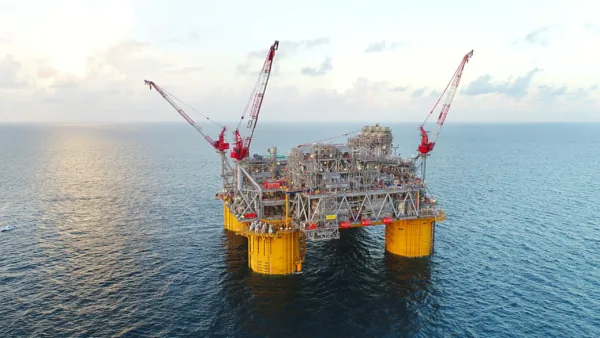
Both Rumah 1 and Nairyah 1 are being developed as combined cycle gas turbine (CCGT) power plants, with each contributing 1,800 MW of capacity. The Rumah 1 project, located in Riyadh Province, will be developed through Remal Energy Company at an estimated investment of SAR 7.5 billion (USD 2 billion). Meanwhile, Nairyah 1 in the Eastern Province will be developed through Naseem Energy Company with a similar investment profile.
CCGT plants are favored for their efficiency, producing lower emissions per megawatt-hour than conventional thermal plants. By integrating provisions for carbon capture retrofitting, the projects are future-proofed for the Kingdom’s net-zero roadmap. This aligns with ACWA Power’s own pledge of achieving net-zero operations by 2050.
Analysts emphasized that the dual benefits of immediate reliability and future decarbonization potential make these plants attractive to both policymakers and investors, bridging the gap between current energy needs and long-term climate goals.
What does institutional sentiment suggest about ACWA Power’s leadership in energy infrastructure and its investor positioning?
ACWA Power, which is listed on the Saudi Exchange (TADAWUL: 2082), has been expanding its role as one of the Kingdom’s flagship developers of power and water infrastructure. Institutional investors have generally regarded the successful closure of this financing round as a positive signal of the firm’s ability to navigate complex, capital-intensive projects while maintaining global partnerships.
The sentiment around ACWA Power’s stock has been moderately bullish, reflecting confidence in its ability to deliver on Saudi Arabia’s Vision 2030 infrastructure demands. Recent trading activity suggests that institutional flows remain supportive, with foreign investors increasing exposure to ACWA Power’s shares on expectations of recurring revenue streams from long-term power purchase agreements.
Market watchers noted that the company’s ability to attract both Chinese and Korean financing institutions further strengthens its international credibility, reducing reliance on domestic lenders and diversifying its financial base.
How does Saudi Electricity Company’s role reinforce the strategic significance of these projects?
Saudi Electricity Company, which also holds a 35% stake, will play a pivotal role not only as an equity partner but also through its subsidiary Energy Infrastructure Consortium Company (EICC). The acting CEO of EICC remarked that the projects go beyond adding capacity—they represent a milestone in sustainable power delivery and international collaboration.
Institutional observers suggested that SEC’s involvement ensures operational resilience, as it brings deep local expertise in grid management and national distribution. This provides added confidence for project stability, mitigating risks tied to project execution and integration into Saudi Arabia’s grid.
How does KEPCO’s participation and export credit backing reflect broader international energy collaboration?
Korea Electric Power Corporation’s participation at 30% equity and the involvement of KEXIM reflects South Korea’s continued strategic engagement with Middle Eastern energy markets. Analysts described KEPCO’s role as an indicator of how Asian utilities and financial institutions are actively seeking exposure to the Gulf’s energy transition, recognizing the region’s long-term infrastructure stability and state-backed guarantees.
By securing Korean export credit support, ACWA Power and SEC have effectively attracted international risk-sharing into Saudi Arabia’s energy build-out. This dynamic is expected to set a precedent for future projects, where international partners co-invest not only for returns but also for strategic alignment with global decarbonization goals.
What is the broader outlook for Saudi Arabia’s gas-fired power and its integration with renewable and carbon capture strategies?
While Saudi Arabia has been investing heavily in renewable energy such as solar and wind, gas-fired power remains a cornerstone for maintaining grid reliability and baseload capacity. The 3,600 MW contribution from Rumah 1 and Nairyah 1 will ensure sufficient supply during peak demand seasons, particularly in Riyadh and the Eastern Province, both high-demand regions.
Looking ahead, the incorporation of carbon capture readiness within these plants indicates a dual-path strategy: meeting immediate demand while enabling future decarbonization. Institutional investors have described this as a pragmatic approach, balancing energy security with climate commitments.
The projects are also seen as a model for integrating local supply chains, boosting employment, and aligning with Vision 2030’s industrial diversification agenda. Analysts expect further tenders for IPPs to adopt similar structures, with multi-partner ownership, international lender syndicates, and embedded carbon-neutrality options.
Discover more from Business-News-Today.com
Subscribe to get the latest posts sent to your email.