



The Aberdeen Hydrogen Hub is a large-scale renewable hydrogen production and distribution project located in Aberdeen, Scotland. It is among the first projects in the United Kingdom designed to produce green hydrogen at commercial scale using electricity from a dedicated solar power plant. With construction starting in 2024 and operations expected in late 2026, the hub is positioned as a critical infrastructure project for decarbonising public transport, enabling low-emission logistics, and eventually supporting broader export and industrial applications.
This hydrogen production facility is being developed through a joint venture between BP Aberdeen Hydrogen Energy Limited and Aberdeen City Council. The initial phase of the project is projected to generate approximately 800 kilograms of green hydrogen per day, which equates to roughly 300 tonnes annually. That output will be sufficient to fuel around 25 buses and an equivalent number of fleet vehicles daily. However, the hub is not a static installation. It is explicitly designed to scale in phases to accommodate growing demand across rail, maritime, and building heat sectors, with future potential for cross-border hydrogen export.
The project is not only one of the United Kingdom’s most advanced hydrogen infrastructure ventures but also represents a broader strategic pivot for Aberdeen. Historically known as Europe’s oil and gas capital, the city is now repurposing its industrial legacy to lead in renewable hydrogen deployment. The hub’s integration of clean power generation, municipal decarbonisation goals, and long-term infrastructure planning makes it one of the most closely watched clean energy initiatives in the region.
How is the Aberdeen Hydrogen Hub structured across its three-phase deployment strategy?
The Aberdeen Hydrogen Hub is being rolled out through a structured, multi-phase development roadmap designed to manage technical risk, build market confidence, and align infrastructure buildout with real-world demand. In the first phase, the project will focus on public and municipal transport applications. Hydrogen produced on site will be used to power buses, refuse trucks, and city fleet vehicles. These applications are well aligned with Aberdeen’s existing hydrogen vehicle fleet and refueling infrastructure, which has been in operation since early pilot projects funded under the European Union’s Interreg and JIVE programs.
The second phase of the project will expand hydrogen availability to the rail and maritime sectors. This phase will leverage Aberdeen’s existing port infrastructure and transportation corridors, positioning the city as a regional hub for hydrogen-powered logistics and mobility. Local officials have indicated that potential partners in the rail freight and shipping industries have already been identified for strategic engagement.
The third and final phase of the development will scale hydrogen production to meet the needs of building heating systems and industrial off-takers, with export readiness built into the system design. The long-term ambition is to integrate Aberdeen into emerging hydrogen corridors across the North Sea, where nations such as Germany and the Netherlands are expected to import large volumes of clean hydrogen as part of their energy diversification strategies. This export angle could help future-proof the economics of the hub by aligning it with international demand growth.
This phase-driven approach allows the Aberdeen Hydrogen Hub to start with high-certainty use cases while building out the underlying infrastructure and stakeholder confidence required for long-term market sustainability.
Which companies have been awarded key contracts to deliver the hydrogen and solar infrastructure?
The Aberdeen Hydrogen Hub has entered the execution phase with a wide array of contract awards that span hydrogen technology integration, civil construction, project management, and renewable energy development. These awards reflect a deliberate strategy to localise supply chains and stimulate green job creation within Aberdeen and the surrounding region.
Hydrasun, a hydrogen systems integrator based in Aberdeen and a subsidiary of D2Zero, has been awarded the core hydrogen technology package. Hydrasun is responsible for designing and integrating the high-capacity hydrogen refueling station and associated safety systems. The contract is expected to generate approximately 40 new engineering and construction jobs in the city, making it one of the region’s most significant green employment generators.
Robertson Civil Engineering has been engaged to deliver the civil works necessary for the hub, including foundations, trenching, and site preparation. FES Group has been awarded the electrical systems contract, covering internal power routing, grid interconnection, and safety-critical electrical installations. AECOM is serving as the project’s principal designer and owner’s engineer, ensuring engineering quality and design compliance throughout the project’s lifecycle. Turner and Townsend has taken the lead on cost management, programme control, and overall project services.
In addition to these primary delivery partners, Hydrasun has subcontracted several global suppliers for specialised hydrogen equipment. Nel Hydrogen US has been contracted to supply a 2.5-megawatt containerised proton exchange membrane (PEM) electrolyser, which will serve as the core production unit. Maximator will deliver the compression technology required to manage high-pressure hydrogen storage and dispensing. Chesterfield Specialist Cylinders, a subsidiary of Pressure Technologies, has been awarded the contract to supply high-pressure hydrogen storage vessels that will act as buffer tanks for the on-site refueling system.
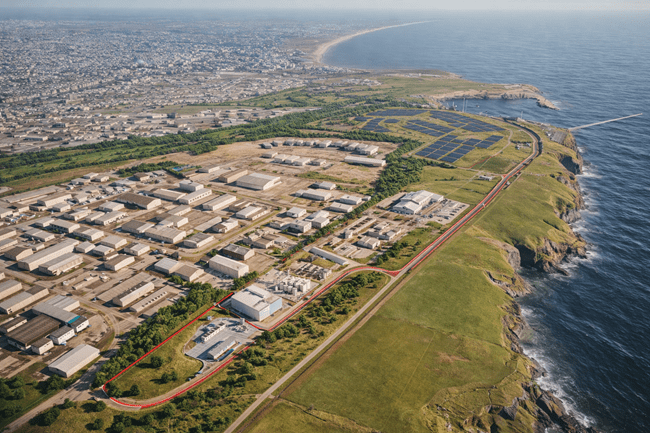
The renewable energy component of the project is equally important. The hydrogen facility will be powered by a dedicated 8-megawatt solar photovoltaic plant situated on the former Ness landfill site. The solar PV design, build, and maintenance contract was awarded to Absolute Solar and Wind Limited for £6.3 million. In parallel, RSK Renewables, part of the RSK Group, has been contracted to provide engineering, procurement, construction, commissioning, and long-term operations and maintenance services for the solar plant. This dual contractor model for the solar infrastructure provides both equipment-focused delivery and site-specific engineering oversight.
Collectively, these contract awards not only reflect the complexity of the Aberdeen Hydrogen Hub’s infrastructure but also demonstrate how renewable hydrogen ecosystems require tightly coordinated multi-vendor collaboration.
How does the Aberdeen Hydrogen Hub fit into Scotland’s long-term decarbonisation agenda?
The Aberdeen Hydrogen Hub is a core pillar of the Scottish Government’s Hydrogen Action Plan, which targets five gigawatts of renewable and low-carbon hydrogen production capacity by 2030. It is one of several regional hydrogen initiatives being developed across Scotland, including in the Highlands, Fife, and Cromarty. However, Aberdeen stands apart due to its pre-existing energy infrastructure, skilled workforce, and municipal leadership in alternative fuels.
Aberdeen City Council has been a first mover in deploying hydrogen transport infrastructure and is one of the few local authorities in Europe operating a full hydrogen bus fleet. The council also owns and operates hydrogen refueling infrastructure and has implemented hydrogen-ready planning frameworks that allow for accelerated permitting of new energy projects.
The decision to build the solar-powered hydrogen production facility on a reclaimed landfill site adds another layer of policy alignment. It speaks directly to Scotland’s emphasis on brownfield redevelopment, energy justice, and land-use circularity. By transforming an old industrial waste site into a cutting-edge clean energy hub, the city is aligning infrastructure development with sustainability and regeneration objectives.
Additionally, the hub is expected to stimulate long-term investment in hydrogen training and certification programmes through partnerships with local academic institutions and technical colleges. This creates a knowledge pipeline that supports both project delivery and broader sector development.
What are the long-term implications for investors and policymakers watching green hydrogen scalability?
The Aberdeen Hydrogen Hub provides a working model for how municipal authorities, global energy companies, and local contractors can jointly deliver commercially scalable hydrogen infrastructure. For institutional investors considering exposure to clean hydrogen assets, the project demonstrates how public-private partnerships can mitigate early-stage offtake risk through targeted deployment in transport and municipal fleets.
For manufacturers of fuel cell vehicles, compression equipment, and electrolyser technology, the hub provides a long-horizon deployment roadmap that creates predictable market signals. The early involvement of Nel Hydrogen, Maximator, and Chesterfield Specialist Cylinders suggests that original equipment manufacturers are willing to commit to UK-based projects when execution risk is credibly addressed through multilateral contracting.
From a policy perspective, the Aberdeen Hydrogen Hub offers a test case for how regional hydrogen markets can be jump-started ahead of national subsidy reform or contract-for-difference mechanisms. With hydrogen pricing and regulatory frameworks still in flux across the United Kingdom, this project may offer a blueprint for other cities looking to avoid delay by leveraging municipal land, demand aggregation, and fleet electrification mandates.
Finally, for the broader hydrogen sector, the Aberdeen model highlights the importance of integrating power generation and hydrogen production at the project design stage. By tying the electrolyser directly to a solar photovoltaic facility located on an adjacent landfill, the project is not only emissions-free but resilient to electricity price volatility, a key advantage as global clean power prices fluctuate.
A former oil capital’s quiet hydrogen reinvention offers a roadmap for energy transition
The Aberdeen Hydrogen Hub is more than a single infrastructure project. It is a demonstration of how traditional energy cities can rewire themselves for net-zero without sacrificing economic relevance. Aberdeen is not simply piloting hydrogen; it is embedding it into its transportation systems, utility corridors, workforce development plans, and industrial future.
If successful, the hub could serve as a replicable model for hundreds of mid-sized cities across the United Kingdom and Europe. Its approach, which is anchored in phased scalability, renewable integration, and supply chain localisation, offers a grounded path forward for green hydrogen at a time when much of the sector still depends on hypothetical demand forecasts and speculative export markets.
For now, Aberdeen’s £40 million hydrogen pivot stands as one of the most credible examples of clean energy transition by a city built on fossil fuels. As hydrogen gains momentum across Europe and the Middle East, it may be Aberdeen, not only the offshore rigs of the past, that defines the next chapter in clean industrial power.
Key takeaways from the Aberdeen Hydrogen Hub project and its strategic implications
- The Aberdeen Hydrogen Hub is one of the United Kingdom’s first scalable green hydrogen facilities, designed to support transport, heat, and export applications in phases.
- The project is being developed through a joint venture between BP Aberdeen Hydrogen Energy Limited and Aberdeen City Council, with first-phase operations targeted for 2025.
- Phase 1 will produce approximately 800 kilograms of green hydrogen per day using a 2.5 megawatt PEM electrolyser powered by an 8 megawatt solar photovoltaic plant.
- Key contracts have been awarded to Hydrasun (hydrogen systems integration), Nel Hydrogen US (electrolyser), Maximator (compression), and Chesterfield Cylinders (storage), alongside civil and electrical works by Robertson Civil Engineering, FES Group, and project services by AECOM and Turner and Townsend.
- Absolute Solar and Wind Limited and RSK Renewables are delivering the solar infrastructure on the former Ness landfill site, creating one of the UK’s first landfill-to-solar-hydrogen integrations.
- The hub is being developed in three phases, expanding from municipal and public fleet hydrogen use to rail, maritime, building heat, and long-term export.
- The project is supported by local and national government funding but operates without long-term subsidies, providing a real-world model for hydrogen project financing in a developing policy environment.
- Aberdeen’s pivot from oil and gas to clean hydrogen offers a replicable model for energy transition in industrial cities with legacy infrastructure and workforce readiness.
- Investors, policymakers, and OEMs view the project as a working testbed for scalable hydrogen logistics and regional decarbonisation strategies.
Discover more from Business-News-Today.com
Subscribe to get the latest posts sent to your email.