




Why does Mitsubishi’s $600 million joint venture with Hudbay matter for Arizona’s copper future and U.S. supply chains?
Hudbay Minerals Inc. (NYSE: HBM; TSX: HBM) has entered into a landmark joint venture agreement with Mitsubishi Corporation, one of Japan’s largest trading houses, to accelerate development of its Copper World project in Arizona. Under the deal, Mitsubishi will acquire a 30 percent interest in the project by investing $600 million. The financing will be split into $420 million at closing and an additional $180 million within 18 months, significantly reducing Hudbay’s capital burden and improving project economics.
The Copper World complex, located in Pima County, is expected to produce about 85,000 tonnes of copper annually for over two decades. The investment also enhances Hudbay’s financing flexibility by cutting its outstanding capital requirement to approximately $200 million. The agreement, which also integrates a revised precious metals streaming deal with Wheaton Precious Metals, is expected to lift the project’s levered internal rate of return (IRR) to about 90 percent—an unusually high figure in today’s mining sector.
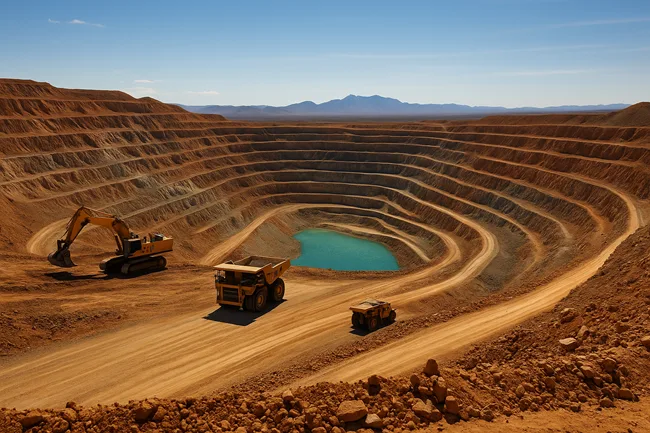
Analysts said the move highlights a growing trend of Japanese trading conglomerates securing long-term access to critical minerals, particularly copper, which is essential for electrification, renewable energy projects, and electric vehicles. For Hudbay, the partnership not only validates Copper World’s scale but also adds a global marketing and financing partner at a time when institutional investors are prioritizing projects with clear supply-chain resilience benefits.
How does the Copper World joint venture with Mitsubishi reshape the project’s financing and return profile?
Before Mitsubishi’s commitment, Hudbay faced significant capital requirements to bring Copper World into production. With $600 million in backing, the Canadian miner now needs to fund only about $200 million from its own resources or future financing. This significantly de-risks the development timeline.
Copper World is planned as a multi-phase project with initial production set to commence once permits and construction are finalized. The 85,000 tonnes of copper output annually over a minimum 20-year mine life positions it as one of the most significant U.S.-based copper projects in development. Hudbay expects the enhanced capital structure to generate robust returns even in conservative copper price scenarios, while Mitsubishi’s involvement provides downstream security for Japanese buyers.
The revised precious metals streaming deal with Wheaton Precious Metals adds another financial lever, offering upfront payments in exchange for a portion of future gold and silver output. This layered financing approach strengthens project economics and reduces dependency on traditional debt.
What are the expected economic, employment, and supply-chain impacts of the Copper World project in Arizona?
Beyond corporate balance sheets, the Copper World development is projected to deliver substantial regional and national benefits. Hudbay has estimated that the project will create more than 1,000 construction jobs during the build-out phase and about 400 direct permanent positions once operations commence.
At the supply-chain level, Copper World supports U.S. efforts to secure domestic sources of copper, reducing reliance on imports from South America and Asia. Given the U.S. Department of Energy’s designation of copper as critical to the clean energy transition, the project aligns with policy objectives around energy independence and grid modernization.
Local economic multipliers include procurement of services, tax contributions, and community development funding. Institutional investors noted that the partnership also enhances social license by bringing in a Japanese partner with a track record of working in regulated markets.
Why is copper demand expected to rise, and how does this project position Hudbay and Mitsubishi for growth?
Copper demand is expected to accelerate over the next decade, driven by global electrification trends. Applications range from solar panels and wind turbines to EV batteries and charging infrastructure. Market data shows copper prices have remained resilient, supported by supply concerns and long-term demand projections.
By committing capital to Copper World, Mitsubishi Corporation signals confidence in copper’s role as a structural growth commodity. Analysts observed that Japanese trading houses have intensified investments in battery metals and copper as part of Japan’s broader energy security strategy. Hudbay, meanwhile, secures a stable partner with global marketing channels that can open doors to Asian buyers and long-term offtake arrangements.
How have institutional investors and market participants responded to the joint venture announcement?
Investor sentiment has been broadly positive. Hudbay’s shares saw upward momentum following the announcement, reflecting relief over reduced financing risk and enthusiasm for the strengthened project economics. Institutional investors commented indirectly that the IRR boost to around 90 percent is highly attractive, especially against the backdrop of rising capital costs in mining.
For Mitsubishi, the deal reinforces its positioning in the global critical minerals market. Market observers interpreted the transaction as part of a strategic portfolio that also includes investments in lithium, nickel, and other energy transition metals. The timing of the deal, amid copper market tightness, suggests both companies are seeking to lock in strategic advantages before new supply comes online globally.
What are the regulatory, environmental, and community considerations that could affect Copper World’s development timeline?
Despite the financial boost, Copper World still faces a complex permitting and regulatory pathway in Arizona. Mining projects in the state are subject to scrutiny over water use, environmental protection, and community impact. Hudbay has previously faced opposition to aspects of its plans, making engagement with stakeholders a key factor in the project’s advancement.
Analysts emphasized that while financing risk has been reduced, permitting remains a critical challenge. Institutional investors are expected to closely monitor updates on environmental impact assessments, federal approvals, and local community agreements. Success in these areas will determine whether Copper World can stay on track for its intended development schedule.
What does this joint venture reveal about Japanese trading houses’ strategy in securing long-term mineral supply?
The Copper World transaction reflects a broader pattern of Japanese sogo shosha (general trading companies) deepening their involvement in resource projects worldwide. Mitsubishi, Mitsui, and Sumitomo have all expanded stakes in energy transition metals to safeguard Japan’s industrial future.
Analysts suggested that Japan’s heavy reliance on imports of critical minerals makes long-term partnerships with miners like Hudbay essential. Copper World gives Mitsubishi not only equity ownership but also strategic influence over supply flows to Japanese industries, particularly in electronics, automotive, and renewable energy equipment manufacturing.
What is the long-term outlook for Hudbay and Mitsubishi following the Copper World investment?
Looking ahead, Hudbay is positioned to fast-track development and potentially expand Copper World’s scope with additional phases. The partnership may also enhance Hudbay’s ability to pursue further U.S. growth opportunities as institutional investors gain confidence in its capital discipline.
For Mitsubishi, Copper World is one part of a diversified portfolio of energy transition investments. Analysts believe the company will continue targeting stable, long-life projects in politically secure jurisdictions. Both firms are aligned with macro trends that forecast strong copper demand through 2040, underpinned by decarbonization and electrification initiatives worldwide.
Discover more from Business-News-Today.com
Subscribe to get the latest posts sent to your email.