





Camptotheca acuminata, commonly called the “cancer tree,” is an important botanical source in the field of anti-cancer drug discovery. Native to China and Tibet, this tree produces a powerful compound known as camptothecin, which has attracted the attention of cancer researchers and pharmaceutical developers for its ability to inhibit DNA replication in tumor cells. With its identification and initial screening by the U.S. National Institutes of Health, camptothecin has served as a chemical blueprint for some of the most effective anti-cancer drugs used today, including irinotecan and topotecan. The journey of this plant—from its origins in traditional medicine to its role in modern oncology—underscores the significant therapeutic value that nature continues to offer in combating some of the most aggressive forms of cancer.
What is the camptotheca plant and why is it called the cancer tree in medical research?
Camptotheca acuminata belongs to the Nyssaceae family and is found primarily in subtropical regions of East Asia, particularly China and Tibet. The plant is deciduous, featuring dark green leaves and red-colored flowers, and it thrives in shaded or drought-prone environments. In these stressed conditions, the plant increases its production of alkaloids, a class of naturally occurring compounds with bioactive properties. Its dried stem wood is the primary source of its therapeutic chemicals. Known colloquially as the “cancer tree,” this name was given not merely as folklore but because of its proven potential to slow down or halt the progression of cancer at the cellular level.
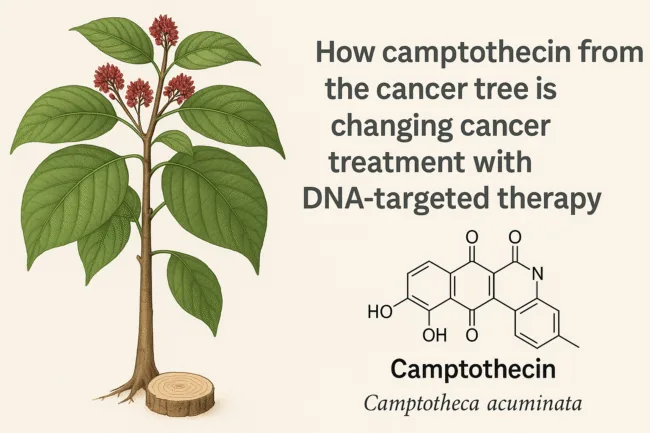
The connection between Camptotheca and cancer treatment stems from the discovery of camptothecin, a compound that demonstrated strong anti-tumor activity. When tested in early screenings by the National Cancer Institute, camptothecin showed the ability to inhibit cell division by targeting the DNA replication process. This earned the plant a central role in ongoing cancer drug development and prompted further exploration into how its chemical components could be optimized for clinical use.
What specific chemicals are found in camptotheca acuminata that make it useful in cancer treatment?
Camptotheca acuminata contains several important bioactive compounds, the most prominent being camptothecin, a type of quinoline alkaloid. Camptothecin has two notable derivatives: 10-hydroxycamptothecin and 10-methoxycamptothecin, which have shown promise in enhancing or modifying the original compound’s therapeutic effects. These derivatives have helped improve the efficacy, solubility, and pharmacokinetic behavior of camptothecin in the body.
At its core, camptothecin functions by interacting directly with DNA-processing enzymes in human cells, particularly topoisomerase I. This interaction has a profound effect on cell division and replication. Since cancer cells divide uncontrollably, disrupting their ability to replicate DNA selectively halts their progression. In this way, the chemicals found in Camptotheca acuminata are not just general toxins but are precise biological tools that interfere with specific molecular pathways that are often hyperactive in cancer cells.
How does camptothecin target DNA replication in cancer cells through enzyme inhibition?
Camptothecin works by inhibiting the enzyme DNA topoisomerase I, which is responsible for relieving tension in the DNA helix during replication and transcription. Normally, topoisomerase I cuts one strand of the DNA, allows it to unwind, and then reseals it—making it possible for cells to copy their DNA before division. When camptothecin binds to the topoisomerase I-DNA complex, it prevents the enzyme from resealing the strand. This creates breaks in the DNA that are lethal to the cell, especially when the cell attempts to divide.
In cancer cells, which replicate much faster than normal cells, the accumulation of DNA damage caused by camptothecin leads to rapid cell death. This mechanism is what makes camptothecin a prototype for a class of drugs known as topoisomerase I inhibitors. Importantly, because the compound specifically targets a cellular mechanism that is more active in cancer cells than in healthy ones, it provides a degree of selectivity in treatment—although not without side effects.
Which types of cancers are currently being treated using camptothecin or its derivatives?
Camptothecin and its derivatives are now part of the treatment protocols for a variety of cancers. The two major derivatives used in clinical settings are irinotecan and topotecan. Irinotecan is primarily used to treat colorectal cancer, while topotecan is used for small-cell lung cancer and ovarian cancer. These drugs have been chemically modified to enhance water solubility and reduce toxicity, allowing them to be administered more safely and effectively in humans.
Beyond these, camptothecin has also shown activity in treating leukemia and liver cancers. In particular, it has demonstrated strong anti-leukemic properties when formulated into sodium salts. In low concentrations, camptothecin can inhibit gastrointestinal cancers, although its narrow therapeutic index has limited its use in higher doses due to toxicity. Research continues into new derivatives and delivery systems that could allow for broader application across additional tumor types.
Why is camptothecin effective against DNA viruses but not against RNA viruses like poliovirus?
One of the unique features of camptothecin is its antiviral selectivity. It has been found to inhibit the replication of DNA viruses such as herpes simplex virus, adenovirus, and vaccinia virus. However, it has no measurable effect on RNA viruses like poliovirus. This difference arises from the mechanism by which camptothecin operates—namely, its disruption of DNA replication enzymes.
DNA viruses often rely on host enzymes, including topoisomerase I, to replicate within the host cell nucleus. By inhibiting this enzyme, camptothecin blocks the ability of these viruses to reproduce. RNA viruses, on the other hand, replicate through different pathways and often do not require host DNA synthesis machinery in the same way. As a result, camptothecin’s interference with topoisomerase I does not affect RNA virus replication, making its action highly specific.
What limits the use of camptothecin in high doses despite its strong anti-tumor potential?
While camptothecin has potent anti-cancer activity, its use in high doses is limited by its toxicity. One of the main challenges is that camptothecin does not discriminate perfectly between rapidly dividing cancer cells and normal cells that also divide quickly, such as those in the gastrointestinal lining and bone marrow. This results in significant side effects, including severe diarrhea, neutropenia, and immunosuppression.
Another limiting factor is its poor water solubility. The compound in its natural form is difficult to administer effectively because it cannot easily circulate through the bloodstream. These factors have led researchers to develop synthetic derivatives that retain the core chemical structure but offer improved safety and bioavailability. New formulations using liposomes, nanoparticles, and targeted delivery systems are also being explored to overcome these challenges.
How can growing conditions of camptotheca acuminata influence its medicinal potency?
The production of camptothecin within the Camptotheca acuminata plant is influenced by environmental factors. Specifically, research has shown that growing the plant in shaded or drought conditions can significantly increase its alkaloid content. This is likely a stress response, where the plant produces more secondary metabolites—such as camptothecin—to protect itself against environmental pressures.
Understanding how cultivation techniques influence the chemical composition of the plant opens up opportunities for optimized harvesting and pharmaceutical extraction. By manipulating growing conditions, farmers and researchers can ensure that higher yields of camptothecin are produced per plant. Additionally, advances in plant tissue culture and synthetic biology may eventually allow for laboratory-based production of camptothecin, reducing the need to harvest large quantities of the plant from its native habitat.
What is the broader impact of camptothecin on cancer drug development and future therapies?
The discovery of camptothecin has had a lasting impact on how cancer drugs are developed. It was one of the first compounds to show that targeted inhibition of a specific cellular enzyme could effectively kill cancer cells. This laid the foundation for the development of modern targeted therapies that focus on interfering with well-defined molecular pathways involved in tumor growth.
The success of camptothecin-inspired drugs such as irinotecan and topotecan demonstrates how natural products can serve as templates for synthetic refinement. It also highlights the role of ethnobotanical knowledge in guiding scientific discovery. In a healthcare landscape that increasingly values precision and personalization, camptothecin remains a cornerstone of enzyme-targeted therapy and continues to inspire new generations of oncology research.
How is camptothecin still relevant today in the age of personalized cancer treatment?
Even as the field of oncology moves toward genomic profiling and personalized therapies, camptothecin-based drugs remain relevant. Their ability to interrupt the universal process of DNA replication makes them useful in many cancers, regardless of specific genetic mutations. Additionally, their role as part of combination therapy regimens adds value in managing resistance and improving outcomes.
As researchers learn more about tumor biology and drug delivery systems, the versatility of camptothecin can be enhanced further. Its chemical structure continues to be used in the design of novel molecules, and its mechanism of topoisomerase inhibition remains one of the most well-validated targets in cancer pharmacology. With the integration of nanotechnology, biodegradable carriers, and precision dosing systems, camptothecin’s future in cancer therapy looks promising despite its decades-old discovery.
In summary, camptothecin derived from the Camptotheca acuminata plant offers a compelling example of how natural compounds can play transformative roles in cancer treatment. From inhibiting DNA topoisomerase I to inspiring entire classes of synthetic drugs, camptothecin bridges traditional medicine and modern molecular oncology. Its impact is not limited to its current applications in leukemia, liver, and colorectal cancer therapies, but extends to the future of personalized and targeted drug development. As cancer treatment continues to evolve, the story of the cancer tree reminds us that nature still holds invaluable resources for curing disease and advancing medical science.
Discover more from Business-News-Today.com
Subscribe to get the latest posts sent to your email.