


SLB, the New York Stock Exchange (NYSE)-listed oilfield services company trading under the ticker SLB, reported second-quarter 2026 revenue of $8.97 billion, adjusted diluted earnings per share of $0.55 and free cash flow of $716 million, comfortably ahead of the sell-side consensus for revenue of roughly $8.68 billion and adjusted EPS of about $0.52. The headline beat masks a more complicated story. Excluding the ChampionX businesses acquired in July 2025, group revenue actually fell 5% year on year, international revenue fell 6% and Middle East revenue declined 13% sequentially as regional conflict-related disruptions continued to weigh on activity. The central tension for shareholders is whether SLB’s growing exposure to Digital, subsea, deepwater and Data Center Solutions can compensate for the loss of Middle East cyclical torque quickly enough to defend margins and justify a valuation currently sitting well below Wall Street’s average price target of about $60.
How much of the second-quarter beat came from underlying growth versus the ChampionX contribution?
The reported 5% year-on-year revenue growth to $8.97 billion is almost entirely an acquisition story. ChampionX contributed $870 million of revenue in the quarter, split between $606 million in North America and $234 million internationally, along with $207 million of adjusted EBITDA and $158 million of pretax segment operating income. Strip out that contribution and the underlying business contracted 5% year on year, with international down 6% and North America down 1%. Pro forma disclosures, which assume ChampionX was owned from the start of 2025, show the picture even more clearly, with pro forma revenue falling 5% year on year against a $9.4 billion comparable base.
That framing matters because it tells corporate strategists and buy-side analysts what is actually happening to demand for SLB’s legacy service intensity. Well Construction revenue fell 7% year on year to $2.74 billion, Reservoir Performance fell 8% to $1.56 billion, and both divisions saw pretax operating margins contract by more than 300 basis points. Production Systems, by contrast, grew 29% year on year to $3.77 billion, but that headline number is entirely explained by the $865 million contribution from ChampionX; excluding the deal, Production Systems revenue fell 1% year on year. SLB is delivering the beat by executing well on offshore and Digital, and by absorbing an acquired business at reasonable margins, rather than by riding a broad recovery in service pricing.
Why did the Middle East conflict hit reported revenue so hard and how quickly can it recover?
Middle East and Asia revenue fell 4% sequentially to $2.57 billion, with the Middle East portion, which accounts for roughly 65% of that area, down 13%. Year on year, the segment declined 14%. This is not a demand problem in the traditional sense; the company attributes the decline to lower activity levels, production shut-ins and operational disruptions tied directly to the regional conflict. Chief Executive Officer Olivier Le Peuch said activity had begun to recover in certain Middle Eastern markets during the second quarter, but that the timing of a full recovery would depend on a durable resolution of the conflict, and that returning to full production capacity would take time even once activity resumes.
For an executive audience, three points stand out. First, the recovery, when it comes, is likely to be service-intensive. SLB expects higher well-intervention demand, equipment redeployment, infrastructure repair and shipping logistics realignment, all of which historically favour integrated service majors with regional scale. Second, the timing is genuinely uncertain and outside SLB’s control, which limits how much of the eventual recovery investors can price into current earnings expectations. Third, the exposure is meaningful; the Middle East was historically among SLB’s highest-margin regions, which explains most of the 289-basis-point year-on-year contraction in pretax segment operating margin to 15.6% and the 284-basis-point decline in adjusted EBITDA margin to 21.2%. Any thesis on margin normalisation runs through Middle East activity levels.
Why is the Digital division becoming the most important long-term margin story for SLB?
Digital revenue grew 9% sequentially and 18% year on year to $697 million, with pretax operating margin expanding 683 basis points sequentially to 27.8% and adjusted EBITDA margin reaching 34.7%. Annualised recurring revenue for the Digital division hit $1.04 billion at the end of June, up 15% year on year. Excluding a modest $34 million ChampionX contribution, Digital revenue still grew 12% year on year, meaning the momentum is organic.
The internal composition matters more than the headline growth. Digital Exploration revenue doubled year on year to $126 million, supported by exploration data licence sales and transfer fees in Brazil and Indonesia, while Digital Operations grew 57% year on year to $148 million. Platforms and Applications was essentially flat as SLB continues to shift customers from perpetual licences toward software-as-a-service arrangements, a mix change that compresses near-term reported revenue but improves the quality of the ARR base. Management framed AI, edge intelligence and agentic assistants such as the recently launched Tela, the new Digital Marketplace and the Qualcomm Technologies memorandum of understanding as the operating chassis for the next stage of Digital scaling. The strategic question for investors is not whether Digital can grow, but whether it can grow fast enough to lift SLB’s blended margin profile as legacy service margins normalise off Middle East disruption.
Can Data Center Solutions justify SLB’s pivot into hyperscaler infrastructure at scale?
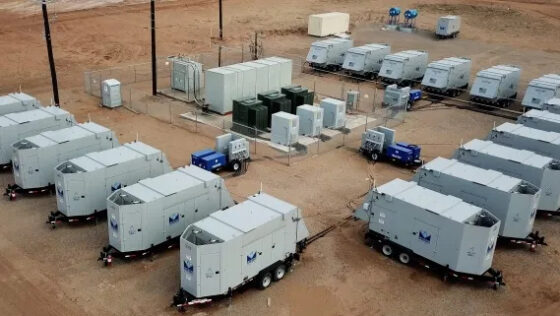
The most differentiated element of the second-quarter narrative is Data Center Solutions, housed within the All Other segment. Data Center Solutions revenue grew 63% year on year in the first half of 2026 and 80% year on year in North America during the second quarter, and management reiterated that the business remains on track to exceed a $1 billion annualised revenue run rate by the end of 2026, with a target of surpassing $2 billion by exit 2027. During the quarter, Meta selected SLB as delivery partner for a planned 1GW data centre in Sturgeon County, Alberta, spanning modular infrastructure manufacturing through building fit-out. SLB also announced a strategic alliance with Liberty Energy for modular infrastructure and behind-the-meter power generation, and confirmed that Ormat Technologies has selected Desert Peak in Nevada as the preferred site for a joint enhanced geothermal system pilot.
The commercial logic is coherent. Modular off-site manufacturing, project execution, subsurface geothermal expertise and power integration draw directly on capabilities SLB has built over decades in oil and gas engineering and procurement. The risk is that hyperscaler capital expenditure cycles do not map neatly onto oilfield service planning horizons, and that pricing power in modular data-centre build-outs may be difficult to defend as more specialised competitors enter the space. If SLB delivers the $2 billion 2027 exit run rate management has guided to, Data Center Solutions will move from an interesting diversification story to a genuine second growth engine capable of shifting how the market prices the enterprise. If growth stalls near the $1 billion mark, the case for the strategic pivot becomes harder to defend.
What do capital returns and the ChampionX-driven balance sheet mean for shareholders?
SLB repurchased 12 million shares for $648 million during the quarter and paid $440 million in dividends, with the board approving another $0.295 quarterly dividend payable in October. Free cash flow of $716 million comfortably covered the $440 million dividend, though the buyback pushed total shareholder returns above operating cash generation, requiring some balance-sheet flex. Net debt rose to $8.73 billion at the end of June from $7.42 billion at the end of 2025, with long-term debt climbing to $11.14 billion from $9.74 billion. Cash and short-term investments stood at $4.07 billion.
The increase in leverage reflects the combination of continued buybacks, higher working capital needs and the residual funding impact of the ChampionX transaction. It is not, on the disclosed numbers, a stressed balance sheet, but it does mean that if Middle East recovery lags and Data Center Solutions ramp slows simultaneously, management will face harder choices about the pace of capital returns. Investors comparing SLB to Halliburton, which fell nearly 6% following its own recent quarterly release, and Baker Hughes should scrutinise how the three majors are managing that same tension between shareholder distributions and strategic reinvestment. SLB completed the Tachyus Corp. acquisition during the quarter to strengthen physics-based reservoir modelling capabilities, signalling that bolt-on Digital deals remain part of the capital allocation menu even at current leverage.
Where does SLB’s investment case sit ahead of the 2027 setup?
SLB shares closed at $47.22 on July 23, ahead of the Q2 print, well below the 52-week high of $58.82 and closer to the 52-week low of $31.64 than the average sell-side price target of roughly $60. Pre-earnings analyst positioning was mixed. Barclays cut its target to $64 while maintaining an Overweight rating, UBS moved to $66 from $69 with a Buy, Susquehanna trimmed to $55, and Morgan Stanley reiterated Overweight at a more cautious $54. The distribution suggests that the sell side broadly views SLB as undervalued on normalised earnings, but is unwilling to underwrite a rapid Middle East recovery.
The second-quarter print does not resolve that debate. It confirms that Digital economics are improving, that Data Center Solutions is a genuine revenue line rather than a marketing narrative, and that ChampionX is contributing accretive margin in Production Systems for a third consecutive quarter. It also confirms that legacy service intensity in the Middle East remains under material pressure, that group revenue excluding acquisitions is still contracting, and that year-on-year adjusted EBITDA margin remains 284 basis points below the second quarter of 2025. Le Peuch described the combination of improving Middle East activity, offshore momentum, production and recovery demand, Digital growth and Data Center Solutions adoption as a strong foundation for 2027. Whether that foundation supports a rerating will depend on how quickly the Middle East normalises and how disciplined SLB remains on capital deployment as it accelerates its diversification programme.
Key takeaways for SLB shareholders from the second-quarter 2026 results
- Reported revenue of $8.97 billion beat consensus, but underlying revenue excluding the ChampionX acquisition fell 5% year on year, exposing continued cyclical weakness in legacy service intensity.
- Middle East revenue fell 13% sequentially and drove most of the 289-basis-point year-on-year contraction in pretax segment operating margin.
- Digital delivered $697 million of revenue with pretax operating margin of 27.8% and annualised recurring revenue of $1.04 billion, up 15% year on year.
- Data Center Solutions grew 63% year on year in the first half and remains on track to exceed a $1 billion annualised run rate by the end of 2026, targeting $2 billion by exit 2027.
- Meta selected SLB as delivery partner for a 1GW data centre in Alberta, extending the hyperscaler customer base beyond North American incumbents.
- ChampionX contributed $870 million of revenue and delivered a third consecutive quarter of sequential pretax operating margin expansion, validating the deal thesis so far.
- Free cash flow of $716 million covered the $440 million dividend, but $648 million of buybacks pushed net debt to $8.73 billion from $7.42 billion at year-end 2025.
- The board approved a maintained quarterly dividend of $0.295 per share, payable October 8, 2026, with a record date of September 2, 2026.
- Management reiterated confidence in a broader 2027 recovery driven by Middle East normalisation, offshore momentum and Digital adoption, but the timing remains dependent on a durable resolution of the regional conflict.
- The next measurable catalysts include third-quarter Middle East activity data, the pace of Data Center Solutions order flow following the Meta and Liberty Energy announcements, and progress toward the $2 billion Data Center Solutions run-rate target by exit 2027.
Share this:
Discover more from Business-News-Today.com
Subscribe to get the latest posts sent to your email.