






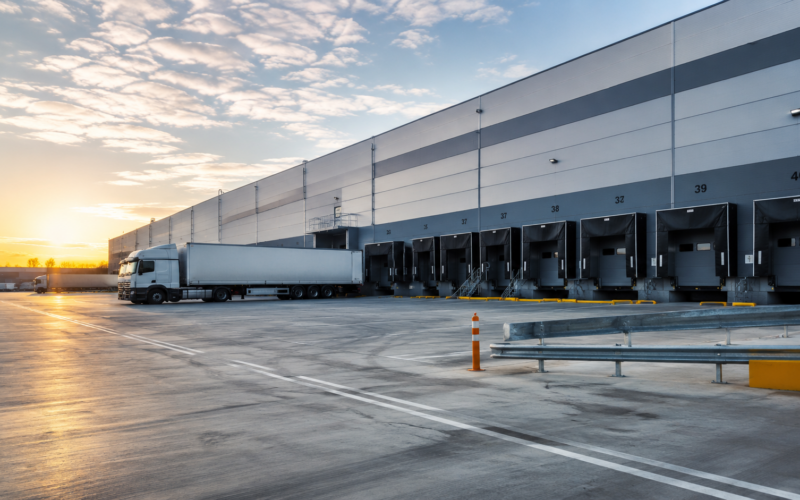
ING Groep N.V. (NYSE: ING), through ING Capital LLC, has provided a fully underwritten $268 million acquisition facility to EQT Real Estate’s Core Plus Fund IV for the purchase of 11 United States logistics properties. The portfolio spans approximately 2.8 million square feet across six high-growth logistics markets and was fully leased when the financing was announced on July 23, 2026. The transaction expands a lending relationship between ING and EQT Real Estate while giving the investment fund immediate exposure to modern distribution, light-industrial and last-mile facilities with relatively long contractual income. The central question is whether stable occupancy and seven-year lease visibility can generate sufficient rent growth and exit value to overcome financing costs that remain materially higher than during the previous industrial-property boom.
The acquisition facility arrives as the United States industrial real estate market begins showing stronger leasing and absorption trends after several years of rising vacancies and valuation pressure. That improves the operating backdrop, but the announcement did not disclose the acquisition price, property-level valuation, capitalization rate, interest margin, maturity, loan-to-value ratio or tenant concentration. Those missing figures matter because a fully occupied portfolio can still deliver disappointing fund returns when the entry valuation is aggressive or debt costs absorb too much of the rental income.
Why does ING’s $268 million acquisition facility matter beyond another logistics property financing?
The financing gives EQT Real Estate greater execution certainty for a multi-asset acquisition that would have been more complicated to fund property by property. A fully underwritten facility means ING has committed to providing the disclosed financing subject to the agreed conditions, reducing the risk that EQT Real Estate must assemble multiple lenders or renegotiate financing during completion.
The structure also illustrates how large private-market managers are using established banking relationships to move quickly when portfolios become available. EQT Real Estate and ING already work together in the United States and Europe, allowing the lender to evaluate the manager’s operating systems, asset-selection discipline and historical performance across more than one transaction.
However, the $268 million figure should not automatically be interpreted as cash already drawn or as new corporate debt sitting directly on EQT AB’s balance sheet. The disclosure identifies the financing as an acquisition facility for EQT Real Estate’s Core Plus Fund IV. It does not say how much had been drawn at the announcement date or whether any portion remained conditional on individual property closings.
That distinction is important for investors assessing EQT AB. Fund-level financing can enhance purchasing capacity and equity returns, but the economic exposure is primarily linked to the properties and fund structure rather than representing an equivalent increase in listed-parent leverage.
For ING, the immediate revenue contribution is unlikely to be material relative to the scale of the banking group. The strategic value lies in deepening a relationship with one of the world’s largest private-market managers, creating potential opportunities in hedging, refinancing, treasury services, future acquisitions and eventual asset sales.
How do full occupancy and seven-year leases strengthen the initial underwriting case?
The acquired portfolio was fully leased at the time of the announcement and had a weighted average remaining lease term of approximately seven years. Those characteristics reduce near-term lease-up risk and provide greater visibility over contractual rental income during the early ownership period.
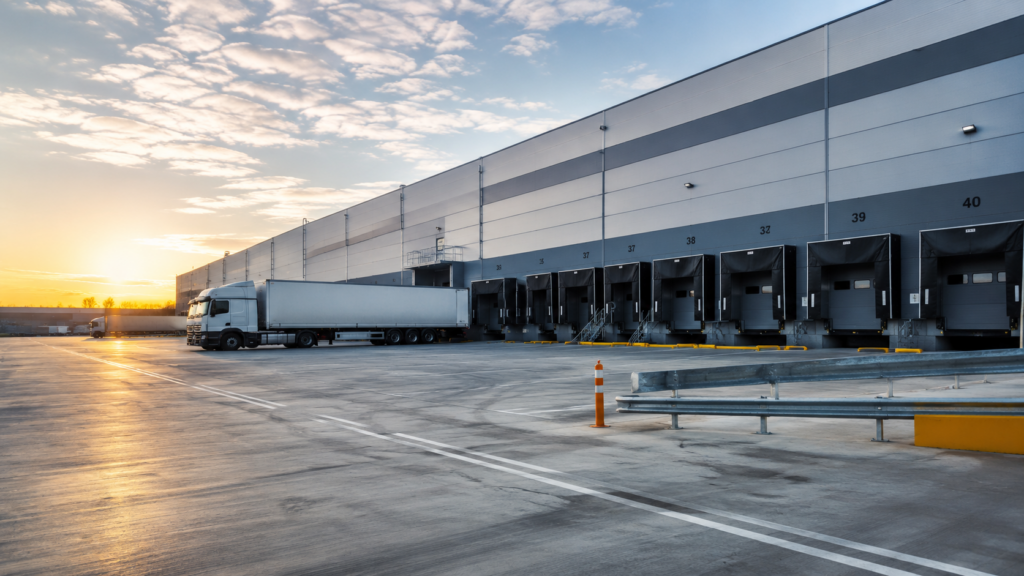
The properties have an average construction year of 2014, average clear heights of 33 feet and approximately 22 dock-high doors per asset. These specifications are relevant because warehouse users increasingly require buildings capable of supporting automated inventory systems, higher storage density, rapid vehicle movements and more sophisticated fulfilment operations.
Approximately 63% of the portfolio comprises bulk-distribution facilities, while light-industrial properties account for 26% and last-mile assets represent 11%. The tenants operate across food and beverage, packaging, bulk transportation, e-commerce and aviation-related activities. This provides some diversification across demand drivers rather than concentrating the portfolio entirely on one retailer or logistics operator.
Full occupancy should nevertheless be treated as the starting point rather than the final measure of investment quality. Investors still need to know whether existing rents are above, below or close to prevailing market levels, whether individual tenants account for a disproportionate share of income and how much capital expenditure will be required to retain occupiers.
A seven-year weighted average lease term can be defensive when market rents weaken because it protects existing income. The same lease structure can limit near-term upside when market rents rise rapidly because the landlord cannot immediately reset every contract. The value of the lease duration therefore depends on contractual escalators, renewal provisions and the relationship between current rents and market rents, none of which were disclosed.
The tenant industries also have different risk profiles. Food distribution can provide relatively resilient demand, while aviation, bulk transportation and discretionary e-commerce volumes may be more sensitive to economic conditions, freight movements and consumer spending.
Why does the 2026 United States industrial-property recovery improve the timing of the deal?
Recent industry data indicate that the United States industrial market entered the second half of 2026 with stronger leasing activity and declining vacancy. JLL reported that second-quarter industrial leasing reached approximately 175.7 million square feet, an increase of 49.4% from the previous year and 20.9% from the first quarter. Net absorption rose to 99.1 million square feet, while national vacancy declined by 60 basis points to 6.8%.
Cushman & Wakefield separately estimated national vacancy at 6.9%, with second-quarter net absorption of 62.1 million square feet and first-half absorption of 113.6 million square feet. Although different methodologies produced different absorption totals, both datasets point towards improving demand and a slower pace of speculative supply additions.
This recovery strengthens the timing for EQT Real Estate because falling vacancy can support tenant retention, rental growth and asset liquidity. Large modern warehouses have also been performing better than some older or functionally obsolete properties as occupiers consolidate operations into facilities that offer greater clear heights, loading capacity and transport efficiency.
The national data cannot confirm the performance of this specific portfolio, however. EQT Real Estate and ING did not identify the six markets, preventing investors from comparing local vacancy, construction pipelines, population growth, port volumes or rent trends.
That omission is significant because United States logistics real estate is not a single uniform market. A well-located warehouse in a supply-constrained distribution hub can behave very differently from a property in a market experiencing heavy construction and weaker tenant demand.
What does the transaction reveal about EQT Real Estate’s deployment and capital-recycling strategy?
EQT Real Estate has approximately $59 billion in gross asset value under management, covering more than 2,000 properties and around 450 million square feet. The wider EQT AB platform reported total assets under management of €291 billion and fee-generating assets under management of €155 billion at June 30, 2026.
The latest acquisition fits a broader strategy of acquiring modern logistics properties in economically significant distribution corridors while recycling capital from stabilised portfolios. In June 2026, EQT Real Estate announced the acquisition of approximately 2.4 million square feet of logistics assets in Savannah, Jacksonville and Lakeland. It also acquired six United Kingdom logistics properties totalling around 1.6 million square feet across markets including Leamington Spa, Didcot, Peterborough and Kettering.
Earlier in 2026, EQT Real Estate completed the sale of a 36-property United States industrial portfolio comprising approximately 7.3 million square feet. That disposal demonstrated the other side of the strategy: aggregate assets, improve or stabilise performance, and sell portfolios to institutional buyers when pricing and liquidity are attractive.
The $268 million ING facility therefore appears to support continued capital rotation rather than isolated expansion. EQT Real Estate is simultaneously acquiring properties that fit its current investment criteria and monetising portfolios that have progressed further through their ownership plans.
EQT AB’s decision to report Real Estate as a separate business segment from the first half of 2026 increases the importance of measurable results from such transactions. Greater reporting visibility means investors can more directly assess fundraising, deployment, management fees, performance fees and operating profitability attributable to the real estate platform.
During the first half of 2026, EQT AB recorded €17.8 billion of gross inflows and approximately €19 billion of investment activity across its strategies. Adjusted revenue rose 5% to €1.41 billion, adjusted earnings before interest, tax, depreciation and amortisation reached €837 million, and adjusted net income was €691 million.
The logistics acquisition may help deploy Core Plus Fund IV capital and support future fee generation, but transaction volume alone does not establish investment performance. The decisive factor will be whether EQT Real Estate can grow net operating income, manage financing obligations and eventually sell or refinance the assets at valuations that produce attractive fund returns.
How could higher debt costs challenge returns from a fully occupied logistics portfolio?
The Federal Reserve maintained its federal-funds target range at 3.50% to 3.75% during the first half of 2026 as policymakers balanced continued economic growth against elevated inflation pressures. This remains a considerably more demanding financing environment than the near-zero-rate period that helped drive aggressive warehouse valuations earlier in the decade.
Higher base rates affect the investment in several ways. They increase interest expense, reduce the amount of leverage a portfolio can sustainably support and can push buyers to demand higher capitalization rates. Rising capitalization rates generally place downward pressure on property values unless rental income grows sufficiently to compensate.
The transaction announcement did not disclose whether the facility has a fixed or floating interest rate, whether EQT Real Estate has hedged its exposure or how much equity Core Plus Fund IV is contributing. Without those figures, it is impossible to determine the portfolio’s debt-service coverage or sensitivity to changes in market rates.
The portfolio’s full occupancy and long leases may have helped ING underwrite the financing by providing predictable income. Yet predictable income is not necessarily high-return income. The fund must generate enough rental growth, contractual escalation and operational efficiency to create value after interest expense, property costs and management fees.
EQT Real Estate could also improve returns through selective capital expenditure, energy-efficiency upgrades, lease restructuring or asset-level disposals. Execution will depend on how much additional capital the properties require and whether tenants are willing to pay higher rents for upgraded facilities.
The most favourable scenario would combine stable occupancy, rising rents, declining financing costs and improving industrial-property valuations. A less favourable scenario would involve flat rents, tenant-specific weakness and refinancing at rates that remain elevated when the facility matures.
What does the financing mean for ING Groep N.V. and EQT AB shareholders?
ING Groep N.V. reported first-quarter 2026 net profit of €1.56 billion, supported by customer-balance growth and fee income. Against that group-level earnings base, one $268 million commercial real estate facility is unlikely to transform financial performance. Its importance lies more in demonstrating the capacity of ING’s wholesale-banking operation to structure large sponsor-backed transactions and retain relationships with global alternative-asset managers.
ING American depositary receipts closed at $32.44 on July 23, down 2.7% during that session. The shares were approximately 1.2% below their July 16 close, around 2.5% above their June 23 close and about 3% below their 52-week high of $33.46. The financing announcement was released after the New York market had closed, so the July 23 movement should not be interpreted as a reaction to the transaction.
EQT AB shares closed at SEK309.70 on July 23. The stock was approximately 8% above its July 16 close and nearly 18% higher than one month earlier, although it remained around 19% below its 52-week high of SEK383. The recent performance was influenced more materially by EQT AB’s first-half results and fundraising progress than by the logistics financing announced after the latest session.
For EQT AB shareholders, the investment thesis is not that a single warehouse acquisition will materially increase earnings. The more relevant issue is whether repeated acquisitions, operational management and portfolio exits can strengthen the Real Estate segment’s fee base and generate performance-related income without requiring excessive financial risk.
For ING shareholders, the transaction reinforces the wholesale bank’s ability to originate institutional real estate credit. The economic value will depend on lending margins, credit quality, ancillary services and whether the relationship produces additional transactions across EQT’s wider private-capital, infrastructure and real estate platforms.
Which measurable signals will show whether the logistics acquisition creates durable value?
The first important evidence would be disclosure of the six markets, purchase price and property-level valuation. Those details would allow investors to compare the portfolio’s entry capitalization rate with local market transactions and determine whether EQT Real Estate acquired the assets at an attractive basis.
The second signal would be greater clarity on the financing structure, including maturity, pricing, leverage, amortisation and interest-rate protection. These factors will determine how much of the portfolio’s rental income remains available after debt costs.
Operating performance will then become the main test. Investors should focus on tenant retention, contractual rent increases, net operating income growth, capital expenditure and any changes in occupancy. A portfolio that remains full but requires heavy tenant incentives or building upgrades may produce weaker cash returns than headline occupancy suggests.
EQT Real Estate’s future segment reporting should also provide evidence about fee-generating assets, investment pace and profitability. The transaction will become more meaningful if it forms part of a repeatable cycle in which Core Plus Fund IV acquires assets, improves income, returns capital and generates performance fees.
For ING, the nearest group-level financial catalyst is its second-quarter 2026 results, scheduled for July 30. Those results may provide broader information about wholesale-banking income, credit quality, commercial real estate exposure and capital allocation, although the individual EQT facility is unlikely to be separately material.
The acquisition has improved EQT Real Estate’s access to modern, fully occupied United States logistics assets while limiting immediate lease-up risk. What remains unresolved is whether the undisclosed entry valuation and financing terms leave enough room for attractive returns. The strongest evidence would be sustained net operating income growth followed by refinancing or asset sales at values that exceed the portfolio’s total acquisition, financing and improvement costs.
What are the key takeaways from ING’s $268 million EQT logistics financing?
- ING Capital LLC has provided a fully underwritten $268 million acquisition facility to EQT Real Estate’s Core Plus Fund IV.
- The financing supports the acquisition of 11 fully leased logistics properties totalling approximately 2.8 million square feet across six United States markets.
- The portfolio has a seven-year weighted average lease term, reducing near-term vacancy and renewal risk.
- Bulk-distribution properties represent 63% of the portfolio, followed by light-industrial assets at 26% and last-mile facilities at 11%.
- The transaction strengthens an existing United States and European financing relationship between ING and EQT Real Estate.
- Improving United States industrial leasing and declining vacancy provide a more supportive market backdrop than in 2024 or 2025.
- The acquisition price, capitalization rate, debt pricing, maturity, leverage and tenant concentration were not disclosed.
- The facility should be assessed as financing connected to Core Plus Fund IV rather than automatically treated as new EQT AB parent-company debt.
- EQT Real Estate must convert stable occupancy into rental growth, operating cash flow and eventual exit value to justify the acquisition.
- Future operating disclosures, Real Estate segment results and portfolio refinancing or sales will provide the clearest evidence of value creation.
Share this:
Discover more from Business-News-Today.com
Subscribe to get the latest posts sent to your email.


