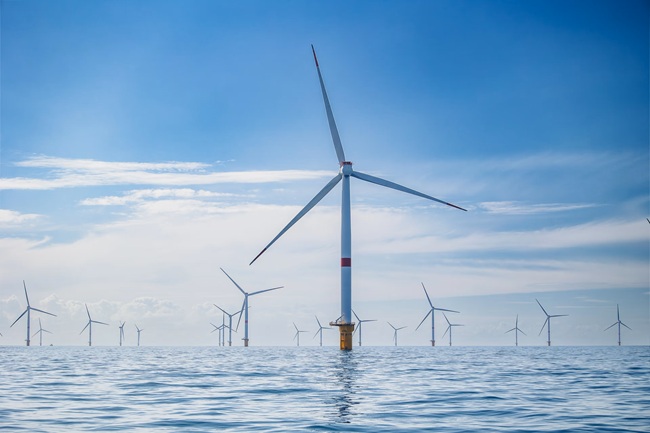
Amazon.com, Inc. (NASDAQ: AMZN) and Skyborn Renewables have signed a 600-megawatt power purchase agreement covering electricity from the proposed Gennaker offshore wind farm in Germany’s Baltic Sea. The agreement is the largest single power purchase agreement signed in Germany and represents approximately 61% of Gennaker’s planned capacity of up to 976.5 megawatts. Amazon’s long-term purchasing commitment gives the privately owned developer greater revenue certainty as it targets financial close during the summer of 2026. Construction is expected to proceed after financing is completed, with commercial operations planned toward the end of 2028. The deal therefore moves Gennaker closer to becoming Germany’s largest Baltic Sea offshore wind farm while testing whether corporate electricity demand can support large renewable projects without relying primarily on conventional subsidy structures.
Why does Amazon’s 600 MW PPA materially change Gennaker’s route to construction?
Amazon’s agreement matters because long-term contracted revenue is one of the most important conditions for securing project finance. Offshore wind projects require billions of euros of upfront expenditure years before electricity sales begin, leaving lenders and equity investors exposed to construction delays, equipment inflation, interest costs and uncertain future power prices. A creditworthy customer committing to purchase 600 megawatts reduces the amount of output that Gennaker must sell into volatile wholesale markets.
The agreement does not mean Amazon will consume every electron generated by 600 megawatts of turbines at a single facility. Corporate power purchase agreements normally operate through contractual and grid-settlement arrangements that match renewable generation with the buyer’s electricity demand across a wider system. The commercial value lies in the predictable revenue stream and the transfer of some future electricity-price risk from the project developer to the corporate buyer.
Covering around 61% of total capacity is particularly important. A smaller agreement might have demonstrated customer interest without substantially altering the financing profile. Amazon’s commitment instead provides an anchor contract around which Skyborn Renewables can structure debt, equity and potentially additional offtake agreements for the remaining capacity.
The timing is equally significant. Skyborn Renewables secured the revised construction and operating permit in December 2025 and has been preparing for a final investment decision during the summer of 2026. The European Investment Bank has approved up to €700 million of financing, major contractors have been selected, and the project’s grid-connection arrangements have advanced. Amazon’s agreement fills one of the remaining commercial gaps by improving long-term revenue visibility.
Gennaker is not yet fully de-risked. Financial close must still confirm that the project’s contracted revenue, remaining merchant exposure, equipment costs and financing assumptions produce acceptable returns. However, the power purchase agreement changes the probability of construction moving forward. It turns Amazon from a sustainability customer into a project-enabling counterparty.
How does the €3.1 billion financing structure reduce risk without completing the investment case?
The European Investment Bank estimates Gennaker’s total project cost at approximately €3.1 billion and has approved financing of up to €700 million. That commitment could cover more than one-fifth of the expected investment, although final drawdowns will depend on financing documentation, environmental compliance, project milestones and the broader lender group.
European Investment Bank participation offers more than capital. The institution’s involvement can provide commercial banks and other lenders with additional confidence that the project has undergone technical, environmental and economic review. It can also improve debt tenor or pricing compared with a structure relying entirely on shorter-duration commercial financing.
The remaining requirement is still substantial. Skyborn Renewables must assemble equity, commercial bank debt and potentially additional institutional financing for the balance of the capital cost. The precise structure has not been disclosed, meaning the final mix of sponsor equity, senior debt, hedging arrangements and reserve facilities remains an important watch point.
Skyborn Renewables benefits from being backed by Global Infrastructure Partners, an infrastructure investor with experience owning and financing complex power, transport and utility assets. This gives the developer access to capital and specialist project-finance expertise that smaller independent developers may struggle to replicate. Infrastructure investors are generally comfortable with long construction periods when future cash flows are contracted, predictable and supported by essential assets.
Amazon’s agreement strengthens that model by improving the quality of Gennaker’s future revenue. A project with a large corporate buyer, an approved European Investment Bank facility, a secured construction permit and experienced contractors is easier to finance than a development dependent primarily on merchant power prices.
That does not guarantee attractive returns. Offshore wind developers across Europe have faced higher turbine prices, financing costs, installation expenses and supply-chain constraints. Financial close will reveal whether Gennaker’s contracted electricity price and remaining market exposure adequately compensate investors for those risks.
What does Gennaker reveal about corporate power purchase agreements replacing subsidy dependence?
Gennaker is described as a subsidy-free offshore wind project, making the Amazon agreement central to its commercial structure rather than a supplementary sustainability arrangement. Traditional European offshore wind developments have often relied on government auctions, contracts for difference or regulated support mechanisms that protect developers from electricity-price volatility.
Corporate power purchase agreements offer an alternative. Large companies with predictable electricity consumption agree to purchase renewable output over extended periods, allowing projects to secure bankable revenue without transferring all price risk to governments or electricity consumers.
The attraction for policymakers is clear. Corporate demand can mobilise private capital, reduce direct subsidy requirements and connect new generation with industrial or technology-sector electricity consumption. The approach is particularly relevant as data centres, cloud computing facilities, electric transport and industrial electrification increase power demand across Europe.
However, corporate agreements do not eliminate risk. They redistribute it. Amazon accepts exposure to the agreed contract price and the difference between contracted generation and its actual electricity requirements. Skyborn Renewables retains construction, operating and generation-performance risk while also managing the uncontracted portion of Gennaker’s output.
There is also a concentration question. Amazon will account for a majority of the project’s contracted capacity under the announced agreement. Amazon.com has exceptional financial scale, making counterparty default an unlikely central concern, but the project will still depend heavily on one customer relationship.
The remaining 376.5 megawatts provide both opportunity and uncertainty. Skyborn Renewables could sign additional corporate buyers, utilities or energy traders, further reducing merchant exposure. Alternatively, it could retain some wholesale-market exposure in the expectation that power prices and offshore wind generation profiles will support stronger long-term returns.
The broader implication is that technology companies are becoming active participants in electricity-market development. Their procurement choices increasingly influence which generation assets obtain financing, where capacity is constructed and how future price risk is allocated. That gives corporate buyers considerable influence over infrastructure investment without requiring them to become power-plant operators.
Why is Gennaker’s Baltic Sea location commercially attractive but operationally demanding?
Gennaker will be constructed approximately 15 kilometres north of the Fischland-Darß-Zingst peninsula in Mecklenburg-Western Pomerania. Its relatively short distance from shore reduces some logistical and cable-installation challenges compared with offshore wind projects located hundreds of kilometres into the North Sea.
The project is also situated in comparatively shallow water, allowing Skyborn Renewables to use fixed-bottom monopile foundations rather than more expensive floating structures. Fixed-bottom technology has a larger operating history, a broader supplier base and generally lower technical risk than commercial-scale floating wind.
Its Baltic Sea position contributes to geographic diversification within Germany’s offshore wind portfolio. German offshore capacity has historically been concentrated in the North Sea. Additional Baltic Sea generation can reduce dependence on a single offshore region and support electricity supply in eastern and northern Germany.
The project will surround the existing EnBW Baltic 1 wind farm and use a region already familiar with offshore energy activity. Local manufacturing is also embedded in the supply chain, with EEW Special Pipe Constructions expected to produce 63 monopiles at Rostock, roughly 40 kilometres from the project site. That proximity could reduce transportation complexity while supporting employment and industrial activity in Mecklenburg-Western Pomerania.
The Baltic Sea is not operationally effortless. Marine construction remains exposed to weather windows, vessel availability, seabed conditions and environmental restrictions. Installation sequences must coordinate foundations, transition pieces, cables, substations and turbines without creating costly idle time for specialised vessels.
Environmental obligations add another layer. The project must manage effects on birds, bats, marine ecosystems and shipping routes. Skyborn Renewables has already redesigned Gennaker from a larger number of smaller turbines to 63 higher-capacity machines, allowing the project to increase maximum capacity without expanding its total offshore footprint.
That redesign improves output per turbine and reduces the number of foundations and installation operations. It also increases dependence on the performance and timely delivery of each individual turbine. When turbines become larger, fewer machines are required, but a delay or technical issue affecting one unit represents a greater amount of unavailable capacity.
How will Siemens Gamesa and Gennaker’s contractors benefit from the construction programme?
Gennaker will use 63 Siemens Gamesa SG 14-236 offshore wind turbines with power-boost capability that supports total project capacity of up to 976.5 megawatts. The turbines have a rotor diameter of 236 metres and are expected to begin offshore installation in early 2028.
Siemens Gamesa has signed both a turbine supply agreement and a long-term service arrangement with Skyborn Renewables. This gives Siemens Energy AG, the parent company of Siemens Gamesa, exposure to equipment revenue during construction and recurring maintenance income once operations begin.
Long-term service contracts are strategically important because they extend the commercial relationship well beyond equipment delivery. Offshore turbine maintenance requires specialist technicians, vessels, spare parts, remote monitoring and performance management. These activities can produce steadier margins than one-time turbine sales when reliability obligations are managed effectively.
Gennaker also provides Siemens Gamesa with another large reference project for its 14-megawatt turbine platform. Successful delivery would strengthen customer confidence in the technology and support Siemens Energy’s attempt to restore profitability within its wind business after years of quality problems and financial losses.
The wider supplier package has already been substantially assembled. EEW Special Pipe Constructions will manufacture the monopiles, while Dajin Heavy Industry is expected to produce transition pieces. Seaway7 has been selected to transport and install the foundations, and Fred. Olsen Windcarrier is expected to install the turbines using the Brave Tern jack-up vessel.
TKF will manufacture approximately 140 kilometres of 66-kilovolt inter-array cables, with Boskalis responsible for offshore installation. The cables will connect individual turbines to two offshore substations, allowing generated electricity to enter the 50Hertz transmission system.
This contractor structure reduces procurement uncertainty but increases coordination risk. Components produced in Germany, China, Denmark and the Netherlands must arrive in the correct sequence. A delay at one factory or vessel can affect multiple downstream activities, creating additional financing and standby costs.
The project therefore represents both revenue and execution exposure for suppliers. Gennaker could strengthen order books and factory utilisation across the European offshore wind chain. However, fixed-price obligations, inflation, component defects or vessel delays could weaken contractor margins even if the project itself remains commercially viable.
What does Amazon gain beyond renewable-energy accounting from this German offshore commitment?
Amazon’s Gennaker agreement increases the company’s contracted carbon-free energy portfolio in Germany to more than 1.3 gigawatts across 12 projects. Once operational, those projects are expected to generate electricity equivalent to the annual consumption of more than 1.8 million German homes.
The immediate purpose is to support Amazon.com’s operational and emissions objectives. The company operates fulfilment centres, logistics assets, offices, cloud infrastructure and data centres, all of which require reliable electricity. Amazon Web Services is particularly relevant because artificial intelligence and cloud-computing demand are increasing electricity consumption across the technology sector.
Long-term power procurement can also provide a hedge against electricity-price volatility. The economics depend on the confidential contract price and settlement structure, but a fixed or formula-based agreement can reduce Amazon’s exposure to future wholesale-price increases.
The agreement strengthens Amazon’s position with European regulators and customers concerned about the electricity requirements of data centres. Technology companies are under increasing pressure to demonstrate that new computing capacity is matched by additional generation rather than simply consuming existing renewable output already available to the grid.
By enabling a project that has not yet been constructed, Amazon can argue that its purchasing commitment is contributing to additional generation capacity. This concept of additionality is more strategically valuable than acquiring certificates from long-operating assets because the contract helps support a new investment decision.
There is nevertheless a timing mismatch. Gennaker is not expected to operate until late 2028, and construction delays could push electricity delivery further into the future. Amazon must therefore maintain a broader procurement portfolio rather than relying on one offshore development.
The scale of the agreement also signals that Amazon expects European electricity demand from its operations to remain substantial. A 600-megawatt commitment is not a symbolic purchase. It indicates confidence in long-term German and European digital-infrastructure growth, even if the contract’s financial impact is too small to materially alter Amazon.com’s consolidated earnings.
How should investors interpret Amazon and Siemens Energy share performance around the deal?
Amazon.com shares closed at $244.39 on June 18, 2026, the latest completed United States trading session before the announcement. The stock had risen approximately 1.2% over five trading days but was down about 7.7% over one month, with a 52-week range of $196 to $278.56.
The share-price pattern indicates mixed near-term sentiment rather than a reaction to the Gennaker agreement. Amazon.com’s valuation is driven primarily by Amazon Web Services growth, artificial intelligence investment, retail margins, advertising revenue and capital expenditure. A single European power purchase agreement is strategically relevant but financially immaterial relative to Amazon.com’s scale.
The one-month decline suggests investors were reassessing broader valuation or growth expectations after the shares reached a 52-week high in early May. The Gennaker contract does not resolve those questions. It does, however, demonstrate how Amazon.com is attempting to secure electricity for continued infrastructure expansion rather than treating energy availability as someone else’s problem.
Siemens Energy AG shares closed at €168.92 on June 19, 2026. The stock gained approximately 10% over the preceding five trading sessions and was broadly unchanged over one month, while remaining within a 52-week range of €83.32 to €191.66.
Investor sentiment toward Siemens Energy has improved as demand for gas turbines, grid equipment and power infrastructure has increased. Progress within Siemens Gamesa has also helped reduce concerns that the wind division will remain a permanent drag on group profitability.
Gennaker supports that improving narrative by moving a conditional turbine order closer to execution. It does not independently justify Siemens Energy’s valuation, and investors should not assume that every large order produces attractive margins. The greater importance lies in project bankability because financially secure customers and developers reduce cancellation and renegotiation risk.
The contrast between the two stocks is instructive. For Amazon.com, Gennaker is an energy-procurement decision supporting a much larger digital business. For Siemens Energy, it is part of an industrial order pipeline that can directly influence factory utilisation, service revenue and the recovery of its wind division.
What could still delay financial close, offshore installation and late-2028 commissioning?
The most immediate risk is financial close. European Investment Bank approval and Amazon’s agreement are important, but Skyborn Renewables must still complete the full debt and equity package. Changes in interest rates, hedging costs, expected electricity prices or contractor terms could alter project returns before final documents are signed.
Construction sequencing is another significant risk. Foundation activity is expected to begin during 2027, inter-array cables are planned for installation by the end of that year, and turbine installation is scheduled for early 2028. Each phase depends on manufacturing and marine logistics progressing within relatively narrow windows.
Specialist-vessel availability can become a bottleneck. Offshore wind projects across Germany, Poland, the United Kingdom, Taiwan and the United States compete for foundation vessels, cable ships and turbine-installation vessels. A delay on an earlier project can affect a vessel’s next assignment even when the second project is otherwise ready.
Turbine performance must also be monitored. Siemens Gamesa’s offshore technology has a substantial order book, but large turbine models have fewer years of operating history than smaller predecessors. Any design modifications, component shortages or certification issues could affect delivery.
Grid readiness is equally important. 50Hertz is developing the OST-6-1 connection using three subsea and onshore cable systems and two offshore substations. Gennaker could complete turbine installation yet remain unable to generate full revenue if transmission infrastructure is delayed.
The agreement between Skyborn Renewables and 50Hertz is intended to align commissioning, but project interfaces remain complex. The developer controls the wind farm while the transmission system operator leads the grid connection. Clear responsibility at these interfaces will be essential when testing, energisation and handover begin.
Environmental or legal challenges appear less threatening after the December 2025 permit, but compliance obligations remain. Offshore construction may be limited during certain periods to protect wildlife, and unexpected seabed or archaeological findings could require changes to installation plans.
Why does the Gennaker agreement look strategically strong despite its remaining execution risks?
In my assessment, the Amazon agreement is one of the most consequential European corporate power deals of 2026 because it connects a large electricity buyer with a project that is close to financial close rather than already operational. The contract therefore has genuine infrastructure additionality.
Gennaker also has several advantages that many stalled offshore wind projects lack. It has a construction permit, a defined grid connection, European Investment Bank backing, selected contractors, an experienced infrastructure shareholder and a customer covering most of its capacity.
The project’s main weakness is no longer whether demand exists. It is whether Skyborn Renewables can preserve economics and schedule discipline across a multi-country supply chain. Offshore wind has repeatedly shown that impressive capacity figures do not pay invoices until turbines are installed, connected and operating.
Amazon’s involvement reduces commercial risk but does not absorb construction overruns. Global Infrastructure Partners and the lender group must remain confident that the contracted revenue can support a €3.1 billion investment after financing costs and supplier obligations.
A successful financial close would be important beyond Gennaker. It would show that large European offshore projects can still reach construction using corporate demand, institutional capital and public-bank financing despite higher industry costs.
Failure or prolonged delay would send the opposite message. It would suggest that even a permitted project with Amazon.com as an anchor buyer cannot overcome current offshore wind economics. That would raise questions for other subsidy-free developments seeking corporate customers.
For now, Gennaker has moved meaningfully closer to construction. The next decisive event is not another supply-chain announcement. It is financial close, followed by an irreversible notice to proceed that releases capital into factories, vessels and offshore construction.
What are the key takeaways from Amazon’s 600 MW Gennaker offshore wind agreement?
- Amazon’s agreement covers approximately 61% of Gennaker’s planned 976.5-megawatt capacity, materially improving revenue visibility.
- The power purchase agreement strengthens Skyborn Renewables’ ability to reach financial close during the summer of 2026.
- Gennaker’s estimated €3.1 billion cost will require substantial commercial debt and equity in addition to the approved European Investment Bank financing.
- Corporate power demand is becoming an increasingly important substitute for direct renewable-energy subsidies.
- The Baltic Sea location offers shallow water, short distances to shore and access to local manufacturing around Rostock.
- Siemens Gamesa gains potential turbine revenue and long-term service income as the project moves closer to an effective notice to proceed.
- Amazon.com gains additional electricity supply and greater credibility around the energy requirements of its European digital infrastructure.
- Amazon.com’s recent stock movement reflects broader technology-sector sentiment rather than the Gennaker contract.
- Siemens Energy’s stronger five-day share performance reflects improving power-equipment sentiment, although wind-project margins remain an execution concern.
- Financial close, vessel coordination, turbine delivery and grid readiness remain the critical milestones ahead of planned commissioning in late 2028.
Share this:
Discover more from Business-News-Today.com
Subscribe to get the latest posts sent to your email.