





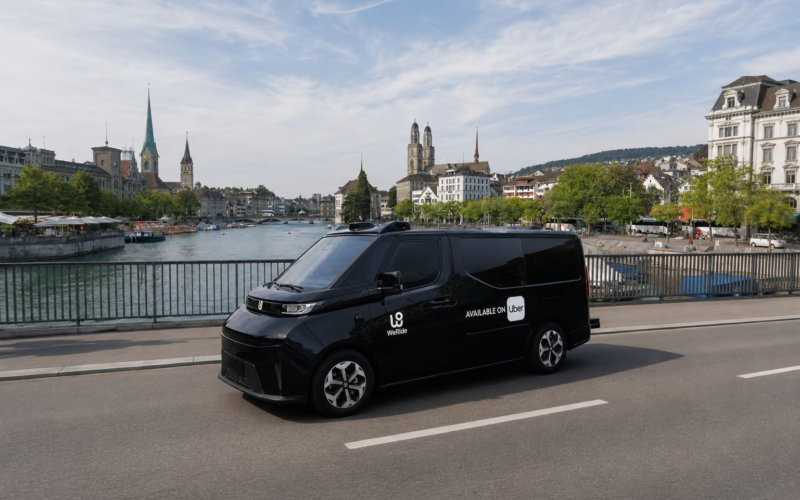
WeRide Inc. (NASDAQ: WRD; HKEX: 0800) and Uber Technologies, Inc. (NYSE: UBER) plan to introduce commercial robotaxi services in the Greater Zurich Region later in 2026, subject to final regulatory approval. The June 17 announcement marks their second European market commitment within weeks, following plans for a Madrid service, and advances a broader agreement covering 15 international cities. Rides will be accessible through the Uber app, while Swiss mobility and logistics operator Rydera will manage the local fleet under WeRide Inc.’s asset-light deployment model. WeRide stock closed at approximately $6.35 on June 18, near the lower end of its 52-week range, while Uber Technologies shares closed at $71.64. The strategic test is whether Switzerland can become a repeatable commercial bridge between the partners’ Middle Eastern operations and the more demanding regulatory, operational and public-acceptance environment across Europe.
Why have WeRide and Uber selected Zurich for their second European robotaxi market?
Zurich combines three characteristics that make it valuable as a commercial test market. It has high labour and transportation costs, strong consumer purchasing power and a regulatory framework that has permitted several automated-driving applications since March 2025. Robotaxi economics are easier to defend in a market where conventional ride-hailing already carries a relatively high operating cost.
Switzerland has also moved beyond discussing autonomous-driving regulation in principle. Its automated-driving ordinance provides a legal basis for vehicles with automated systems, including requirements relating to approval, vehicle data and operating responsibility. WeRide Inc. received a permit from the Federal Roads Office in November 2025 that allowed driverless operations on public roads in Zurich’s Furttal region.
That earlier permit reduces part of the technical and regulatory uncertainty surrounding the proposed commercial service. The companies are not entering Switzerland with an entirely untested operating concept. However, permission for autonomous road testing or limited operation does not automatically guarantee unrestricted commercial deployment across central Zurich.
The Greater Zurich Region offers a mix of urban streets, suburban routes, business travel and connections to major transport hubs. Success would demonstrate that WeRide technology can operate in a wealthy European market with dense public transport, high service expectations and complex interactions between cars, cyclists, pedestrians and trams.
Zurich is also strategically useful because it is large enough to produce meaningful operating data without requiring the scale of London, Paris or Berlin at the first stage. The partners can expand the operational area progressively as safety and performance milestones are met.
How does the Zurich launch advance the wider WeRide and Uber robotaxi partnership?
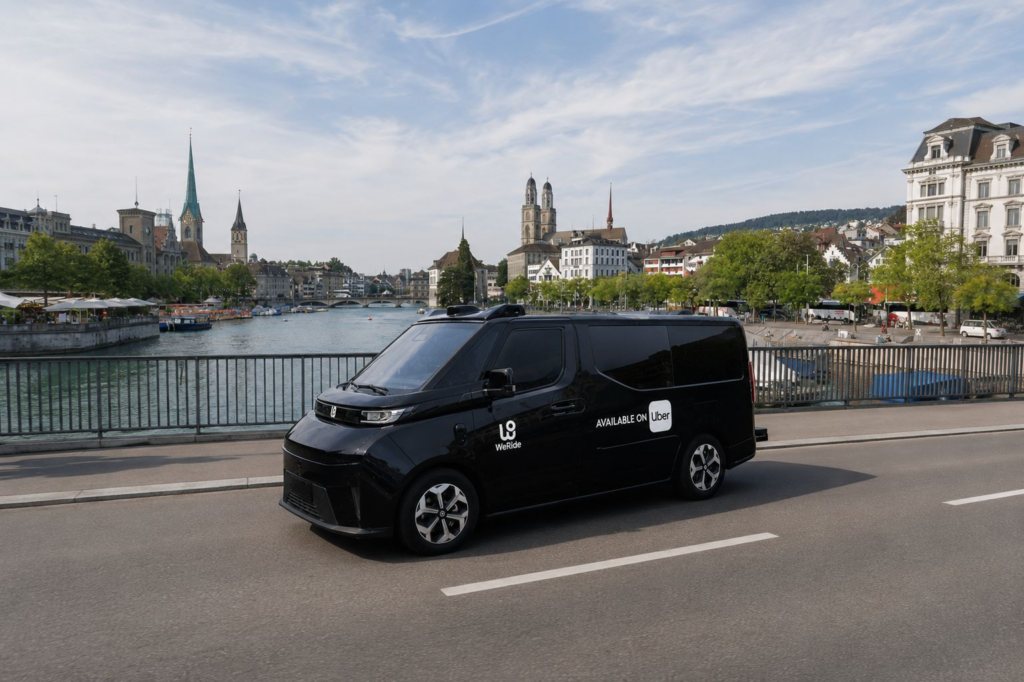
The Zurich announcement moves the partnership closer to becoming a multi-region commercial network rather than a collection of isolated demonstrations. WeRide Inc. and Uber Technologies now expect to operate robotaxi services in five of the 15 cities covered by their expanded international agreement.
The relationship began with Abu Dhabi, where the companies launched services in December 2024 and later moved into fully driverless commercial operations. They have subsequently expanded their partnership across Dubai and Riyadh, with Madrid and Zurich forming the initial European wave.
This rollout creates a division of responsibilities that reflects the strengths of each partner. WeRide Inc. provides the autonomous-driving system, vehicles, simulation capabilities and operational technology. Uber Technologies supplies customer demand, trip dispatch, payments, support infrastructure and integration into an app already used by millions of passengers.
Uber Technologies does not need to develop every autonomous-driving stack internally. Instead, it can aggregate multiple robotaxi providers and connect them with an established demand network. That capital-efficient approach reduces dependence on a single technology developer while strengthening Uber Technologies’ position as the consumer gateway for autonomous rides.
For WeRide Inc., the partnership solves one of the most difficult commercialisation problems facing autonomous-driving companies. Building a technically capable vehicle does not create a customer base, local operating network or efficient dispatch system. Uber Technologies provides those elements without requiring WeRide Inc. to recreate a global ride-hailing platform.
The model could also generate better fleet utilisation. Robotaxis become more economically attractive when they spend less time waiting without passengers. Uber Technologies can use existing demand patterns to direct autonomous vehicles towards locations and time periods where rides are more likely.
Why is Rydera’s fleet role central to WeRide’s asset-light expansion strategy?
Rydera will manage day-to-day fleet operations in Zurich, continuing WeRide Inc.’s strategy of relying on local partners for vehicle investment and operational support. That structure allows WeRide Inc. to concentrate capital on technology, regulatory approval, simulation and autonomous-driving performance rather than owning every vehicle and local operating facility.
Robotaxi fleets require more than autonomous software. Vehicles must be cleaned, charged or fuelled, inspected, maintained, repositioned and removed from service when faults occur. Local operators also need to manage depots, insurance, emergency procedures and communication with regulators.
Outsourcing these functions reduces WeRide Inc.’s direct capital requirements and can accelerate entry into multiple countries. A local partner understands labour rules, transport regulations, road conditions and supplier networks more quickly than a foreign technology company building an operation from scratch.
The model also distributes financial risk. If fleet assets are funded by partners, WeRide Inc. can expand without carrying the entire depreciation and utilisation burden on its balance sheet. That distinction is important because the company remains loss-making and continues to spend heavily on research and development.
However, asset-light expansion creates dependency on operating partners. Service quality, maintenance standards and vehicle availability can affect the passenger experience even when the autonomous technology performs correctly. WeRide Inc. must ensure that a decentralised partner network does not produce inconsistent safety or service outcomes.
Commercial agreements will also determine how economics are divided among WeRide Inc., Uber Technologies and Rydera. A robotaxi trip may avoid the cost of a human driver, but the revenue must still support the technology provider, platform operator, fleet owner, maintenance network, insurance and regulatory compliance.
Can Zurich demonstrate that robotaxi unit economics work in a premium European market?
The economic argument for robotaxis is based primarily on replacing the variable cost of a human driver with technology and fleet-management costs. That logic is attractive, but the early commercial phase includes expenses that conventional ride-hailing vehicles do not carry.
Autonomous vehicles require sensors, computing hardware, software updates, remote support, mapping and specialised maintenance. Initial fleets may also operate within limited geographical zones, reducing utilisation and increasing the amount of time vehicles spend repositioning.
Zurich could help offset those costs because conventional transport and labour are expensive. If robotaxi fares remain close to existing ride-hailing prices, the potential value created by removing driver costs may be greater than in lower-cost cities.
The city also has a substantial business-travel and premium-mobility market. Airport transfers, business districts and predictable high-demand corridors may provide attractive early routes because they can generate frequent trips within a manageable operational area.
Yet Zurich also has an extensive public-transport network. Robotaxis will compete not only with taxis and ride-hailing drivers but with trains, trams and buses that are reliable and widely used. The service may need to complement public transportation by serving first-mile, last-mile and late-night demand rather than attempting to replace mass transit.
The partners will need to prove that vehicles can achieve sufficient paid trips per day while maintaining high availability. An impressive autonomous journey is technically interesting. A vehicle completing too few revenue-generating trips remains an expensive science project with comfortable seats.
What does the European rollout mean for WeRide’s revenue growth and cash requirements?
WeRide Inc. entered the expansion phase with rapid revenue growth but substantial operating losses. First-quarter 2026 revenue increased 57.6% to RMB114.1 million, equivalent to approximately $16.5 million. Gross profit rose 55.9% to RMB39.6 million, while gross margin remained close to 35%.
The revenue base remains small relative to the company’s research and commercialisation spending. First-quarter research and development expenses reached RMB363.3 million, while the operating loss was RMB431 million. WeRide Inc. reported a net loss of RMB389.1 million.
That financial structure explains the importance of asset-light deployment. WeRide Inc. cannot efficiently fund technology development, international regulation and the ownership of thousands of vehicles at the same time without consuming considerable cash.
The balance sheet provides meaningful capacity. WeRide Inc. held approximately RMB6.22 billion, or about $902 million, across cash, time deposits, restricted cash and specified financial assets at the end of March. That liquidity can support continued development, but persistent quarterly losses will remain a key investor concern until robotaxi deployments produce recurring commercial revenue.
WeRide Inc.’s global robotaxi fleet reached approximately 1,300 vehicles by the end of April, including around 1,000 in China. International markets are strategically valuable because they diversify revenue and may offer stronger economics than highly competitive domestic deployments.
Zurich alone is unlikely to materially transform near-term group revenue. Its greater value lies in proving that a standardised deployment model can be repeated across European markets. A successful regulatory and operating blueprint could reduce the cost and time required to enter subsequent cities.
Why does Uber benefit even if robotaxi adoption develops more slowly than expected?
Uber Technologies approaches autonomous mobility from a much stronger financial position. First-quarter 2026 gross bookings increased 25% to $53.7 billion, while trips rose 20% to 3.64 billion. Revenue reached $13.2 billion, and adjusted EBITDA increased 33% to approximately $2.5 billion.
The company generated about $2.3 billion in free cash flow during the quarter. That gives Uber Technologies the ability to invest in autonomous partnerships while continuing to grow its conventional Mobility and Delivery operations.
Uber Technologies does not need robotaxis to replace human drivers immediately for the strategy to create value. Adding autonomous vehicles can increase available supply in selected markets, improve service during driver shortages and create a differentiated consumer experience.
The platform approach also allows Uber Technologies to work with multiple autonomous-driving companies. That reduces technology concentration risk and gives the company bargaining power when allocating demand across competing fleets.
If autonomous vehicles scale successfully, Uber Technologies could retain a platform fee without bearing the full labour cost and operational complexity of a traditional driver network. If adoption is slower, the company can continue relying on human drivers while introducing autonomous supply selectively.
There are still strategic risks. Large robotaxi operators may eventually attempt to build direct consumer relationships and reduce dependence on Uber Technologies. Regulators may also require changes to pricing, insurance or platform responsibility as autonomous fleets expand.
For now, Uber Technologies’ demand aggregation remains difficult to replicate. Autonomous-driving companies may possess valuable technology, but consumer acquisition and continuous fleet utilisation are separate competitive capabilities.
How could European regulators and public acceptance slow the Zurich robotaxi timeline?
The companies expect public operations later in 2026, but the announcement remains conditional on regulatory approval. The fleet is expected to scale gradually and coordinate with the Federal Roads Office as performance milestones are achieved.
Regulators will examine more than whether the vehicles can follow traffic rules in normal conditions. They must consider system failures, emergency response, remote supervision, data storage, cybersecurity, insurance and responsibility when an autonomous vehicle causes an incident.
Europe’s data-protection environment introduces an additional consideration. Robotaxis use cameras, sensors and location information to understand their surroundings and operate safely. Companies must demonstrate that necessary data collection is proportionate, secure and compliant with applicable privacy requirements.
Public acceptance could become just as important as technical approval. A serious accident, even if statistically unusual, could produce political pressure and slow deployments across multiple markets. The reputational effects would not necessarily remain confined to one operator or country.
Employment concerns may also shape the debate. Taxi drivers and transport workers could view robotaxis as a threat to livelihoods, creating pressure for restrictions, minimum staffing requirements or gradual deployment conditions.
Switzerland’s decentralised political system may require coordination with federal, cantonal and local authorities. Obtaining one permit does not remove every question relating to road use, operating zones, public transport integration and emergency planning.
The Zurich rollout will therefore be judged not only by the absence of accidents but by how transparently the partners communicate with regulators, passengers and local communities.
How have investors responded to the Zurich announcement and broader robotaxi strategy?
WeRide stock closed at approximately $6.35 on June 18, rising modestly during the session. The shares gained about 2.9% over five trading days but remained approximately 13.5% lower over one month.
The stock traded within a 52-week range of roughly $6.01 to $12.55. At the latest close, WeRide Inc. was only around 5.7% above its 52-week low and almost 49% below its 52-week high.
That weak medium-term performance indicates that investors remain focused on cash consumption, commercial scale and the time required to convert deployments into material earnings. Additional city announcements support the strategic narrative, but the market appears to want evidence of recurring revenue and improving losses.
Uber Technologies closed at $71.64 on June 18, around 4.1% higher over five trading days but broadly flat over one month. The shares remained close to the lower end of their $67.19 to $101.99 52-week range.
Uber Technologies’ stock performance is influenced by a much broader set of factors, including Mobility growth, Delivery margins, regulatory costs, capital returns and competitive conditions. The Zurich announcement is strategically relevant but too small to determine near-term group earnings.
The contrasting valuations illustrate the difference between the partners. WeRide Inc. is priced as an early commercialisation company whose value depends heavily on autonomous-driving adoption. Uber Technologies is a profitable global platform for which robotaxis represent an additional growth option rather than an immediate financial necessity.
What milestones will determine whether the Zurich robotaxi plan becomes commercially meaningful?
The first milestone is final regulatory approval and confirmation of a public launch date. Any material delay would suggest that remaining operational or legal requirements are more complex than the announcement implies.
The initial fleet size and operating zone will reveal the commercial ambition. A limited pilot can produce useful safety data, but it will not demonstrate scalable economics. Investors should watch how quickly the service expands beyond restricted routes.
The transition towards fully driverless operations will be another critical test. Vehicles that require onboard safety operators retain a large portion of the labour cost that robotaxis are intended to remove.
Fleet utilisation will determine economic viability. The partners must show that vehicles can complete enough paid trips each day to cover fleet, technology, maintenance and platform expenses.
Service reliability will also matter. Passenger waiting times, vehicle availability, cancellations and customer-support outcomes will influence whether users treat robotaxis as dependable transportation rather than a novelty.
For WeRide Inc., the most important financial evidence will be growth in robotaxi product and service revenue without a proportionate increase in operating losses. For Uber Technologies, the key question is whether autonomous vehicles add profitable supply and strengthen the platform without requiring heavy direct capital investment.
Zurich is unlikely to decide the future of European robotaxis on its own. However, a successful launch could show that a Chinese autonomous-driving company, an American ride-hailing platform and a Swiss fleet operator can create a workable commercial structure under European regulation.
That would be a significant strategic achievement. Failure would reveal that international robotaxi expansion remains slower, more localised and more capital-intensive than the technology industry’s global rollout plans suggest.
What are the key takeaways from WeRide and Uber’s Zurich robotaxi expansion strategy?
- Zurich will become the second announced European market for the WeRide Inc. and Uber Technologies partnership after Madrid.
- Switzerland’s automated-driving framework and WeRide Inc.’s existing Furttal permit reduce regulatory uncertainty but do not guarantee an unrestricted commercial rollout.
- Rydera’s role as fleet operator allows WeRide Inc. to expand without funding every vehicle and local operating function directly.
- Uber Technologies contributes demand, payments and dispatch capabilities that could improve robotaxi utilisation from the first day of service.
- Zurich’s high transport and labour costs may support stronger robotaxi unit economics than lower-cost European cities.
- The city’s extensive public-transport system means robotaxis may initially serve complementary routes rather than replace mass transit.
- WeRide Inc.’s 58% first-quarter revenue growth is encouraging, but its operating expenses remain far larger than its current revenue base.
- Uber Technologies can treat autonomous mobility as a capital-efficient growth option because its core platform is already profitable and generating substantial free cash flow.
- WeRide stock trading near its 52-week low shows that investors still require commercial revenue and loss improvement, not only new deployment announcements.
- Regulatory approval, fleet scale, driverless transition, utilisation and customer reliability will determine whether Zurich becomes a repeatable European blueprint.
Share this:
Discover more from Business-News-Today.com
Subscribe to get the latest posts sent to your email.

