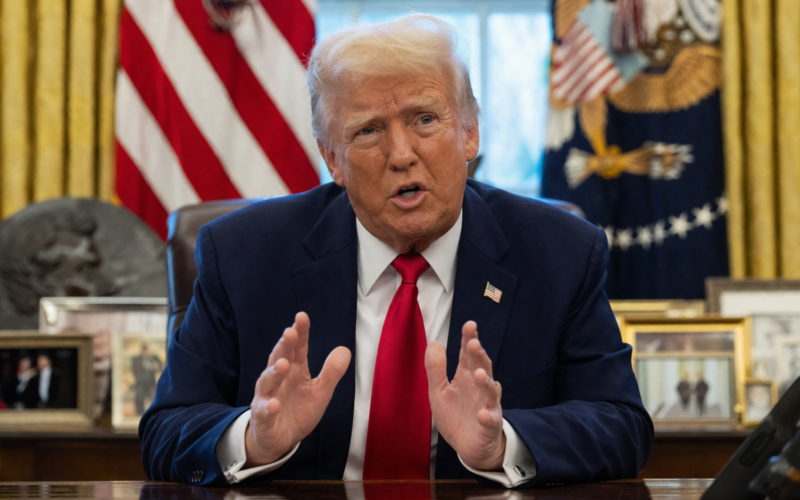
United States President Donald Trump signed a memorandum of understanding with Iran at the Palace of Versailles in France on June 17, 2026, placing a temporary framework to end the United States-Iran war into effect while leaving critical disputes over Lebanon, nuclear enrichment, sanctions relief and Israeli military operations unresolved.
The White House said Donald Trump signed the document during a dinner with French President Emmanuel Macron. Iranian President Masoud Pezeshkian also signed the agreement, while officials said a copy of the completed document was transmitted to Iran and the countries involved in mediation.
The 14-point memorandum calls for an immediate termination of military operations involving the United States, Iran and their allies across all fronts, including Lebanon. It also provides for the restoration of commercial shipping through the Strait of Hormuz, the gradual lifting of the United States naval blockade, oil-export waivers, access to frozen Iranian assets and negotiations over wider sanctions relief.
The agreement gives the United States and Iran up to 60 days, with the possibility of an extension by mutual consent, to negotiate a more comprehensive settlement. Iran reaffirmed that it would not develop nuclear weapons, but the future of its enriched uranium, domestic enrichment programme and verification arrangements remains subject to negotiation.
The agreement has reduced immediate fears of renewed United States-Iran combat, but it has not created a complete Middle East peace settlement. Israel is not a party to the memorandum and has resisted suggestions that the document requires Israeli forces to leave territory occupied during the latest war in Lebanon.
Iran considers Israel’s continued presence in southern Lebanon incompatible with an end to the regional conflict. United States officials have offered a narrower interpretation, saying the memorandum requires an end to military operations but does not explicitly compel an immediate Israeli withdrawal.
That contradiction has made Lebanon the most dangerous unresolved test of the agreement. The memorandum may have stopped one war on paper, but its durability could depend on a country that did not sign it and an armed group, Hezbollah, that was not part of the negotiations.
What did Donald Trump and Masoud Pezeshkian agree to in the 14-point Iran memorandum?
The memorandum establishes an immediate pause in military operations between the United States, Iran and their allies in the current conflict. Its opening provisions also refer to ending the war on all fronts, including Lebanon, and respecting Lebanon’s sovereignty and territorial integrity.
The agreement commits the United States and Iran to negotiate a final settlement within 60 days. The deadline may be extended if both governments consent, meaning the memorandum is best understood as an interim framework rather than a final peace treaty.
The United States is expected to begin removing the naval blockade imposed on Iran and end it fully within 30 days. Washington also committed not to deploy additional forces to the region during the negotiating period, provided the interim arrangement continues to hold.
Iran is expected to restore safe passage for commercial vessels between the Persian Gulf and the Sea of Oman. Shipping is intended to resume as technical barriers, mines and other military obstacles are removed.
The initial 60-day arrangement provides for commercial ships to pass without charge. Iran separately plans discussions with Oman and other Gulf coastal states over the longer-term management of maritime services in the Strait of Hormuz.
The memorandum also contains significant economic provisions. The United States is expected to issue waivers allowing exports of Iranian crude oil, petroleum products and related services, including banking, insurance and transport.
Frozen or restricted Iranian funds would become available under procedures negotiated by the two governments. The agreement also refers to a reconstruction and economic development plan valued at no less than $300 billion, although the final financing mechanism remains unsettled.
These commitments could deliver major economic relief to Iran if implemented. They also explain why critics in the United States and Israel argue that Tehran may secure broad sanctions and financial benefits without surrendering its missile capability, ending support for Hezbollah or immediately dismantling its nuclear infrastructure.
Why does the Strait of Hormuz remain the most urgent economic test of the Iran agreement?
The Strait of Hormuz remains the agreement’s most immediate economic test because global energy markets need evidence that commercial traffic can resume safely, not merely a diplomatic statement saying the route should reopen.
The memorandum calls for commercial movement to begin immediately and return progressively toward pre-war levels. Iran is responsible for arranging safe passage and removing technical or military obstacles, while the United States is expected to start dismantling its blockade.
However, the White House did not immediately confirm that the Strait of Hormuz had fully reopened after Donald Trump signed the memorandum. That uncertainty matters because shipping companies, oil traders and insurers will judge the agreement by physical conditions in the waterway.
The Strait of Hormuz is one of the world’s most strategically important oil routes. Any prolonged disruption affects crude prices, liquefied natural gas flows, marine insurance costs and the energy security of major importing economies across Asia and Europe.
Reopening will require more than political announcements. Commercial operators will need navigational assurances, confirmation that mines or other threats have been addressed, clarity over Iranian transit rules and evidence that military confrontations near merchant vessels have ended.
Iran has also indicated that it intends to establish a future system for managing the strait and charging for maritime services after the initial no-charge period. That proposal could become another difficult issue because international shipping states may challenge any arrangement they believe restricts internationally recognised navigation rights.
The agreement therefore reduces immediate escalation risk but does not eliminate the possibility of future maritime disputes. The Strait of Hormuz may reopen before the larger nuclear and sanctions settlement is complete, making shipping access both an early benefit and a source of negotiating leverage.
Why could Israel’s continued presence in Lebanon destabilise the United States-Iran agreement?
Israel’s continued military presence in Lebanon could destabilise the agreement because Iran considers the end of the Lebanon war an integral part of the regional ceasefire, while Israel does not accept that the United States and Iran can decide its security posture.
Iranian Foreign Minister Abbas Araqchi has said the regional war cannot be considered fully concluded while Israeli forces remain on Lebanese territory seized during the conflict. Iran also considers new Israeli attacks in Lebanon or continued occupation to be possible violations of the memorandum.
United States officials have presented a different interpretation. The American position is that the memorandum calls for an end to hostilities in Lebanon but does not contain a clear and immediate obligation requiring Israel to withdraw.
Israel has said it is not bound by an agreement it did not negotiate or sign. Israeli leaders have also maintained that forces may remain in southern Lebanon as long as they consider the deployment necessary to prevent Hezbollah from rebuilding military infrastructure near the border.
Hezbollah has linked Israel’s withdrawal to the next phase of nuclear negotiations between Washington and Tehran. The organisation believes Iran will insist on withdrawal during the 60-day talks, although it has described withdrawal as an intended result of negotiations rather than a precondition for beginning them.
This creates a dangerous chain of dependency. A strike by Hezbollah could trigger Israeli retaliation. An Israeli operation could be treated by Iran as a breach of the memorandum. A breakdown in the Lebanon ceasefire could then damage nuclear talks, sanctions relief and shipping arrangements that are formally separate.
The disagreement also limits the meaning of the phrase “end of the war on all fronts.” The United States and Iran may stop attacking each other, but a continuing Israel-Hezbollah confrontation would leave the regional war partially active.
Why is Donald Trump publicly pressuring Israel to show greater restraint in Lebanon?
Donald Trump is publicly pressuring Israel because continued military operations in Lebanon could undermine an agreement that the United States administration is presenting as a major diplomatic achievement.
Donald Trump said Israel retains the right to protect itself but should exercise better judgment in Lebanon. He also criticised the duration and civilian cost of Israel’s campaign against Hezbollah and expressed dissatisfaction with a recent strike on an apartment building in Beirut.
The shift is significant because Donald Trump has maintained a close political relationship with Israeli Prime Minister Benjamin Netanyahu and strongly supported Israeli security operations earlier in the conflict.
The Iran memorandum has changed the immediate American calculation. Washington now has an interest in preventing Israeli operations from provoking Iran, reviving fighting around the Strait of Hormuz or collapsing the negotiating window.
The dispute does not mean the United States has abandoned Israel’s security concerns. The memorandum does not require Hezbollah to disarm immediately, and Iran has not agreed to stop supporting allied armed groups across the region.
Instead, the disagreement reflects competing priorities. Israel wants freedom to continue degrading Hezbollah and controlling strategic areas in southern Lebanon. The United States wants a wider regional pause that protects the Iran agreement and restores energy traffic.
The result is a visible policy gap between Donald Trump and Benjamin Netanyahu. That gap may widen if Israel continues operations that Washington believes threaten the wider settlement.
How much progress does the memorandum make on Iran’s nuclear programme?
The memorandum records Iran’s commitment not to procure or develop nuclear weapons, but it postpones most of the difficult nuclear questions to the next round of negotiations.
The future of Iran’s enriched uranium remains unresolved. The memorandum provides for the stockpile to be addressed through a mutually agreed mechanism, with on-site dilution under International Atomic Energy Agency supervision identified as the minimum possible method.
Iran has rejected demands to transfer all enriched nuclear material outside the country. Tehran also wants to retain a domestic enrichment capability, while the United States and Israel have previously sought much more restrictive outcomes.
Verification is another unresolved issue. The final agreement must establish how international inspectors will assess damaged nuclear facilities, locate enriched material and confirm that Iran is complying with agreed limits.
The memorandum maintains the nuclear status quo during the negotiating period. Iran is expected not to expand its programme, while the United States is expected not to introduce new sanctions or deploy additional regional forces.
That arrangement buys time but does not solve the core dispute. Iran retains knowledge, infrastructure and enriched material, while Washington retains the ability to restore military and economic pressure if negotiations fail.
Donald Trump has also said the negotiating period is flexible, but he has warned that military action could resume if Iran does not comply or if the final agreement is unacceptable. The result is a ceasefire backed by the continued threat of force rather than a fully normalised diplomatic relationship.
Why is the unpublished text creating political and diplomatic uncertainty?
The unpublished text is creating uncertainty because different governments are describing the same agreement in different ways, particularly on Lebanon, sanctions and implementation.
A senior United States official read the 14 provisions to reporters, but the White House had not released the signed document publicly. Vice President JD Vance said mediating governments had initially requested a delay because of diplomatic protocol.
The lack of an official published text makes it difficult for lawmakers, allied governments, shipping companies, investors and international organisations to confirm the precise legal meaning of the commitments.
It has also contributed to confusion over the signing process. United States officials initially referred to earlier digital signatures and later said Donald Trump physically signed the document at Versailles. The administration said the agreement became effective after the signatures were completed.
Iran has described the memorandum as finalised, but Tehran’s interpretation of Lebanon goes further than the interpretation presented by some United States officials.
Israel’s government has also questioned provisions that appear to constrain military operations without Israeli participation. The absence of a publicly authenticated document allows each government to emphasise the interpretation that best serves its political position.
Publication will not eliminate every disagreement, but it would clarify whether the differences are genuine legal contradictions or competing political descriptions of broadly similar language.
What would determine whether the Iran memorandum becomes a durable regional peace settlement?
The memorandum will become durable only if implementation produces visible results during the 60-day negotiating period.
Commercial shipping must resume through the Strait of Hormuz without renewed drone attacks, vessel seizures, mining threats or military confrontations. The United States must begin removing the blockade in a verifiable manner.
Iran must maintain the nuclear status quo and permit negotiations over enriched material, inspections and long-term limits. Washington must issue the promised oil waivers and avoid introducing new sanctions while talks continue.
Lebanon may prove even more difficult. Israel and Hezbollah must reduce military operations sufficiently to prevent the Iran agreement from becoming hostage to renewed border warfare.
A monitoring mechanism must also be established. The memorandum calls for an executive structure to assess implementation, but the composition, powers and enforcement process have not been publicly detailed.
A final agreement would also require endorsement through a binding United Nations Security Council resolution. That step would give the settlement broader international standing but could create new negotiations involving permanent Security Council members.
The memorandum has achieved something important by replacing active United States-Iran warfare with a structured diplomatic process. Its weakness is that it attempts to connect nuclear policy, sanctions, shipping, Lebanon and regional security without fully controlling every actor involved.
The next 60 days will determine whether the Versailles signing marks the beginning of a durable settlement or only a temporary interruption between phases of conflict.
What are the key takeaways from Donald Trump signing the Iran memorandum at Versailles?
- United States President Donald Trump physically signed the Iran memorandum at the Palace of Versailles on June 17, 2026, while Iranian President Masoud Pezeshkian also completed the agreement and officials declared the interim framework effective.
- The 14-point memorandum calls for the immediate termination of military operations across all fronts, including Lebanon, and gives the United States and Iran up to 60 days to negotiate a comprehensive final settlement.
- Iran is expected to restore commercial passage through the Strait of Hormuz, while the United States must begin dismantling its naval blockade and fully end the blockade within the agreed implementation period.
- The economic provisions include oil-export waivers, access to frozen Iranian funds, negotiations over broader sanctions termination and a proposed reconstruction and development plan worth at least $300 billion.
- Iran reaffirmed that it would not develop nuclear weapons, but the future of enriched uranium, domestic enrichment, inspections and verification remains unresolved and will be negotiated during the next phase.
- Lebanon is the agreement’s most dangerous contradiction because Iran considers Israeli withdrawal essential to ending the war, while United States officials say the memorandum does not clearly require an immediate withdrawal.
- Israel is not a party to the memorandum and maintains that it may continue military operations or retain forces in southern Lebanon when necessary to prevent Hezbollah from rebuilding its capabilities.
- The signed text had not been publicly released in full, leaving governments, lawmakers and international observers dependent on verbal descriptions that have already produced conflicting interpretations of key provisions.
Share this:
Discover more from Business-News-Today.com
Subscribe to get the latest posts sent to your email.