




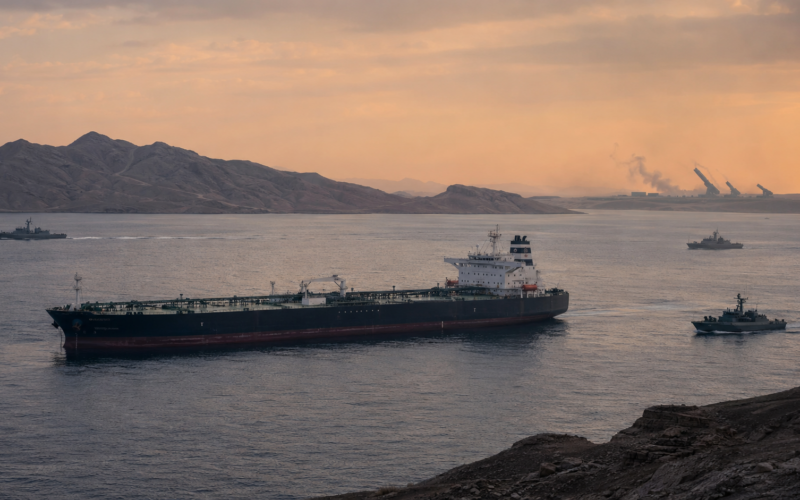
Crude oil futures sank to their lowest level since mid-April as traders grew increasingly confident that the United States and Iran are nearing a preliminary framework agreement that would include reopening the Strait of Hormuz. Brent crude traded near 91 dollars a barrel and West Texas Intermediate settled around 87 dollars, leaving the international benchmark on track for a monthly decline of roughly 19 percent, its steepest since 2020. The catalyst was a weekend of diplomatic signals, including a lengthy social media post from President Donald Trump asserting that Washington and Tehran had largely negotiated an understanding on a peace deal, even as both sides acknowledged that difficult issues remain unresolved. The Strait of Hormuz, which carried roughly a fifth of global oil and liquefied natural gas shipments before the conflict, has been the single most important variable in energy markets throughout the 2026 Iran war. As the prospect of its reopening firms up, the enormous war risk premium that drove crude above 115 dollars in early April is rapidly unwinding.
Why did crude oil slide to a six-week low on the tentative US-Iran framework deal?
The decline reflects a collapse in geopolitical fear pricing rather than a change in current supply. Reports that the United States and Iran had tentatively agreed to extend their ceasefire by 60 days, combined with optimism that the Strait of Hormuz could soon reopen, removed much of the premium that had been built into prices on the assumption that the waterway would stay disrupted. When the market prices out a worst-case supply shock, prices fall even before a single additional barrel actually flows.
The scale of the move underscores how much fear had been embedded. Crude had surged toward multi-year highs above 115 dollars at the peak of the conflict in early April, so a retreat to the high 80s for West Texas Intermediate represents a decline of roughly a quarter from that peak. The speed of the reversal shows that traders had been holding substantial long positions predicated on continued conflict, and those positions are being unwound as diplomacy advances.
The market is also looking through to a potential supply increase. A framework that reopens the Strait of Hormuz and extends the ceasefire would not only restore blocked shipments but could pave the way for additional Iranian barrels to return to the market if sanctions ease. The combination of a peace dividend and the prospect of more supply is a doubly bearish setup for crude, which is why prices reached a six-week low even though no agreement has been signed.
What would reopening the Strait of Hormuz mean for global oil and LNG supply?
The Strait of Hormuz is the most important chokepoint in global energy. Before the conflict it carried roughly one fifth of the world’s seaborne oil and a large share of liquefied natural gas, so any interruption removes a volume that cannot easily be replaced by other routes. Its disruption during the 2026 Iran war produced the largest dislocation to global crude supply in decades.
Reopening the strait would restore that flow and ease a structural supply fear. Gulf producers including Saudi Arabia, the United Arab Emirates, and Qatar rely on the waterway to reach Asian and European customers, and a return to normal transit would relieve the freight, insurance, and rerouting costs that have inflated delivered prices. For importers in Asia and Europe, the reopening would lower energy costs that have fed directly into inflation.
The liquefied natural gas dimension is equally significant. Qatar is one of the world’s largest LNG exporters and ships through Hormuz, so the conflict tightened global gas markets at a time when energy prices were already elevated. A reopening would loosen LNG supply, with knock-on effects for European gas prices and for the global cost of energy that has shaped central bank policy. The strait’s status is therefore not just an oil story but a broader energy and macroeconomic one.
How big is the risk premium unwinding and why is Brent set for its worst month since 2020?
The monthly numbers capture the magnitude of the shift. Brent crude is heading for a decline of around 19 percent for the month, which would be its largest monthly drop since 2020, a year defined by an unprecedented demand collapse. A move of that size in a single month reflects the wholesale removal of a war premium rather than ordinary supply and demand fluctuations.
The premium being unwound was extraordinary. At the height of the conflict, fears of a prolonged blockade, threats of strikes on energy infrastructure, and the risk of escalation pushed crude to levels not seen since 2022, with the market pricing a meaningful probability of a sustained supply shock. As each step toward de-escalation has materialized, from initial ceasefires to the current framework talks, that probability has been steadily marked down.
The repricing has clear macroeconomic consequences. Lower oil prices feed quickly into headline inflation, easing some of the pressure that the energy shock placed on central banks, a dynamic relevant to the broader debate about the path of interest rates. The same conflict that had been pushing inflation higher and forcing policymakers toward a more hawkish stance could, if the de-escalation holds, become a disinflationary force in the second half of the year.
What obstacles still stand between the framework and a finalized US-Iran agreement?
The agreement is far from done, which is the central caveat. President Donald Trump has indicated that he would make a final determination on the preliminary deal and has signaled he does not want his negotiators to rush, while emphasizing that the two sides remain at odds on several difficult issues. A framework that is largely negotiated is not the same as a signed and implemented accord.
Iran’s position adds further uncertainty. Tehran’s Foreign Ministry stated that no final understanding had been reached and that message exchanges were continuing, a reminder that public optimism from one side does not guarantee agreement from the other. Throughout the conflict, the two parties have repeatedly appeared close to deals that then stalled over enforcement, sanctions relief, and verification, and there is no assurance this round ends differently.
The practical mechanics of reopening also matter. Even if a political framework is agreed, restoring full, reliable transit through the Strait of Hormuz involves security guarantees, monitoring arrangements, and the rebuilding of shipping and insurance confidence, none of which happen instantly. Analysts have cautioned that significant obstacles remain before oil can flow freely through the strait again, which means the market may be pricing a smoother and faster resolution than the diplomacy can deliver.
How are energy stocks, refiners and oil ETFs positioned as the war premium fades?
Falling crude has pressured energy equities and oil-linked funds. The United States Oil Fund and related crude exchange-traded products have declined alongside futures, and the broader energy sector has lagged as the prospect of lower prices weighs on the earnings outlook for producers. Integrated majors and exploration companies that benefited from elevated crude now face the prospect of compressing margins if prices keep falling.
The picture is not uniformly negative across the energy complex. Refiners and consumers of energy can benefit from lower input costs, and airlines, transportation, and other fuel-intensive industries stand to gain margin relief if crude stabilizes at lower levels. The distinction between upstream producers, who are hurt by falling prices, and downstream and consuming industries, which benefit, is the key to reading the equity market response.
For investors, the fading war premium also resets expectations across the market. Lower energy prices support consumer spending power and ease inflation, which can be positive for equities broadly even as they hurt the energy sector specifically. The rotation away from energy exposure that tends to accompany a de-escalation reflects this trade-off, and it explains why a sharp fall in oil can coincide with strength in the wider stock market.
What are the scenarios and risks for oil prices if the Iran deal holds or collapses?
The bullish-for-stocks, bearish-for-oil scenario is a durable agreement. If the framework is signed, the ceasefire holds, and the Strait of Hormuz reopens reliably, crude could fall further as the war premium disappears entirely and additional supply returns, potentially pushing prices well below current levels and delivering broad disinflationary benefits. This is the outcome the market is currently leaning toward.
The opposing scenario is a breakdown. Given how often the two sides have approached and then retreated from agreements, a collapse in talks or a renewed flare-up around the strait could send prices sharply higher again, reversing the monthly decline and reintroducing the supply fears that drove crude above 115 dollars. The market’s swift pricing of a positive outcome leaves it exposed to a violent snapback if diplomacy fails.
The most likely path may be a volatile middle ground. Even a partial or fragile agreement could keep prices oscillating as traders react to each headline about enforcement, sanctions, and transit security, leaving crude lower than its wartime peak but prone to spikes on any sign of trouble. For now, oil at a six-week low reflects a market betting on peace, but the gap between a largely negotiated understanding and a fully implemented deal is exactly where the risk lies. Until barrels are confirmed flowing freely through the Strait of Hormuz, the premium can return as quickly as it has faded.
Key takeaways on what the US-Iran framework means for oil and energy markets
- Crude fell to a six-week low as traders bet a tentative US-Iran framework, including a 60-day ceasefire extension, would reopen the Strait of Hormuz.
- Brent near 91 dollars is heading for a roughly 19 percent monthly drop, its steepest since 2020, as the war risk premium unwinds.
- Prices have fallen about a quarter from the early-April peak above 115 dollars, reflecting the removal of fear pricing rather than new supply.
- The Strait of Hormuz carried roughly a fifth of global oil and major LNG volumes, so its reopening would ease both crude and gas markets.
- Lower oil feeds quickly into headline inflation, potentially turning the energy shock from an inflationary into a disinflationary force.
- The deal is not finalized, with President Trump yet to sign off and Iran’s Foreign Ministry saying no final understanding has been reached.
- Restoring reliable transit through the strait requires security, monitoring, and insurance confidence that will not return instantly.
- Energy equities and oil ETFs have fallen, while refiners and fuel-intensive industries stand to benefit from lower input costs.
- A durable agreement could push crude lower still, while a breakdown risks a violent price snapback toward wartime highs.
- The market is pricing a smooth resolution, leaving it exposed if the gap between a framework and a signed deal proves hard to close.
Discover more from Business-News-Today.com
Subscribe to get the latest posts sent to your email.