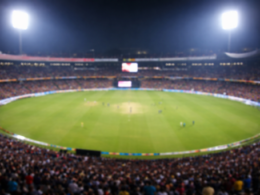





An Austrian court has sentenced a 21-year-old man to 15 years in prison for planning an Islamic State-inspired attack on a Taylor Swift concert in Vienna, closing a high-profile terrorism trial that revived questions about music-event security, online radicalisation and the vulnerability of major entertainment venues.
The man was convicted over a foiled plot targeting Taylor Swift’s 2024 Vienna concerts, which were cancelled after authorities warned of a planned attack. The case drew global attention because Taylor Swift’s Eras Tour had become one of the largest entertainment events in the world and because the planned attack threatened thousands of fans expected to attend the concerts in Austria’s capital.
The defendant admitted to the plot during court proceedings. Austrian authorities said the attack was inspired by Islamic State ideology and had been stopped before it could be carried out. No fans were injured because the concerts were cancelled after the threat was detected.
The 15-year prison sentence is a major outcome in a case that blended celebrity culture with counterterrorism. It also showed how public entertainment spaces can become security targets when mass gatherings, global fandom and extremist propaganda intersect.
The Vienna concerts were among three Taylor Swift shows cancelled in 2024 after the plot was uncovered. At the time, the cancellations disappointed fans who had travelled from several countries, but authorities and organisers framed the decision as necessary to protect public safety.
The ruling now moves the case from threat response into the accountability stage. For Austria and Europe, the trial highlights the continuing challenge of detecting radicalised individuals before they attack public venues. For the live entertainment industry, it reinforces why security planning for global tours has become a counterterrorism issue as well as a crowd-control responsibility.
Why did the Austrian court sentence the Taylor Swift concert attack plotter to 15 years?
The Austrian court sentenced the 21-year-old defendant to 15 years in prison after finding him guilty of terrorism-related offences linked to the planned attack on Taylor Swift’s Vienna concerts. The sentence reflected the seriousness of the plot, the scale of the potential target and the ideological motivation behind the plan.
The defendant admitted involvement in the planned attack. Authorities said the plot was inspired by Islamic State ideology. That detail was central because it moved the case beyond a general threat against a concert and into the category of extremist violence aimed at a mass public gathering.
Taylor Swift’s concerts in Vienna were expected to draw large crowds. Major concerts create dense queues, transport congestion, merchandise areas, entry checkpoints and fan gatherings outside venues. Even before fans enter a stadium or arena, there can be vulnerable crowd zones that require careful protection.
The institutional response in 2024 was to cancel the concerts after the plot was discovered. That decision prevented the attack from being attempted at the event and avoided the risk of mass casualties. The court sentence now confirms that the threat was treated as a serious terrorism case rather than a vague or low-level security scare.
The broader consequence is that European authorities may continue to treat large music events as potential targets for extremist plots. The Vienna case shows that celebrity-led events with global audiences can attract ideological attackers seeking visibility and symbolic impact.
How did the foiled Vienna plot affect Taylor Swift fans and the Eras Tour?
The foiled Vienna plot affected Taylor Swift fans deeply because the cancelled concerts were part of one of the world’s most visible music tours. Fans had planned travel, accommodation, outfits, meetups and social-media events around the shows, only to see them cancelled because of a credible security threat.
The cancellation disappointed thousands of ticket holders, but the security decision was framed around public safety. When a terrorism plot is credible enough to trigger cancellations, organisers and authorities must prioritise preventing harm over preserving the entertainment schedule.
The Eras Tour had become more than a concert series. It was an international cultural event, drawing fans across borders and generating local economic activity in host cities. That scale increased both the public impact of the cancellation and the security complexity around the event.
For fans, the case may still carry emotional weight because the threat targeted a space built around community, music and celebration. Many Taylor Swift fans treat concerts as shared social milestones. A planned attack against such a gathering can create fear that lasts beyond the immediate cancellation.
The sentencing provides some legal closure, but it does not erase the disruption or anxiety caused by the plot. It also underscores the reality that modern entertainment events must operate under security assumptions once associated mainly with political summits, sports tournaments or state ceremonies.
Why are major concerts increasingly treated as high-risk security environments?
Major concerts are increasingly treated as high-risk security environments because they bring together large crowds, predictable schedules, fixed venues and heavy social-media visibility. Those features can make events attractive to attackers seeking maximum public impact.
Concert security has changed sharply over the past decade. Organisers now plan not only for crowd surges, medical emergencies and ticket fraud, but also for terrorism, vehicle attacks, drone threats, cyber disruption and violence outside venues. The Taylor Swift Vienna plot fits into this wider trend.
Entertainment venues often have multiple risk zones. Security does not begin at the stage door. It extends to parking areas, train stations, fan queues, perimeter zones, merchandise areas and informal gatherings outside the venue. Attackers may target any point where crowds gather.
The institutional challenge is coordination. Police, intelligence services, venue operators, tour organisers, private security firms and local governments must share information quickly. In Vienna, authorities acted before the concerts took place, showing how intelligence-led prevention can avert disaster.
The broader entertainment industry consequence is that security costs and planning complexity are rising. Global tours must now adapt to threat levels in each city, sometimes making decisions that affect fans, insurers, local businesses and international travel plans.
What does the case reveal about online radicalisation and extremist propaganda?
The case reveals how online radicalisation can connect individual actors to global extremist narratives without requiring a large physical organisation. Authorities said the plot was inspired by Islamic State ideology, a form of influence that can spread through digital propaganda, encrypted channels and online communities.
Extremist groups often use high-profile events to inspire followers because the symbolic value is obvious. A major concert involving a globally recognised artist offers attention, fear and media amplification. That makes entertainment events vulnerable not because of the artist personally, but because the crowd and public visibility create a target.
The defendant’s age also matters. At 21, the attacker fits a pattern seen in several European radicalisation cases involving young men influenced by online extremist content. Security agencies across Europe have repeatedly warned that lone actors or small cells can move from online engagement to operational planning quickly.
The broader challenge for authorities is detection. Online radicalisation does not always create obvious signs before an attempted attack. Intelligence services must identify credible threats while respecting legal limits, privacy protections and the risk of false alarms.
The Vienna case suggests that detection worked before violence occurred. But it also reinforces that extremist propaganda remains a durable threat to public spaces, especially when young individuals seek ideological belonging or notoriety through planned attacks.
How does the Vienna case fit into Europe’s wider counterterrorism challenge?
The Vienna case fits into Europe’s wider counterterrorism challenge because it shows that mass-casualty plots against civilian targets remain a concern even after the decline of Islamic State’s territorial control in the Middle East. The group’s territorial losses did not end its ability to inspire attacks abroad.
European governments have spent years strengthening intelligence sharing, border controls, online monitoring and venue security after attacks in France, Belgium, Germany, Austria and the United Kingdom. The Taylor Swift Vienna plot belongs to that broader security environment.
Austria’s response also matters because Vienna has previously experienced extremist violence. The city has had to maintain vigilance around public spaces, religious sites, transport hubs and entertainment venues. A planned attack against a major concert placed the threat in a highly visible cultural setting.
The broader consequence is that European security agencies must continue treating soft targets as priority risks. Soft targets are places where civilians gather and where open access is part of normal life. Concerts, markets, transport centres and public squares remain difficult to secure without changing the civic character of public life.
The sentencing may reassure the public that the legal system has acted, but prevention remains the more important challenge. Stopping plots before they reach the attack stage depends on intelligence, community reporting, digital monitoring and rapid operational decisions.
What could the Taylor Swift Vienna ruling mean for future live-event security?
The Taylor Swift Vienna ruling could push organisers and authorities to strengthen live-event security planning, especially for global tours, stadium shows and events expected to draw international crowds. The legal outcome confirms that threats against concerts will be treated with the same seriousness as threats against other mass public venues.
Future planning may involve earlier intelligence coordination, stronger venue perimeter controls, expanded screening zones, more visible police deployment and closer monitoring of online threats. Tour organisers may also refine crisis communication plans for fans when cancellations become necessary.
The ruling also reinforces the need for clear decision-making authority. When intelligence agencies identify a credible threat, organisers, police and government officials must decide quickly whether to proceed, postpone or cancel. Those decisions carry enormous financial and emotional consequences, but the Vienna case shows why caution can be necessary.
For fans, the case may alter expectations. Concert security may feel more visible, entry may take longer, and restrictions on bags, movement or fan gatherings may become stricter. Those changes can be inconvenient, but they are increasingly part of the cost of protecting large gatherings.
For the live entertainment industry, the message is blunt: blockbuster tours are not just cultural products. They are major public events requiring security planning at the level of international risk management.
What are the key takeaways from the Taylor Swift Vienna attack plot sentencing?
- An Austrian court sentenced a 21-year-old man to 15 years in prison. The sentence followed his conviction over a foiled attack plot targeting Taylor Swift’s 2024 Vienna concerts.
- The defendant admitted involvement in the planned attack during court proceedings. Authorities said the plot was inspired by Islamic State ideology and was stopped before it could be carried out.
- Taylor Swift’s Vienna concerts were cancelled in 2024 after the threat was detected. The cancellations disappointed thousands of fans but prevented a potential attack on a mass gathering.
- The case drew global attention because the Eras Tour was one of the world’s biggest entertainment events. The plot showed how high-profile music events can become targets for extremist violence.
- The sentencing renewed focus on concert security and public-event protection in Europe. Authorities and organisers must manage risks around venues, queues, transport points and fan gatherings.
- The case also highlighted ongoing concerns about online radicalisation. European security agencies continue to monitor how extremist propaganda can influence young individuals to plan attacks.
Discover more from Business-News-Today.com
Subscribe to get the latest posts sent to your email.