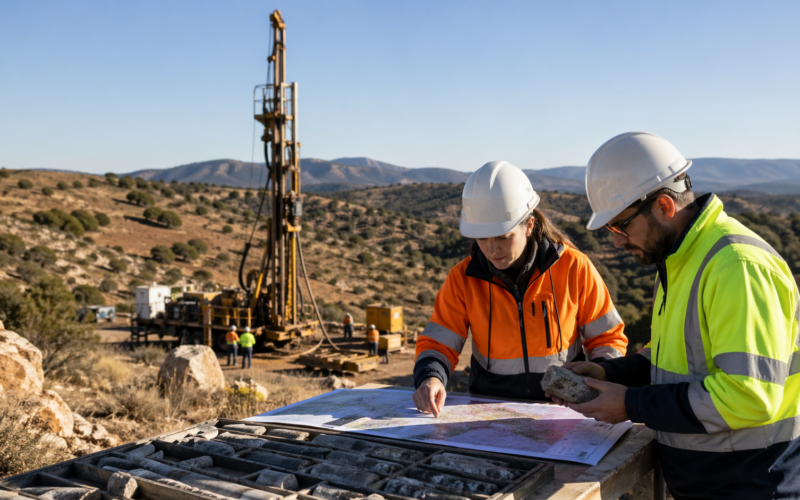
Pan Global Resources Inc. (TSXV: PGZ, OTCQB: PGZFF, FRA: 2EU) has announced a C$7.2 million non-brokered private placement with existing strategic investor Alpayana, giving the Peruvian mining group an expected 19.9 percent stake in the Canadian explorer after closing. The financing will be completed through the issue of 45 million common shares at C$0.16 per share and comes as Pan Global Resources Inc. shifts capital toward a larger drilling program at its Escacena and Cármenes projects in Spain. The company has also decided not to proceed with a previously announced warrant extension, a move that changes the near-term capital structure discussion for existing warrant-holders. For investors tracking Pan Global Resources stock, the deal is less about headline cash alone and more about whether a strategic mining shareholder can help convert exploration optionality into a more credible development pathway.
Why is Alpayana increasing its stake in Pan Global Resources at a crucial stage for Spain copper exploration?
Alpayana’s decision to lift its exposure to Pan Global Resources Inc. is strategically important because it comes at a point where exploration companies are being judged less on land position and more on their ability to fund meaningful drilling. Many junior miners can assemble prospective ground, generate attractive geophysics, and issue ambitious exploration language. The harder part is paying for enough drilling to prove whether those targets can become economically relevant. That is where this financing changes the tone of the Pan Global Resources story.
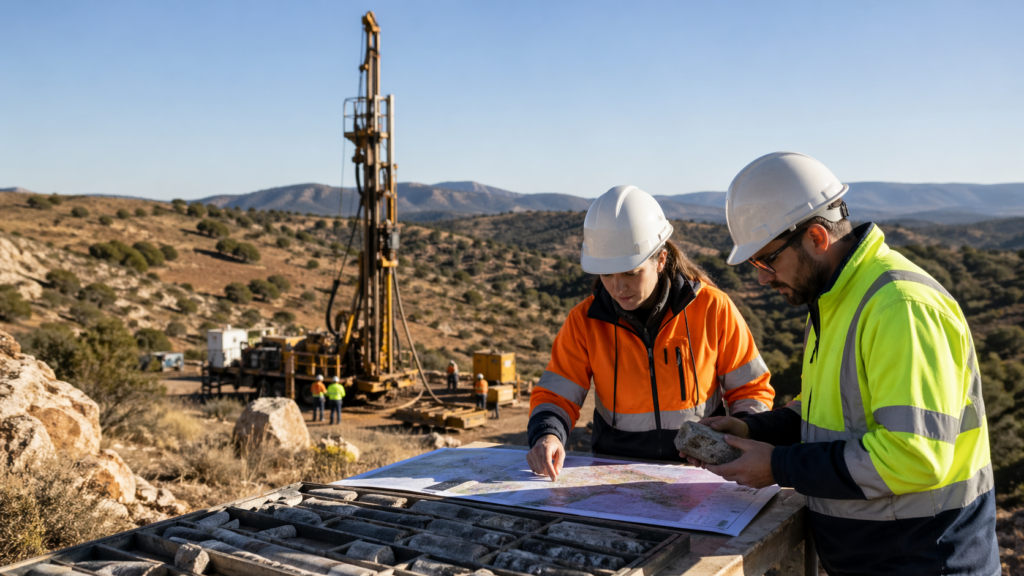
The C$7.2 million placement allows Pan Global Resources Inc. to double its current drilling plan to 20,000 meters, which is a material change for a company at this stage. More meters do not automatically create value, of course. The drill bit still has the final vote, and the drill bit is famously rude when geology gets overconfident. However, the ability to expand drilling across Escacena and Cármenes gives Pan Global Resources Inc. a better chance of turning technical targets into market-moving data points.
The identity of the investor also matters. Alpayana is not simply a financial buyer chasing short-term mining sentiment. It is a privately owned mining group with operating mines in Latin America and decades of operating history in Peru and Mexico. That does not remove exploration risk, but it does create a stronger signal than a routine flow-through financing or a scattered retail raise. Strategic capital from an operating mining group can suggest that the investor sees project-level potential, geological relevance, or long-term optionality that may not yet be fully reflected in public market valuation.
How does the C$7.2 million financing change Pan Global Resources’ Escacena and Cármenes drilling strategy?
The immediate operational impact is clear: Pan Global Resources Inc. plans to use the proceeds to expand and accelerate exploration at Escacena and Cármenes. At Escacena, the company intends to extend and expand the Cañada Honda copper-gold deposit, where a preliminary resource, prior drill results, and a large untested coincident gravity and electromagnetic target point to additional expansion potential. That combination of known mineralization and untested geophysical scale is exactly the kind of setup that can attract junior mining investors, provided drilling results begin to support the model.
The Escacena Project remains the anchor asset. Located in southern Spain within the Iberian Pyrite Belt, Escacena benefits from a mining district that already has infrastructure, operating history, and copper relevance. Pan Global Resources Inc. has stated that the project package, including Escacena South and new application areas, covers more than 13,000 hectares. The company’s existing mineral resource estimates at La Romana and Cañada Honda provide a base from which to build, but the market will likely focus on whether the expanded program can demonstrate scale beyond the known resource areas.
The Cármenes Project gives Pan Global Resources Inc. a second exploration lever. Located in northern Spain on the Rio Narcea Gold Belt, Cármenes includes historical copper, cobalt, nickel, and gold workings, with recent drilling at the Providencia target indicating gold potential. The company has framed the area as prospective for carbonate-hosted hydrothermal or epithermal-style mineralization. For investors, the strategic appeal is that Cármenes diversifies the exploration story beyond Escacena, but the risk is that management attention and capital allocation must remain disciplined across two projects rather than becoming stretched across too many targets.
Why did Pan Global Resources cancel the warrant extension and what does that signal to investors?
The decision not to proceed with the previously announced warrant extension is more than a housekeeping item. It indicates that the Alpayana financing has altered the company’s near-term funding calculus. By inviting warrant-holders to exercise before the May 6, 2026 expiry date, Pan Global Resources Inc. is effectively leaving open the possibility of additional cash inflow without extending the life of those instruments.
For existing shareholders, the cancellation of the warrant extension may be viewed as a cleaner approach to dilution management. A warrant extension can sometimes be interpreted as friendly to warrant-holders but less attractive for common shareholders, especially when it prolongs overhang. By choosing the strategic placement instead, Pan Global Resources Inc. is prioritizing a defined capital injection from Alpayana and allowing the warrant deadline to do what deadlines are supposed to do: force a decision.
The trade-off is that the placement itself is dilutive. Alpayana will hold approximately 19.9 percent of Pan Global Resources Inc. after closing, which gives the strategic investor a meaningful position without crossing into outright control. For a junior explorer, dilution is not automatically negative if the capital is used to generate resource growth, new discoveries, and stronger project economics. The market’s judgment will depend on whether the 20,000-meter program produces results that justify the dilution. In mining, dilution is forgiven when discovery follows. When it does not, investors remember everything.
How does Pan Global Resources stock performance reflect market sentiment after the Alpayana financing?
Pan Global Resources stock was trading around C$0.165 in recent TSX Venture Exchange data, with a 52-week range around C$0.10 to C$0.19 and market capitalization near C$53 million. That places the company closer to the upper half of its recent trading band, suggesting that investors have already been assigning some value to the Spain exploration thesis before the latest financing. The stock’s recent five-day and year-to-date performance also indicates improving momentum, although liquidity and volatility remain normal features of TSX Venture-listed exploration names.
The financing price of C$0.16 per share is important because it sits close to the recent market level rather than at a dramatic discount. For shareholders, that is preferable to a heavily discounted financing that resets valuation expectations lower. For Alpayana, the structure signals willingness to increase exposure at a level broadly aligned with current trading, rather than waiting for a deeper pullback. That helps frame the transaction as a strategic endorsement rather than a distressed financing.
Investor sentiment will still depend on execution. Pan Global Resources Inc. is not being valued like a producer with cash flow visibility. It is being valued like an explorer with resource expansion potential, strategic backing, and copper-gold optionality in a European mining jurisdiction. That means market reaction can move quickly around drill results, permit progress, financing updates, and commodity sentiment. The current setup is constructive, but it remains exploration-stage constructive, which is Wall Street’s polite way of saying “interesting, but bring data.”
What does the Alpayana investment say about copper exploration demand in Europe?
The Alpayana placement lands in a broader context where copper exploration is attracting renewed attention because of electrification, grid expansion, renewable energy deployment, and industrial policy. Europe’s interest in domestic and allied-source critical minerals has increased the strategic value of projects in jurisdictions such as Spain, particularly where infrastructure and mining history already exist. Escacena’s location in the Iberian Pyrite Belt gives Pan Global Resources Inc. a stronger jurisdictional narrative than many early-stage projects in more remote or politically complex regions.
For Alpayana, exposure to Spain may offer geographic diversification beyond Latin America while staying within the mining group’s operational comfort zone of polymetallic systems and disciplined project development. For Pan Global Resources Inc., having a strategic investor with operating mining experience can help strengthen credibility with investors who increasingly want to see more than attractive exploration maps. Capital markets have become choosier, and junior miners that can secure committed strategic funding may have an advantage over peers relying only on episodic equity raises.
The competitive implication is that copper explorers with district-scale land packages, early resources, and credible drill targets may continue to attract strategic interest. However, this does not mean every copper junior becomes a takeover candidate overnight. Strategic investors still care about grade, scale, metallurgy, permitting, infrastructure, and the practical timeline to development. Pan Global Resources Inc. has improved its funding position, but the next phase must convert that improved position into stronger technical evidence.
What are the main execution risks as Pan Global Resources expands drilling in Spain?
The biggest risk remains geological execution. Pan Global Resources Inc. has identified attractive targets at Escacena and Cármenes, but expanded drilling must confirm continuity, grade, thickness, and scale. A larger drill program increases the probability of meaningful discovery, but it also increases the volume of data that must be interpreted carefully. Exploration success is rarely linear, and investors should expect volatility as individual assay results are released.
Permitting and access are also important. Pan Global Resources Inc. has indicated that exploration at Escacena South will begin with heliborne geophysics, followed by an aggressive drill program, with access and permit applications in progress and expected later this year. That timeline matters because delayed permits can slow exploration momentum even when capital is available. In European jurisdictions, social licence, environmental scrutiny, and administrative process can be as important as geology.
Capital discipline is the third risk. The financing gives Pan Global Resources Inc. more room to accelerate work, but exploration companies must balance ambition with sequencing. Drilling too broadly can dilute technical focus, while drilling too narrowly can miss district-scale opportunity. The company’s challenge is to prioritize targets that can most efficiently improve market understanding of resource scale, development potential, and strategic value. Investors will want evidence that the enlarged budget is being deployed with precision rather than enthusiasm alone.
What happens next for Pan Global Resources after the Alpayana private placement closes?
The next phase will likely be defined by three catalysts: final TSX Venture Exchange acceptance of the offering, warrant-holder decisions before the May 6, 2026 expiry date, and the rollout of expanded drilling across Escacena and Cármenes. The placement gives Pan Global Resources Inc. a stronger funding base, but the market will quickly shift attention from financing terms to drill results. In junior mining, money buys the chance to prove value. It does not prove value by itself.
At Escacena, investors will watch whether drilling at Cañada Honda can expand the copper-gold deposit and whether Escacena South begins to generate credible targets from geophysical work. At Cármenes, follow-up drilling at Providencia and additional targets could determine whether the project becomes a genuine second pillar or remains a promising but secondary exploration asset. The sequencing of news flow will matter because investor attention spans in junior mining can be shorter than a drill core box on a windy day.
The broader strategic question is whether Alpayana’s increased stake becomes the beginning of a deeper relationship. A 19.9 percent holding gives Alpayana strong economic exposure and potential influence, but it stops short of control. If drilling strengthens the project case, the relationship could become more strategically important over time. If results disappoint, the financing still provides runway, but the market may demand a sharper explanation of how Pan Global Resources Inc. intends to convert exploration spending into durable shareholder value.
Key takeaways on what Pan Global Resources’ Alpayana financing means for investors, competitors, and Spain copper exploration
- Pan Global Resources Inc. has strengthened its balance sheet with a C$7.2 million strategic placement at a time when many junior explorers still face selective capital markets.
- Alpayana’s expected 19.9 percent stake gives Pan Global Resources Inc. a mining-sector strategic shareholder rather than only short-term financial backing.
- The financing enables Pan Global Resources Inc. to double its drilling plan to 20,000 meters, increasing the importance of upcoming assay results.
- Escacena remains the core value driver because it combines existing resources, district-scale land, infrastructure advantages, and Iberian Pyrite Belt exposure.
- Cármenes adds exploration diversification, but Pan Global Resources Inc. must show that a two-project strategy improves value rather than spreading capital too thin.
- The decision to cancel the warrant extension may reduce overhang concerns, although the placement itself still introduces dilution.
- Pan Global Resources stock is trading near the upper half of its 52-week range, suggesting that investors are already assigning value to the Spain exploration story.
- Strategic copper exploration in Europe is becoming more relevant as electrification, grid expansion, and critical minerals policy reshape investor interest.
- The next market test will not be the financing announcement itself, but whether expanded drilling delivers stronger evidence of resource growth and discovery potential.
- For competitors, the deal reinforces that credible strategic investors may increasingly back junior miners with district-scale copper exposure in lower-risk jurisdictions.
Discover more from Business-News-Today.com
Subscribe to get the latest posts sent to your email.