



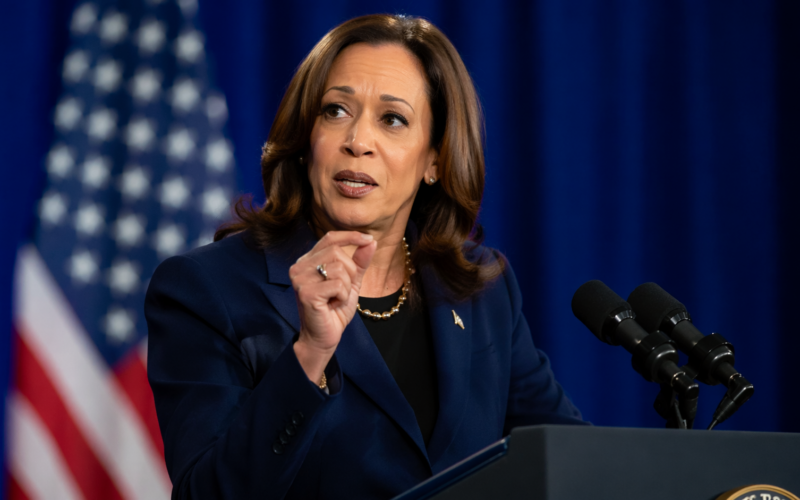
Kamala Harris said on April 10, 2026, that she was thinking about running for president again, giving her clearest public indication yet that she may seek the Democratic nomination in 2028. Speaking at the National Action Network convention in New York, the former Vice President told Reverend Al Sharpton that she might run and repeated that she was thinking about it, drawing cheers from the audience.
The remark mattered because Harris had largely left her future plans undefined after losing the 2024 presidential election to Donald Trump. By answering directly at a gathering that drew several Democratic figures widely seen as possible 2028 contenders, Harris moved from strategic ambiguity to open consideration, even if she stopped short of a formal declaration. Reuters and The Associated Press both reported that the exchange took place as Democrats were already using the convention to test messages and strengthen ties with Black voters, a core constituency in the party’s presidential coalition.
Harris framed the question in terms of public service rather than personal ambition. Reuters reported that she said any decision would depend on who, in 2028, could do the best job as president for the American people. The Associated Press separately reported that Harris emphasized her experience in and around the White House, saying she knew what the presidency required after serving four years as vice president and spending extensive time in the Oval Office and the Situation Room.
That formulation is politically significant because it lets Harris argue continuity of readiness while avoiding an immediate campaign launch. It also allows her to re-enter the 2028 conversation on terms that stress executive experience, national exposure, and familiarity with presidential decision-making. At a moment when there is no settled early Democratic frontrunner, such positioning may help Harris preserve flexibility while the party remains focused on the 2026 midterm elections.
Why Kamala Harris’s “I might” comment is becoming an early marker in the 2028 Democratic presidential contest
The immediate political context was the National Action Network annual convention, which served not just as an activist gathering but also as an early proving ground for Democrats with national ambitions. The Associated Press reported that more than a half-dozen potential 2028 candidates appeared during the week, while Reuters named figures including Pennsylvania Governor Josh Shapiro, former Transportation Secretary Pete Buttigieg, and Illinois Governor JB Pritzker as participants in the broader field of possible contenders.
That made Harris’s answer stand out. The Associated Press reported that she received the only standing ovation and the largest crowd of any 2028 prospect appearing at the event. It also reported that while others largely deflected questions about future campaigns, Harris repeated three times that she was thinking about it. In practical terms, that made her the most direct speaker on the question that hovered over the convention.
The venue also mattered. The National Action Network convention is not a formal primary debate, but it is an influential political stage, especially for Democratic candidates seeking credibility and enthusiasm among Black voters. The Associated Press described Black voters as one of the Democratic Party’s most powerful blocs, while its reporting from the convention suggested that the event was already functioning as an early showcase for a crowded future contest. Harris’s appearance therefore resonated beyond a single soundbite.
ABC News reported that Harris also used the event to argue that the status quo in government and politics was not working, tying the personal question about whether she would run to a wider dissatisfaction with the current direction of public life. That matters because it begins to sketch a possible rationale for a future candidacy: not merely unfinished personal business after 2024, but an argument that the existing political order is failing to meet voter expectations.
What Kamala Harris’s latest comments reveal about Democratic leadership after the 2024 election loss
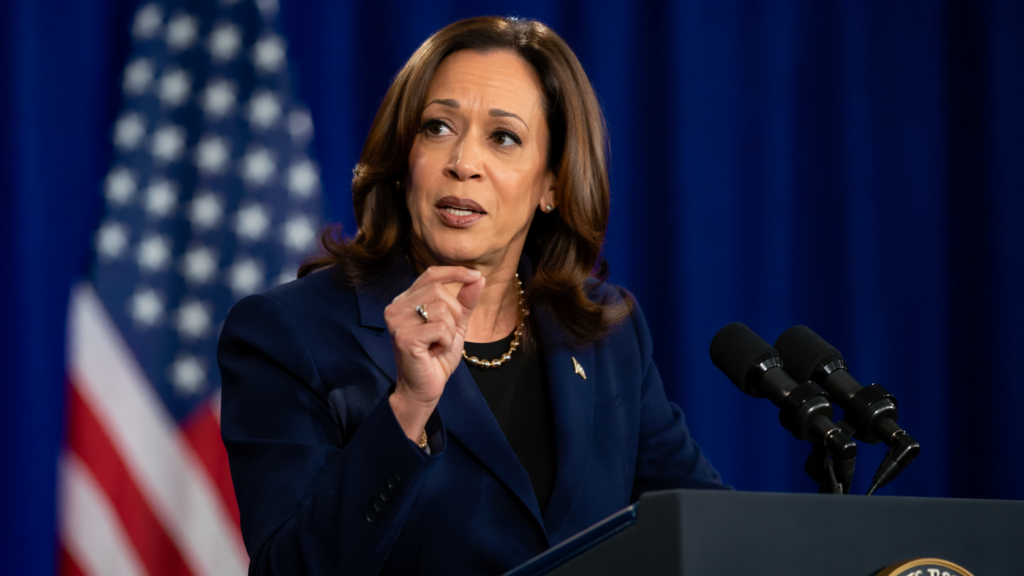
Harris enters any 2028 discussion with strengths and liabilities that are both already well defined. Reuters noted that she remains a prominent Democratic figure after her loss to Trump in 2024, but it also reported that polling has shown some voters want new Democratic leadership. That tension is now central to the question of whether Harris can convert recognition and experience into renewed party-wide momentum.
The Associated Press pointed to the same underlying split in a different way. It reported that Harris remained politically active after leaving office, including by launching a political action committee and traveling to support Democrats, especially in the South. At the same time, it said some in the party had shifted their attention to a newer generation of leaders following her 2024 defeat. Those two realities are not contradictory. They show a party that still treats Harris as an important national figure while also testing alternatives.
This is why Harris’s wording was carefully calibrated. She did not say she would run. She did not say she would not run. Instead, she confirmed deliberation. That is enough to keep donors, activists, strategists, and rivals engaged without forcing early commitments in a political cycle that remains distant. The Democratic primary season, as The Associated Press noted, is not expected to begin in earnest until after the November midterms. In that sense, Harris’s statement functions as a marker, not a launch.
It also helps explain why the response in the room drew attention. According to The Associated Press, Sharpton noted that Harris had won more votes in her losing 2024 campaign than former Democratic Presidents Barack Obama and Bill Clinton. While that comparison does not settle the question of future viability, it does show how Harris’s allies are attempting to frame her place in party history: not as a figure defined solely by defeat, but as one who remains nationally competitive and historically significant.
How the National Action Network convention in New York is shaping early Democratic positioning for 2028
The convention’s broader importance lies in how it highlighted an unsettled Democratic landscape. Reuters reported that the gathering drew several possible candidates. The Associated Press reported that no clear early favorite had yet emerged. Harris may have been the most prominent figure in the room, but the larger story is that the Democratic field remains fluid, with multiple factions and constituencies still assessing who can lead the party next.
For Harris, that fluidity offers both opportunity and risk. Opportunity comes from name recognition, prior national campaign infrastructure, and clear command of presidential-level issues. Risk comes from the fact that a former nominee who lost a general election must persuade party voters that she represents not just familiarity but a credible path forward. Reuters’ reference to voter appetite for new leadership underscores that challenge. Harris is not trying to introduce herself to the country. She is trying to define whether prior experience is an asset or a ceiling.
The New York appearance also suggests Harris understands that the pathway to another candidacy begins with coalition maintenance. Black voters remain central to Democratic primaries, and a high-profile exchange with Sharpton at a major National Action Network event offered a visible reminder that Harris still commands attention in one of the party’s most influential political spaces. The Associated Press account that attendees streamed out after her appearance in part to seek selfies captured the practical side of that appeal. Enthusiasm in a room is not the same as votes nationwide, but it is still a political resource.
None of this means a Harris campaign is imminent. The reporting instead shows an early-stage repositioning. Harris has reopened the possibility of another presidential run, placed herself back into the center of media and activist attention, and done so without triggering the burdens of a formal campaign. That is why the most important word in her answer may not have been “might” alone, but the repetition that followed. By saying she was thinking about it more than once, Harris made clear that the idea is live, not rhetorical.
For now, the practical effect is straightforward. Harris has ensured that any discussion of the Democratic Party’s 2028 field must include her near the front of the conversation. Whether that ultimately becomes a candidacy will depend on the midterm environment, party appetite, rival strength, and Harris’s own judgment about whether her profile matches what Democratic voters want next. But as of April 10, 2026, one piece of uncertainty has narrowed. Kamala Harris is no longer merely being talked about as a possible presidential candidate by others. She has now said herself that she is thinking about it.
Key takeaways on what this development means for the countries, institutions, and global context involved
- Kamala Harris publicly confirmed on April 10, 2026, that she is thinking about another presidential run, making this her clearest statement yet on the 2028 race.
- The comment came at the National Action Network convention in New York, where several Democratic figures seen as possible 2028 contenders were also appearing.
- The reporting indicates that Harris drew the strongest audience response at the event, suggesting she remains a major figure in Democratic coalition politics, particularly among Black activists and voters.
- Harris’s remarks do not amount to a campaign launch, but they place her firmly back into an early Democratic field that reporters describe as unsettled and without a clear favorite.
- The immediate institutional context remains the 2026 midterm cycle, meaning Harris’s statement is best understood as an early positioning move rather than a formal bid.
Discover more from Business-News-Today.com
Subscribe to get the latest posts sent to your email.