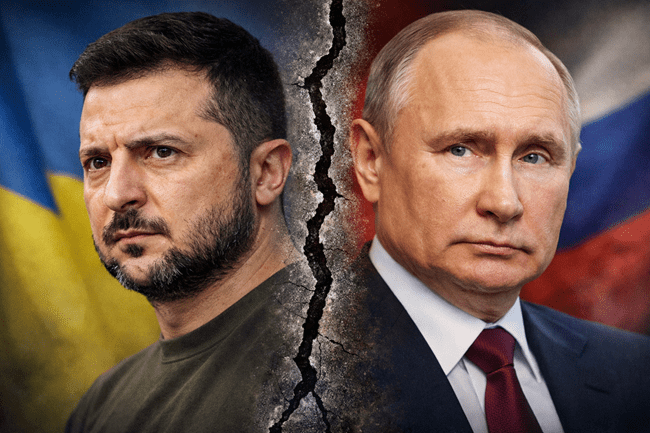


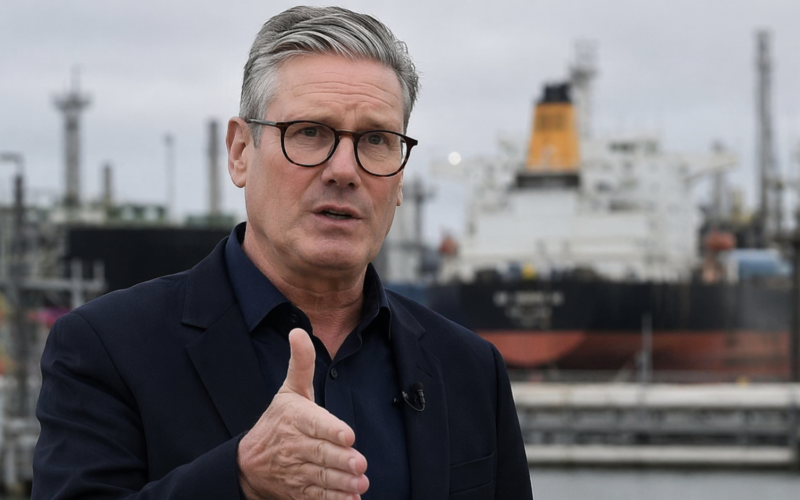
British Prime Minister Keir Starmer said on Thursday, 9 April 2026, that he was “fed up” with the actions of United States President Donald Trump and Russian President Vladimir Putin causing energy bills to rise for households and businesses across the United Kingdom. The remarks, delivered in an interview with ITV News’ Talking Politics podcast recorded during a Gulf tour, came as a fragile two-week ceasefire between the United States and Iran held under mounting uncertainty, with the Strait of Hormuz still effectively closed to international shipping.
Starmer told ITV News’ Robert Peston that families across the United Kingdom were being forced to absorb the economic consequences of decisions made by foreign leaders. The prime minister said he was “fed up with the fact that families across the country see their bills go up and down on energy, businesses’ bills go up and down on energy, because of the actions of Putin or Trump across the world.” He added that people were being told to simply accept that international events would “impact” their families each winter, and described his aim as getting the United Kingdom “off that roller coaster” through expanded domestic renewable energy capacity.
Why Starmer said he was fed up with Trump and Putin over rising UK energy bills during the Iran war
The interview followed the announcement on 8 April 2026 of a two-week ceasefire between the United States and Iran, reached approximately 88 minutes before a deadline set by Trump threatening to destroy Iranian power plants, oil wells, Kharg Island, and desalination infrastructure. Iran had signalled it would allow coordinated, time-limited safe passage through the Strait of Hormuz in exchange for a halt to United States and Israeli strikes. Traffic through the strait remained at a virtual standstill despite the ceasefire announcement, and Iran subsequently reclosed the waterway in response to continued Israeli missile strikes against Hezbollah targets in Lebanon.
The United States and Israel had launched strikes on Iran on 28 February 2026, assassinating Supreme Leader Ali Khamenei and other Iranian officials. The operation was conducted with little to no advance consultation with transatlantic partners. Iran responded with missile and drone strikes against Israel, United States bases, and United States-allied Gulf states, and by effectively closing the Strait of Hormuz. Oil prices surged globally. In the United Kingdom, the average price of diesel reached 190.6 pence per litre by the morning of 8 April 2026, representing a 34 percent increase since 28 February 2026, according to motoring organisation RAC. Unleaded petrol reached 157.7 pence per litre, a 19 percent increase over the same period. The United Kingdom’s Bank of England had declined to cut interest rates at its March 2026 meeting, citing the economic effects of the conflict, in a reversal of prior market expectations. Energy bills, mortgage costs, petrol prices, and food bills were all rising across the United Kingdom as the conflict continued.
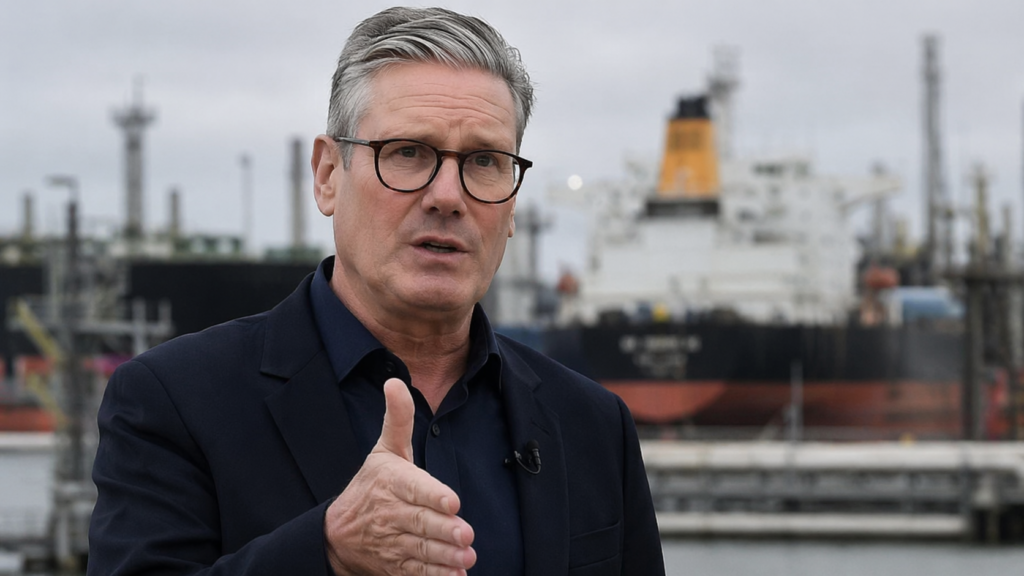
What Starmer said about Trump’s Iran rhetoric and why he refused to use the same language
Starmer also used the Gulf trip to publicly distance the United Kingdom from Trump’s verbal threats against Iran. After Trump posted on Truth Social earlier in the week warning that an entire Iranian civilisation would “die tonight” unless a deal was reached, Starmer told ITV News those were not words he would “ever use.” He said he came at the matter “with our British values and principles” and that the United Kingdom would be guided by those values in everything it did. The prime minister confirmed that the United Kingdom’s position on military bases remained unchanged: the bases could be used only for collective self-defence, not for offensive operations against Iran. He said he was clear in his own mind about what had been agreed on base usage and described this as a “really important point of principle,” adding that the United Kingdom had to “learn the lessons of Iraq.”
Starmer also publicly condemned post-ceasefire Israeli missile strikes on Lebanon as “wrong” and said they “should stop.” He acknowledged it was “hard to say” whether the strikes technically constituted a breach of the United States-Iran ceasefire, citing limited access to the full details of the agreement, but said the matter was one of principles regardless of technical definitions. He said he would not comment when asked if his relationship with Trump was “in tatters,” stating instead that he had acted as one would expect of a British prime minister by being focused on what was in the British national interest.
How Starmer’s Gulf tour from Saudi Arabia to Qatar aimed to secure a permanent Hormuz ceasefire
Starmer arrived in Doha, Qatar, on Thursday as the final stop of a Gulf tour that had already taken him to Saudi Arabia, the United Arab Emirates, and Bahrain. In Jeddah, he met Saudi Arabia’s Crown Prince Mohammed bin Salman. In the United Arab Emirates, he held talks with Emirati President Mohamed bin Zayed Al Nahyan, where the official Emirati news agency said the two sides discussed the “serious implications” of developments in the Middle East. In Bahrain, Starmer met King Hamad bin Isa Al Khalifa and Crown Prince Salman bin Hamad Al Khalifa. In Doha, the Amir of Qatar, Sheikh Tamim bin Hamad Al Thani, received Starmer at Lusail Palace, with both sides welcoming the ceasefire and stressing the need for joint international efforts to turn it into a lasting peace agreement and to ensure the continued flow of global energy through the Strait of Hormuz.
The Gulf tour had been preceded by a United Kingdom-hosted virtual meeting on 7 April 2026 of military planners from more than 30 countries exploring measures for an international coalition to make the Strait of Hormuz accessible and safe. A separate United Kingdom-convened virtual meeting of approximately 40 countries had taken place the previous week on the same subject. Starmer described the mood among Gulf state leaders as one that the ceasefire was “fragile” and that there was still considerable work to do. He said he wanted to ensure the economic impact of the war was minimised by getting the Strait of Hormuz open again and described the aim of his visit as making sure the ceasefire became a permanent one.
Later on Thursday, Downing Street confirmed that Starmer had spoken with Trump by telephone from Qatar. According to a statement from Starmer’s office, the two leaders discussed the need for a “practical plan” to get shipping moving through the Strait of Hormuz as quickly as possible. The statement said the leaders had agreed that, with a ceasefire in place and an agreement in principle to open the strait, they were at the next stage of finding a resolution, and that they would speak again.
Starmer also rejected Iran’s suggestion that it could charge passage fees for vessels transiting the Strait of Hormuz, stating that “open means open for safe navigation.” United Kingdom Foreign Secretary Yvette Cooper, speaking in London, also called for toll-free travel through the strait, warning that trading routes from Qatar, the United Arab Emirates, Bahrain, Kuwait, Iraq, Saudi Arabia, and Oman were being held hostage. Cooper said the fundamental freedoms of the seas could not be unilaterally withdrawn or sold off to individual bidders and that there could be no tolls on an international waterway.
Why European NATO allies refused to join US military operations in Iran and what that means for the alliance
Across continental Europe, the response to United States pressure to join military operations was uniformly resistant. Germany’s Defence Minister Boris Pistorius stated that the conflict was not Europe’s war and that Germany had not started it. German Chancellor Friedrich Merz’s spokesman Stefan Kornelius told reporters the conflict had “nothing to do with NATO” and that the legal mandate to deploy NATO forces was absent. German Foreign Minister Johann Wadephul said Berlin had no intention of joining military operations and called on the United States and Israel to inform European partners of their objectives and whether those objectives had been achieved. France’s President Emmanuel Macron had earlier warned that military action conducted outside international law risked undermining global stability and called for emergency United Nations discussions.
Spain closed its airspace to United States military aircraft. Italy denied permission for United States military aircraft to land at a base in Sicily. Poland stated it had no plans to relocate Patriot missile defence batteries to the Middle East. Greece said it would not engage in any military operations in the Strait of Hormuz. Italian Foreign Minister Antonio Tajani said Italy was not involved in any naval missions that could be extended to the area. The Baltic states of Lithuania and Estonia said the United States request deserved consideration but demanded clarity on the mission’s scope, legal basis, and strategic objectives before any commitment could be made. Estonian Foreign Minister Margus Tsahkna posed what he described as the essential question: what exactly was the plan?
A joint statement signed by the leaders of the United Kingdom, France, Italy, Germany, Canada, Denmark, the Netherlands, Spain, and the presidents of the European Commission and European Council committed the signatories to contributing to ensuring freedom of navigation in the Strait of Hormuz, though without committing to military participation in the broader conflict.
How Trump escalated attacks on NATO allies and threatened consequences for European non-involvement in Iran
Trump responded to the European resistance with escalating public attacks. He described NATO as a “paper tiger” and its member countries as “cowards.” He posted on Truth Social that “NATO WASN’T THERE WHEN WE NEEDED THEM, AND THEY WON’T BE THERE IF WE NEED THEM AGAIN,” following a meeting with NATO Secretary-General Mark Rutte. The Wall Street Journal reported that the Trump administration was considering ways to penalise NATO countries it viewed as unhelpful during the war, including by relocating United States troops currently stationed in Europe. Trump also compared Starmer to Neville Chamberlain, the British prime minister associated with the appeasement of Nazi Germany before the Second World War. At a White House event, Trump said the level of enthusiasm from allies for supporting United States objectives in the region “matters” to him and expressed surprise at the United Kingdom’s reluctance given the extent of United States spending on NATO.
The White House described the two-week ceasefire as a “total victory” for the United States. White House spokeswoman Anna Kelly said Trump had taken “courageous action to ensure Iran can never possess a nuclear weapon” and that a “definitive agreement to deliver lasting peace” was well advanced. Iran, however, accused the United States of violating the terms of the ceasefire, pointing to the ongoing Israeli strikes in Lebanon. Israeli Prime Minister Benjamin Netanyahu stated there was no ceasefire in Lebanon. United Nations Secretary-General Antonio Guterres said the Israeli attacks on Lebanon posed a “grave risk to the ceasefire and efforts toward a lasting and comprehensive peace in the region.”
What the Iran war ceasefire means for global oil prices and the Strait of Hormuz shipping crisis
Goldman Sachs analysts, in a note following the ceasefire announcement, assessed that Brent crude oil could average more than 100 United States dollars per barrel through the remainder of 2026 if the Strait of Hormuz remained closed for another month. The investment bank’s base-case forecast assumed energy flows through the strait would begin recovering from the weekend of 12 and 13 April 2026, with Gulf exports returning to pre-war levels over approximately one month. Under that scenario, Goldman Sachs projected Brent averaging 82 United States dollars per barrel in the third quarter of 2026 and 80 United States dollars in the fourth quarter. The analysts noted that the situation remained fluid and that risks to their price forecast were skewed to the upside.
The European Union Aviation Safety Agency extended its advisory to airlines warning them to avoid Middle Eastern and Gulf airspace until 24 April 2026, covering the airspaces of Bahrain, Iran, Iraq, Israel, Jordan, Kuwait, Lebanon, Oman, Qatar, the United Arab Emirates, and Saudi Arabia.
What the Pakistan-hosted US-Iran peace talks in Islamabad mean for a lasting end to the conflict
Pakistani Prime Minister Shehbaz Sharif announced that Islamabad would host delegations from the United States and Iran on Friday, 10 April 2026, for follow-on talks following the ceasefire. Iran’s parliament speaker Mohammad Bagher Ghalibaf was reported by Iran’s state news agency ISNA to be leading Iran’s negotiating team, with United States Vice President JD Vance expected to represent the United States. The talks were to address the terms required to convert the two-week ceasefire into a lasting arrangement, including disputes over Israeli operations in Lebanon, Iranian demands for passage fees in the Strait of Hormuz, and the broader conditions for a permanent agreement.
Starmer wrote in The Guardian during his Gulf tour that Iran “must now become a line in the sand,” describing the crisis as one that would “define all of us for a generation” and calling for a new path for Britain focused on strengthening energy, defence, and economic security. He said the world had become “more volatile and dangerous than at any other point in my lifetime” and that the conditions of the early part of the twenty-first century no longer applied.
What Starmer’s Gulf diplomacy and Europe’s split with the United States over the Iran war mean for global stability and energy markets
- United Kingdom Prime Minister Keir Starmer publicly distanced the United Kingdom from United States President Donald Trump’s threatening language on Iran and condemned post-ceasefire Israeli strikes on Lebanon as wrong, while conducting telephone diplomacy with Trump from Qatar to advance a practical plan for reopening the Strait of Hormuz.
- The United Kingdom, Germany, France, Spain, Italy, Poland, Greece, and other NATO members all declined to join United States military operations in Iran or contribute forces to secure the Strait of Hormuz, with Germany formally stating the conflict had no legal basis for NATO involvement.
- The Strait of Hormuz remained effectively closed as of 10 April 2026 despite the two-week ceasefire, with Iran reclosing the waterway following continued Israeli strikes on Lebanon; Goldman Sachs assessed Brent crude could exceed 100 United States dollars per barrel if the closure continued for another month.
- United States President Donald Trump escalated public attacks on NATO allies, describing the alliance as a “paper tiger” and threatening to review United States troop deployments in Europe, with the Wall Street Journal reporting that the administration was considering punitive measures against European countries it viewed as unhelpful during the conflict.
- Formal peace talks between the United States and Iran, hosted by Pakistan in Islamabad, were scheduled to begin on 10 April 2026, with the ceasefire’s durability contingent on resolving disputes over Israeli operations in Lebanon, Iranian demands for Hormuz passage fees, and the terms of a permanent agreement.
Discover more from Business-News-Today.com
Subscribe to get the latest posts sent to your email.