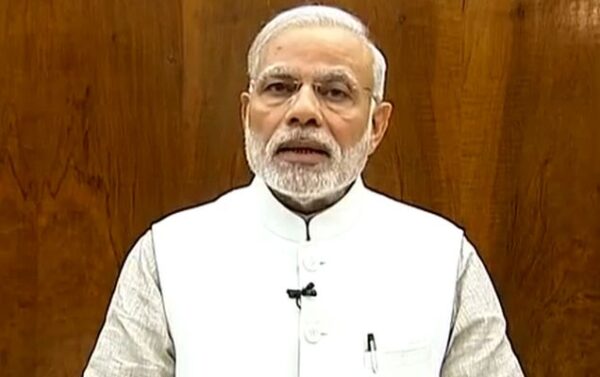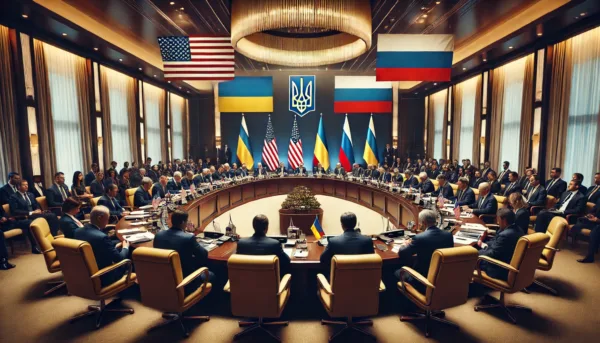




Iran’s parliament speaker Mohammad Baqer Qalibaf declared on Wednesday, 8 April 2026, that proceeding with a bilateral ceasefire or peace negotiations with the United States had become “unreasonable,” citing three violations of the terms Iran says it had agreed to the previous day. Qalibaf made the statement in a post on the social media platform X, hours after Israel launched what Lebanese authorities described as the heaviest strikes on Lebanon since the conflict began in early March 2026.
The declaration came less than 24 hours after United States President Donald Trump announced a two-week ceasefire between the United States and Iran, brokered by Pakistan. Trump made the announcement on his Truth Social platform on 7 April 2026, less than two hours before a deadline he had imposed on Iran to reopen the Strait of Hormuz to all international shipping or face the destruction of Iranian power plants and critical infrastructure. The ceasefire, while welcomed by global financial markets and several governments, immediately exposed deep structural disagreements between Washington and Tehran on the scope of the agreement, the status of Lebanon, and the future of Iran’s nuclear program.
Qalibaf, who serves as Iran’s parliament speaker and was identified by Pakistani sources as a leading figure in the Pakistan-brokered negotiations to end the conflict, said three conditions from Iran’s 10-point proposal had been violated before talks set to begin in Islamabad on 10 April 2026 could even commence. The three alleged violations, as set out in Qalibaf’s post, were: the continuation of Israeli military operations against Hezbollah in Lebanon in breach of ceasefire terms, the entry of what he described as an intruding drone into Iranian airspace after the ceasefire took effect, and the United States administration’s public assertion that it would not accept any Iranian uranium enrichment capability as part of a permanent agreement.
How did Iran and the United States reach a ceasefire deal after five weeks of conflict in the Middle East?
The war between the United States, Israel, and Iran began on 28 February 2026, when the United States and Israel launched coordinated large-scale strikes targeting Iranian military commanders, nuclear scientists, military installations, and government facilities. Iran responded with extensive retaliatory strikes against Israel and United States military bases across Bahrain, Jordan, Kuwait, Qatar, Saudi Arabia, and the United Arab Emirates. The conflict escalated into a broader regional confrontation that shut down the Strait of Hormuz to general commercial shipping, disrupted global energy markets, and intensified hostilities in Lebanon through Israel’s ongoing military campaign against the Iran-aligned militia Hezbollah.
Prior to the 28 February 2026 strikes, indirect negotiations between Washington and Tehran had been under way since April 2025. Omani Foreign Minister Badr Al-Busaidi had stated in late February 2026 that a breakthrough had been reached and that Iran had agreed both to never stockpile enriched uranium and to full verification by the International Atomic Energy Agency. Al-Busaidi described peace as “within reach” ahead of resumed talks scheduled for 2 March 2026. Those talks were overtaken by the outbreak of hostilities. By March 2026, Pakistan had emerged as the primary mediator, with Pakistani officials delivering a United States-led 15-point ceasefire proposal to Iran on 25 March 2026. Iran rejected that proposal and presented five conditions for ending the war, including cessation of attacks on Iran and Iranian-aligned forces in Lebanon and Iraq, mechanisms to prevent resumption of hostilities, compensation for damage, and international recognition of Iranian sovereignty over the Strait of Hormuz.
Iran’s Supreme National Security Council formally agreed to the two-week ceasefire on 7 April 2026, following Pakistan’s mediation through Field Marshal Asim Munir and Prime Minister Shehbaz Sharif. Trump said on his Truth Social platform that Iran’s 10-point proposal was “a workable basis on which to negotiate” and announced a suspension of strikes on Iran for two weeks.
Why does Israel say the ceasefire between the United States and Iran does not include Lebanon or Hezbollah?
Israel and the United States both maintained that the two-week ceasefire did not apply to Lebanon or to Israeli military operations against Hezbollah. Israeli Prime Minister Benjamin Netanyahu stated that the ceasefire does not include Lebanon and that Israeli strikes would continue, adding that Israel had its “finger on the trigger” and was prepared to return to full-scale fighting at any moment. Netanyahu described the ceasefire as “not the end” of the military campaign but a “stop on the way to achieving all of our objectives.”
United States Vice President JD Vance, designated to lead the United States delegation at the Islamabad talks, told reporters in Budapest that Iran appeared to have believed the ceasefire covered Lebanon but that the United States had never agreed to that. Vance urged Iran not to allow the fragile ceasefire to collapse over Lebanon, characterising it as unrelated to the core United States-Iran dispute. Pakistan’s Prime Minister Shehbaz Sharif had explicitly stated in his ceasefire announcement that the agreement applied to all fronts of the war, including Lebanon, directly contradicting the Israeli and United States positions. Hezbollah separately stated that it had halted attacks on Israel following the ceasefire announcement, while warning that if Israel did not adhere to the agreement, no party would be bound by it.
The Lebanon question sits at the heart of Iran’s strategic position in the region. Iran has consistently demanded that any permanent settlement include a ceasefire in Lebanon and a cessation of Israeli military operations against Hezbollah. Iranian President Masoud Pezeshkian told French President Emmanuel Macron in a phone call on 8 April 2026 that a Lebanon ceasefire had been one of the key conditions of Iran’s 10-point plan. Iranian Foreign Minister Abbas Araghchi stated on X that the continuation of Israeli attacks on Hezbollah placed responsibility on the United States government to intervene.
What is the disagreement between the United States and Iran over uranium enrichment at the Islamabad peace talks?
The nuclear enrichment question represents the deepest structural disagreement in the negotiations and was a primary stated justification by the United States and Israel for launching the war in February 2026. Trump said on 8 April 2026 that there would be “no enrichment of uranium” in Iran under any final agreement and that the United States would work with Iran to “dig up and remove” deeply buried enriched uranium stocks. The White House also said Iran had indicated it would turn over its existing enriched uranium, though Iran did not publicly confirm this.
Qalibaf directly contradicted that position, stating that the right to continue uranium enrichment was part of the terms Iran understood it had agreed to. Iranian media outlets, including the state-affiliated Mehr News Agency and Fars News Agency, published versions of Iran’s 10-point plan in Farsi that included the phrase “acceptance of enrichment” for Iran’s nuclear program. The English-language versions shared by Iranian diplomats with journalists did not contain that phrase. Trump publicly described the Farsi version as “fraudulent” without elaborating on specifics. Vance said the deal was being misrepresented inside Iran but did not offer further detail. White House Press Secretary Karoline Leavitt described Iran’s original 10-point plan as “fundamentally unserious, unacceptable and completely discarded” and called it “absurd” to suggest that Trump would accept what she characterised as an Iranian wish list.
The enrichment dispute had derailed prior diplomatic efforts. Before the February 2026 outbreak of hostilities, United States special envoy Steve Witkoff had said Iran opened nuclear talks by insisting on its “inalienable right” to enrich uranium and rejected a United States proposal for zero enrichment. The International Atomic Energy Agency had reported in early 2026 that it had no evidence Iran had an organised nuclear weapons program but could not confirm that Iran’s nuclear activities were “exclusively peaceful” because it had been denied access to certain facilities. United States Defence Secretary Pete Hegseth told a Pentagon briefing on 8 April 2026 that the United States would pursue measures comparable to the prior joint strikes with Israel on Iranian nuclear sites if Iran refused to voluntarily relinquish its enriched uranium.
Why did Iran close the Strait of Hormuz again hours after agreeing to a ceasefire with the United States?
Iran closed the Strait of Hormuz again on 8 April 2026 in response to Israel’s continued strikes in Lebanon, according to Iranian media reports. The Fars News Agency reported that two oil tankers were permitted to pass through the strait after obtaining authorisation from Iran but that further passage was halted following renewed Israeli operations in Lebanon. The closure reinforced Iran’s leverage over global energy supply chains. Shippers said they needed more clarity before resuming transit, and marine traffic data showed only a small number of vessels had passed through since the ceasefire announcement.
Iran also struck oil facilities in Gulf Arab states on 8 April 2026. A pipeline in Saudi Arabia used to bypass the blockaded Strait of Hormuz was struck, according to an oil industry source. Kuwait, Bahrain, and the United Arab Emirates reported missile and drone strikes. Abu Dhabi’s Habshan gas complex sustained damage from a direct hit. Lebanon’s civil defence service reported that 254 people were killed across Lebanon in Israeli strikes on 8 April 2026, with 91 of those deaths in Beirut. Residents said some Israeli strikes came without the standard warnings for civilians to evacuate. France 24 reported the Lebanese health ministry’s updated figure at 182 killed, marking the deadliest single day of the Israel-Hezbollah conflict.
Despite the immediate fragility of the ceasefire, global financial markets responded strongly to the initial announcement. International benchmark Brent crude oil prices fell 14 percent to settle near 95 United States dollars per barrel, remaining approximately 25 dollars above pre-war levels. Stock market indices surged globally. United Nations Secretary-General Antonio Guterres welcomed the ceasefire and called on all parties to comply with their obligations under international law. Pakistan indicated it was preparing to host the United States and Iranian delegations in Islamabad beginning 10 April 2026, with Qalibaf and Foreign Minister Araghchi named as Iran’s expected representatives at those talks.
What are the key takeaways from Iran’s rejection of peace talks as unreasonable following Israeli strikes on Lebanon?
- Iranian Parliament Speaker Mohammad Baqer Qalibaf declared on 8 April 2026 that a bilateral ceasefire and negotiations with the United States were “unreasonable,” citing three ceasefire violations: continued Israeli strikes on Hezbollah in Lebanon, an alleged drone incursion into Iranian airspace, and the United States insistence on zero uranium enrichment.
- Israel and the United States maintained the two-week ceasefire does not apply to Lebanon or to Israeli military operations against Hezbollah, while Pakistani Prime Minister Shehbaz Sharif and Iran stated the ceasefire explicitly covered Lebanon, creating an unresolved contradiction at the centre of the agreement.
- A translation discrepancy between Farsi and English versions of Iran’s 10-point peace plan created immediate contention over nuclear enrichment, with Iran’s Farsi text including “acceptance of enrichment” and Trump publicly insisting there would be “no enrichment of uranium” under any final deal.
- Iran closed the Strait of Hormuz again on 8 April 2026 in response to Israeli strikes in Lebanon, with further transit halted pending resolution of the Lebanon dispute, casting doubt on the durability of the ceasefire.
- Permanent peace talks brokered by Pakistan were scheduled to begin in Islamabad on 10 April 2026, with United States Vice President JD Vance designated to lead the United States delegation and Qalibaf and Foreign Minister Abbas Araghchi expected to represent Iran.
Discover more from Business-News-Today.com
Subscribe to get the latest posts sent to your email.