



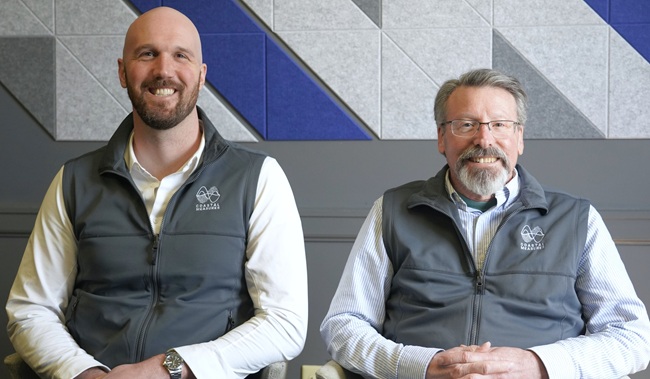
Coastal Measures has raised more than $1.2 million in equity and non-dilutive funding to accelerate CUMULUS, its artificial intelligence platform for coastal and ocean data. The Kittery, Maine-based company said support includes backing from Amazon Web Services through a generative artificial intelligence incentive program, with another $400,000 expected to close in the coming months as part of the pre-seed round. The announcement matters because Coastal Measures is not simply selling another dashboard for environmental monitoring. It is trying to build data infrastructure for a fragmented coastal economy where insurers, engineers, port operators, and public agencies often make high-stakes decisions using incompatible systems and incomplete situational awareness.
That framing is more important than the headline funding number. A $1.2 million raise is modest by venture standards, especially in an artificial intelligence market where pre-seed decks can sometimes attract checks large enough to fund a small moonshot and a medium-sized espresso machine collection. But Coastal Measures appears to be pursuing a narrower and potentially more defensible strategy. Rather than competing in general-purpose geospatial analytics or broad climate software, the company is positioning CUMULUS as a purpose-built operating layer for coastal data standardization, governance, and real-time decision support. That is a more practical wedge, and in sectors shaped by safety, infrastructure exposure, and regulatory friction, practicality often beats glamour.
Why is fragmented coastal and ocean data becoming a bigger commercial problem right now?
The answer starts with asset exposure. Coasts are where critical infrastructure, insurance concentration, municipal vulnerability, logistics bottlenecks, and climate volatility increasingly collide. Ports need live operational visibility. Insurers need better risk inputs. Engineers and public agencies need more defensible data trails for planning and emergency response. Yet environmental intelligence remains notoriously messy, spread across different sensor types, vendors, formats, permissions models, and update cycles. Coastal Measures is betting that the real pain point is not merely data scarcity, but data incompatibility.
That creates a meaningful opening. Plenty of organizations can buy hardware, commission studies, or access public feeds. Far fewer can combine radar, camera, buoy, satellite, and third-party sensor streams into a governed system that can be used in real time by multiple decision-makers. In other words, the bottleneck is shifting from collection to interoperability. If Coastal Measures can reduce the time and cost required to ingest, normalize, and operationalize these data streams, it could become more than a software vendor. It could become infrastructure for coastal workflows.
The company’s own public materials reinforce that direction. CUMULUS is described not just as a visualization layer, but as a platform for standardized, AI-ready, analysis-ready environmental data. That language matters because it suggests Coastal Measures understands where the budget expansion is likely to come from. Enterprise and public-sector buyers are increasingly less interested in raw feeds alone and more interested in governed systems that support downstream analytics, automation, and accountability.
How does CUMULUS fit into the larger race to build vertical artificial intelligence platforms?
The broader artificial intelligence market has trained investors to look for model breakthroughs, flashy copilots, and horizontal software narratives. Coastal Measures is going the opposite way. CUMULUS appears to be a vertical intelligence platform, one designed around a specific operational environment where data quality, provenance, and compatibility matter more than novelty. That is increasingly where some of the more durable enterprise value may sit.
Vertical artificial intelligence works best when the problem domain is complex, data is messy, and the user cannot tolerate hallucination dressed up as insight. Coastal operations fit that profile almost perfectly. Port managers do not need poetic answers. Infrastructure engineers do not want a probabilistic shrug in paragraph form. Insurers certainly do not want a model that is creative when it should be boring. They want standardized, trusted inputs that can feed real decisions. Coastal Measures’ decision to center the platform on curated, interoperable environmental data rather than on generalized artificial intelligence branding may therefore prove strategically sound.
Amazon Web Services support also adds a layer of credibility, although investors should distinguish between technical ecosystem backing and commercial validation. Support through a generative artificial intelligence incentive mechanism can help with infrastructure, experimentation, and development velocity, but it does not by itself prove large-scale customer adoption. Still, for an early-stage company building data-heavy workflows, access to cloud support and artificial intelligence tooling can materially compress development time and reduce capital intensity.
Why could insurers, infrastructure engineers, and public agencies care about this funding round?
Because the round is really a proxy for a more interesting thesis: coastal intelligence may be graduating from a specialist function into a core operational software layer. That matters most in sectors where the cost of bad information is rising.
For insurers, better coastal data can improve underwriting granularity, claims context, and portfolio exposure assessment. For infrastructure engineers, it can improve site planning, resilience analysis, and maintenance prioritization. For city managers and public agencies, it can support emergency preparedness, procurement decisions, and cross-department coordination. These are not theoretical use cases. They are spending categories with growing urgency as severe weather risk, sea-level pressures, and resilience mandates become more central to planning cycles.
That gives Coastal Measures a potentially attractive commercial position. If CUMULUS becomes embedded upstream in decision-making, it could expand from software subscription economics into a higher-value role tied to workflow integration, data services, and decision support. The danger, of course, is that enterprise buyers in infrastructure and public-sector markets often move slowly, demand proof, and do not hand out renewals just because a platform has a clever acronym. Execution in this category is won through trust, not marketing.
What does the Matt Marino board appointment signal about Coastal Measures’ next phase?
The appointment of Matt Marino to the board may be one of the more revealing parts of the announcement. Marino previously co-founded and led Galehead Development, a renewable energy development platform that attracted large-scale capital and later became part of Macquarie Asset Management’s broader push into U.S. clean energy development. That background matters less as a biography bullet and more as a clue to the company’s commercial ambition.
Galehead sat at the intersection of data, infrastructure development, and capital deployment. That is a relevant pattern here. Coastal Measures is not just serving scientists or niche analysts. It appears to be trying to build a platform that helps de-risk capital and operational decisions in coastal environments. Marino’s presence suggests the company may be thinking beyond narrow product-market fit toward how standardized intelligence can unlock larger infrastructure, insurance, and resilience budgets.
That does not mean the company is destined for the same trajectory. But it does indicate that the board composition is being shaped with commercialization and capital translation in mind. In early-stage infrastructure-adjacent software, that is usually a more useful signal than generic startup theater about changing the world one API call at a time.
What are the main execution risks facing Coastal Measures as it tries to scale CUMULUS?
The first risk is integration complexity. Coastal Measures’ value proposition depends on stitching together fragmented sensor and data ecosystems. That sounds elegant in strategy language and deeply annoying in practice. Different vendors, inconsistent data quality, legacy systems, and variable customer workflows can slow deployment and inflate service requirements.
The second risk is procurement drag. Public agencies, insurers, and infrastructure operators are attractive end markets, but they are not famous for frictionless buying behavior. Sales cycles can be long, pilots can stretch, and budget authority can be split across departments that all agree the problem exists while waiting for someone else to sign.
The third risk is category competition. While Coastal Measures seems differentiated in its coastal focus, it is operating near several adjacent markets, including geospatial analytics, environmental intelligence, risk technology, and climate resilience software. Larger platforms could eventually move down-market or sideways into similar workflows if customer demand proves real enough.
The fourth risk is proving return on investment early. Buyers may like the vision of unified coastal intelligence, but they will eventually ask a blunt question: what decision improved, what cost was avoided, and how quickly? Early-stage enterprise platforms often stumble not because the problem is unimportant, but because the savings case is harder to quantify than the pitch deck implies.
Could this small pre-seed round still signal a larger market shift in climate and risk technology?
Yes, because not every important signal arrives with a giant valuation and a celebrity venture thread. Sometimes the stronger signal is that a niche but painful workflow is starting to attract specialized capital, cloud ecosystem support, and leadership talent from adjacent infrastructure markets.
Coastal Measures is emerging at a time when climate adaptation spending is becoming more operational and less rhetorical. Markets are slowly moving from talking about resilience to buying tools that make resilience measurable, auditable, and deployable. That transition favors companies that can turn messy environmental inputs into standardized intelligence products. If Coastal Measures executes well, it could benefit from that shift.
The opportunity is especially interesting because coastal intelligence sits at the intersection of public need and commercial necessity. Ports cannot relocate easily. Insurers cannot underwrite blindly forever. Municipalities cannot keep pretending that fragmented environmental data is a harmless inconvenience. Someone will build the connective tissue between raw coastal sensing and decision-grade insight. Coastal Measures wants to be that company.
Whether it gets there will depend less on the elegance of the thesis and more on whether CUMULUS becomes indispensable in actual operating environments. If it does, the company may discover that the real business is not just coastal data, but coastal coordination. And that is a much larger category.
What are the key takeaways from Coastal Measures raising $1.2 million to scale CUMULUS?
- Coastal Measures is targeting a real enterprise bottleneck: fragmented coastal data that is expensive to integrate and difficult to trust.
- The company’s strategy is less about generic artificial intelligence and more about building a vertical intelligence layer for high-stakes coastal decisions.
- CUMULUS appears designed to monetize interoperability, governance, and decision support rather than raw environmental monitoring alone.
- Support from Amazon Web Services may help accelerate product development, but commercial traction will still need to be proven customer by customer.
- The addressable opportunity spans insurers, infrastructure engineers, ports, utilities, and public-sector resilience planners.
- Matt Marino’s board appointment suggests the company is thinking in terms of infrastructure-grade commercialization, not just experimental software.
- The biggest execution risks are integration burden, long enterprise and public-sector sales cycles, and difficulty proving measurable return on investment early.
- If Coastal Measures succeeds, it could help define a broader category where climate resilience software becomes operational infrastructure rather than advisory technology.
- The modest round size does not diminish the strategic relevance of the problem; it may instead reflect a capital-efficient attempt to validate a focused market wedge.
- The bigger long-term question is whether standardized coastal intelligence becomes a budget line item across sectors that increasingly cannot afford fragmented risk data.
Discover more from Business-News-Today.com
Subscribe to get the latest posts sent to your email.