




Sensofusion, a Finnish defence technology company focused on counter-drone systems and signals intelligence, said it has acquired Finnish aircraft manufacturer Atol Aviation and is launching Sensofusion Aviation to expand into air-to-ground surveillance systems. The deal gives Sensofusion in-house aircraft manufacturing capability, a production site at a former Finnish Air Force base in Halli, and access to aircraft platforms already developed for authority and defence use. Strategically, the move shifts Sensofusion from being primarily a counter-UAS sensor and mitigation specialist toward becoming a more vertically integrated airborne surveillance player. In a Europe where drone threats are multiplying faster than procurement systems can usually cope, that is a more consequential development than the purchase price, which was not disclosed.
Why does Sensofusion’s Atol Aviation acquisition matter beyond a routine Finnish defence-tech deal?
What changed here is not simply ownership of an aircraft manufacturer. Sensofusion is effectively trying to solve a long-standing limitation in counter-drone operations: ground-based detection does not always scale well across forests, varied terrain, or fast-changing operating environments. The company’s own rationale is straightforward. From altitude, radio-emitting targets can be detected across a wider area because signal propagation is less obstructed by terrain or buildings, making airborne detection a force multiplier for wide-area surveillance. That logic fits the company’s existing Airfence positioning as a passive drone detection and response system already marketed for military, law-enforcement, and security use.
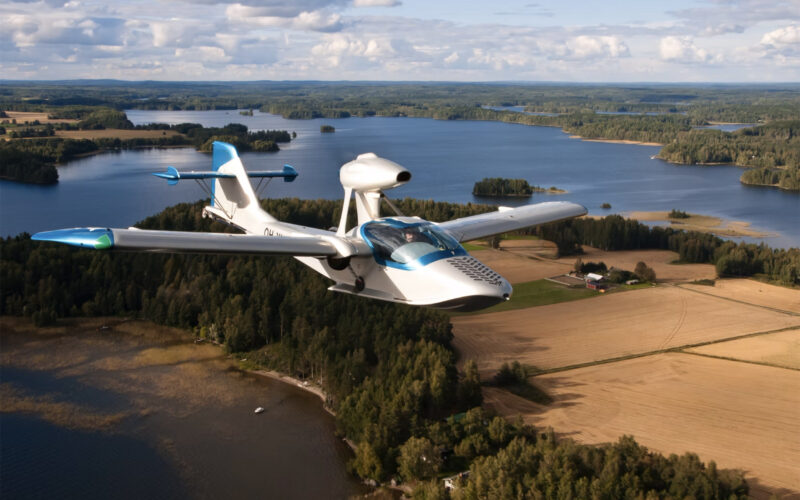
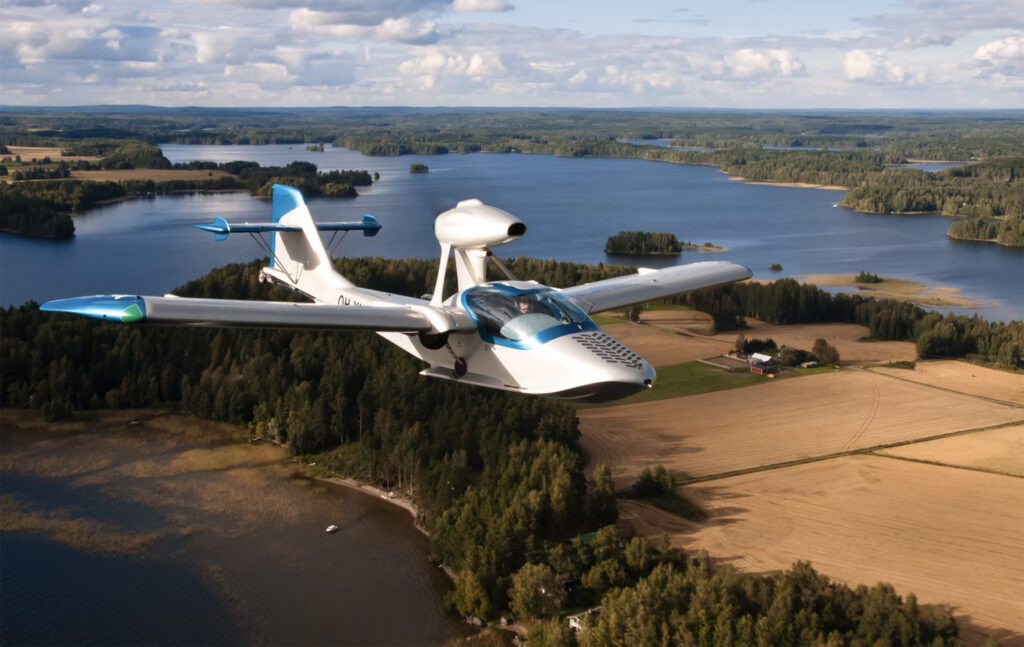
This makes the Atol Aviation deal notable because it adds the missing physical layer. Sensofusion did not previously manufacture aircraft. By acquiring Atol Aviation, it gains platform engineering, assembly know-how, and production capacity for both crewed and authority-oriented aircraft systems. Atol Aviation’s Halli operation had already developed the Atol Aurora amphibious aircraft and the Atol Protector aircraft for authority and defence-oriented use cases. Instead of waiting for outside integrators, Sensofusion can now package sensors, software, and aircraft into a more complete surveillance product. In defence technology, that kind of vertical integration often determines who wins programs when buyers increasingly want systems rather than components.
How does airborne drone detection change the commercial and military value proposition for Sensofusion?
Airborne detection changes the geometry of counter-drone surveillance. Ground systems are useful for perimeter defence, fixed-site protection, and event security, but they are constrained by clutter, elevation changes, and line-of-sight interruptions. Once a sensor stack moves onto an aircraft, especially one that can operate flexibly across remote terrain, the monitored footprint expands materially. That does not automatically make airborne detection a silver bullet, but it does make it more relevant for border monitoring, infrastructure surveillance, maritime approaches, and dispersed military operations.
That matters because the drone threat itself is no longer confined to battlefield trench lines or airport no-fly zones. Recent reporting from Finland and across Europe shows how drone intrusions, anti-drone procurement, and low-cost air-defence efforts are now tied to national resilience as much as military readiness. Finland recently reported a suspected territorial violation by drones, while Sweden has just announced a major anti-drone and air-defence procurement push to protect not only military sites but also ports, railways, airports, and nuclear facilities. Europe’s main military powers are also accelerating programmes for lower-cost air defence after lessons drawn from Ukraine. In that environment, a company offering airborne detection and reconnaissance is selling into a market that is broadening from niche protection to national-scale coverage needs.
There is also a practical commercial point here. Many drone-defence companies remain subsystem vendors. They sell radars, passive RF sensors, jammers, optics, or software interfaces. Buyers then shoulder the integration burden. Sensofusion appears to be betting that governments and security operators will increasingly prefer pre-integrated solutions that combine airframes, sensor payloads, software, and operational support. Put simply, it is easier to sell a surveillance capability than a box of hardware and a wish for interoperability.
Why is Finland becoming a strategically relevant base for counter-drone and airborne surveillance manufacturing?
Finland’s strategic relevance has risen sharply since it became NATO’s 31st member on April 4, 2023. Since then, the country has moved deeper into the alliance’s northern security architecture while also adjusting its own defence posture in response to the Russian threat environment. Reuters has reported that Finland plans to raise defence spending to at least 3% of GDP by 2029, even as the country faces wider budget pressure. That combination matters because it tells you security spending is not a temporary political slogan in Finland. It is becoming structural.
The Halli manufacturing site adds symbolism and utility. A former air force base carries obvious heritage value, but more importantly it suggests access to an ecosystem already familiar with aviation production, testing, and defence-adjacent operations. For a company like Sensofusion, that can help credibility with customers who do not want a software-only startup improvising its way into airborne missions. Defence buyers may enjoy innovation, but they still like factories, airframes, and demonstrable production discipline. Funny how ministries still prefer things that exist.
The Finnish angle also supports a broader European thesis. Reuters recently noted that even with rising rearmament rhetoric, some European drone and counter-UAV startups remain funding-constrained because procurement has not always moved fast enough. Owning production and broadening into a fuller product stack may therefore be a way for Sensofusion to become more procurement-ready and less dependent on the timing whims of third-party industrial partners.
What strategic advantages could Sensofusion gain by integrating aircraft production with Airfence systems?
The clearest advantage is product control. Sensofusion’s Airfence platform is already marketed as a passive detection and response system for military and security environments, with portable and scalable configurations. By pairing those capabilities with proprietary or controlled aircraft platforms, the company can shape performance around its own sensor architecture rather than compromise around another manufacturer’s limitations. That can improve deployment speed, data integration, maintenance logic, and upgrade cycles.
A second advantage is margin structure. Hardware-plus-software companies often find that they capture more value when they own more of the stack. That does not guarantee higher profitability, especially in early manufacturing ramps, but it does create room for differentiated pricing once the solution is validated. A bundled airborne detection product can be sold not just as equipment but as a mission package tied to surveillance, intelligence gathering, and security outcomes.
A third advantage is export positioning. Finland’s defence technology sector may be smaller than those of the United States, France, or Germany, but Nordic systems can punch above their weight when they show operational relevance, modularity, and ruggedness. If Sensofusion can prove that airborne RF-based drone detection meaningfully extends coverage for military, border, or critical infrastructure users, it could build a valuable niche in Europe and beyond. The company has said more product detail will come in June 2026, so that announcement will be the first real test of whether this deal is about industrial capability alone or about a new product category with export potential.
What does Sensofusion’s Atol Aviation acquisition mean for the company, its competitors, and Europe’s defence market?
The first risk is integration complexity. Buying an aircraft manufacturer is not the same thing as proving an airborne surveillance business. Sensofusion now has to blend two very different disciplines: defence electronics and aircraft production. The operational cultures, certification burdens, supply chains, and support models are not identical. A clever sensor company can still stumble when it starts dealing with airframe manufacturing economics and aviation-grade production standards.
The second risk is product-market fit. The strategic case for airborne detection is logical, but customers will still ask hard questions. How much additional coverage is delivered in real operational settings? What is the endurance profile? How do aircraft-based sensor missions compare with tethered systems, ground-based mast solutions, or unmanned alternatives? Does the airborne model lower total cost for wide-area surveillance, or merely add another expensive layer? Until Sensofusion releases more technical detail, investors and procurement officials alike are looking at a promising thesis rather than a fully proven category.
The third risk is timing. Europe’s counter-drone market is heating up, but so is competition. Saab has just won a Swedish order for a mobile counter-unmanned aerial system, Rheinmetall has been showcasing drone-defence capabilities in Finland, and Ukraine-linked expertise is increasingly shaping allied procurement debates. Sensofusion may be early in one niche, but it is not alone in a market where larger incumbents have procurement muscle, integration experience, and deeper balance sheets.
How could Sensofusion’s Atol Aviation deal signal a wider shift in European counter-drone strategy?
The bigger takeaway is that European counter-drone companies may increasingly need to think in layers rather than products. The Ukraine war and wider regional instability have made clear that detection, tracking, jamming, interception, and mobility all need to work together. Sensofusion’s acquisition suggests that airborne detection may become a more important layer within that stack, especially where terrain, borders, maritime approaches, and infrastructure sprawl create blind spots for fixed systems.
It also hints at a more industrial turn in European defence tech. For several years, the sector’s narrative has been dominated by software, autonomy, and venture-backed drone companies. But wars are rude reminders that factories matter. Sensofusion is moving from software-and-sensors elegance toward production-backed capability. If the June 2026 product reveal shows a credible airborne surveillance platform, this acquisition may come to be seen as an early example of Nordic defence tech maturing from component innovation into vertically integrated mission systems.
That is the real story. Sensofusion has not merely bought Atol Aviation. It has bought itself a chance to compete at a higher strategic level. Whether it converts that chance into a durable advantage will depend less on the romance of Finnish aviation heritage and more on whether it can prove that airborne counter-drone reconnaissance delivers enough operational value to justify new procurement budgets.
What does Sensofusion’s Atol Aviation acquisition mean for the company, its competitors, and Europe’s defence market?
- Sensofusion is moving beyond stand-alone counter-drone detection tools toward a more vertically integrated airborne surveillance model.
- The Atol Aviation acquisition gives Sensofusion in-house aircraft manufacturing capability, which could improve product control and procurement credibility.
- Airborne RF-based drone detection could materially expand monitored area coverage in terrain where ground systems face line-of-sight limitations.
- Finland’s post-NATO security posture and rising defence focus make the timing strategically supportive for defence-tech manufacturing expansion.
- The Halli site gives Sensofusion an industrial footprint that may matter as much as the aircraft designs themselves in future defence bids.
- If Sensofusion can package aircraft, sensors, software, and reconnaissance workflows together, it may differentiate itself from subsystem-only vendors.
- The company still faces real execution risk in integrating aviation manufacturing with defence-electronics development and support.
- Larger European incumbents such as Saab and Rheinmetall remain formidable competitors in a market that is becoming more crowded and procurement-driven.
- The June 2026 product reveal will be critical in determining whether this acquisition represents a niche expansion or the start of a scalable new category.
- More broadly, the deal signals that Europe’s counter-drone market is evolving toward layered, mission-ready systems rather than isolated detection components.
Discover more from Business-News-Today.com
Subscribe to get the latest posts sent to your email.
