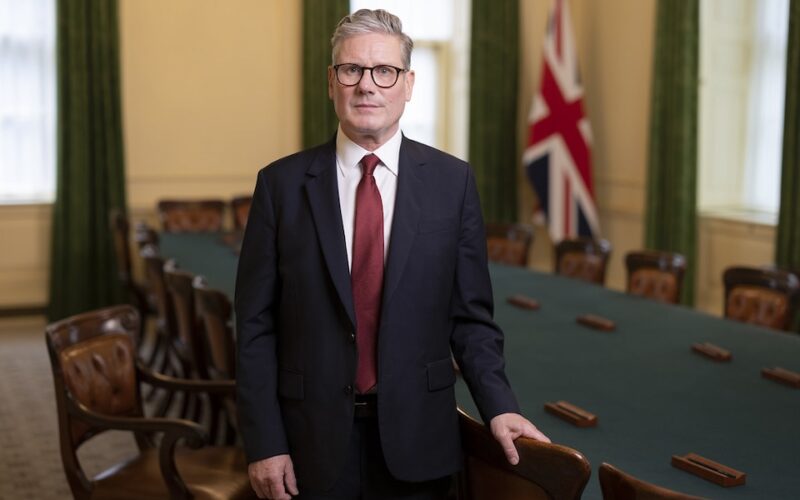
United Kingdom Prime Minister Sir Keir Starmer used a press conference at 10 Downing Street on 1 April 2026 to address the domestic and diplomatic consequences of the ongoing Middle East conflict, which he confirmed had entered its second month. Speaking directly to the British public and international media, Starmer outlined a five-point domestic plan, announced new multilateral diplomatic measures, and declared that the United Kingdom would not participate in the military conflict, framing all decisions through the lens of British national interest.
The press conference comes as global oil prices have surged following Iran’s blockade of the Strait of Hormuz, the critical shipping passage through which a significant share of the world’s energy exports travel. The disruption has pushed up fuel prices at petrol stations across the United Kingdom, triggered concern over household energy bill rises, and raised questions about fertiliser and food supply chains dependent on Gulf commodity exports.
Why did UK Prime Minister Keir Starmer say the United Kingdom will not join the Middle East military conflict?
Starmer repeated his position that the conflict in the Middle East is not the United Kingdom’s war and that the country will not be drawn into the fighting. He described the decision not to participate in offensive military action as rooted in a calm and level-headed assessment of British national interest, and stressed that the most effective way the British government can protect household living costs is to push for de-escalation and the reopening of the Strait of Hormuz. Starmer acknowledged that United States President Donald Trump has publicly called on allies that did not participate in the initial strikes against Iran to take responsibility for securing the waterway, but declined to commit to specific military operations.
The Prime Minister said the United Kingdom must not lose sight of the need for a negotiated settlement and warned against allowing the conflict to become a strategic windfall for Russian President Vladimir Putin. He noted that United States military operations had already substantially weakened Iran’s military capabilities.
What diplomatic steps is the UK government taking to reopen the Strait of Hormuz and restore maritime security?
Starmer announced that the United Kingdom had brought together 35 nations around a statement of intent to push collectively for maritime security across the Gulf of Hormuz. He confirmed that the Foreign Secretary would host a formal multilateral meeting later in the week, bringing those 35 nations together for the first time to assess all viable diplomatic and political measures available to restore freedom of navigation, guarantee the safety of ships and crew currently trapped in the region, and resume the movement of essential commodities.
Following that diplomatic meeting, the Prime Minister said the government would also convene military planners to examine how British and allied capabilities could be marshalled to make the Strait of Hormuz accessible and safe once active fighting has stopped. Starmer said he had already met with senior business leaders in the shipping, finance, insurance, and energy supply sectors at Downing Street the previous Monday. He said those leaders had made clear that the primary challenge they face is not one of insurance coverage but of the physical safety and security of passage through the Strait.
The Foreign Secretary and the Chancellor have each met their counterparts within the Group of Seven, and the Defence Secretary has conducted meetings with regional partners in the Middle East. Starmer framed the combination of a united diplomatic front, partnership with industry, and calm political leadership as the three pillars required to navigate the crisis.
What are the five measures in the UK government’s domestic plan to ease cost of living pressure from the conflict?
Starmer set out the five-point plan the government has put in place to shield British households from the immediate impact of the crisis. The first measure is a reduction in household energy bills of over £100 per household, which he confirmed took effect on 1 April 2026. Separately, the government has confirmed that the energy price cap will be held at its current level until the end of June 2026, protecting households from price rises until a new rate is announced in May.
The second measure is an extension of the cut in fuel duty until September 2026, with the government monitoring the situation daily. The third measure is a £53 million support fund for households that rely on heating oil, a fuel source more directly exposed to the price surge caused by the Strait of Hormuz blockade. The fourth measure is accelerated investment in clean British energy, which Starmer described as the only durable mechanism for removing household energy bills from the volatility of international markets driven by the Russian government and the Iranian regime. The fifth measure is the continued diplomatic push for de-escalation in the Middle East.
What domestic policy changes take effect from 1 April 2026 and the following week in the United Kingdom?
Beyond the energy-specific measures, Starmer listed a series of pre-planned policy changes that took effect on or around 1 April 2026. The National Health Service prescription charge was frozen for one year from 1 April 2026, halting what had been an annual increase. Workers earning the National Living Wage received an increase in pay from the same date. The state pension will rise from the following Monday under the triple lock mechanism.
Also taking effect the following week is the removal of the two-child benefit limit, which the government said will lift approximately 450,000 children out of poverty, with the majority coming from working households. The Employment Rights Bill, described by Starmer as the biggest strengthening of workers’ rights in a generation, will also become law the following week.
Starmer acknowledged that some commentators might note these measures were already planned before the conflict intensified. He responded that the entire policy direction of his government since taking office had been shaped by the recognition that the world entered a more dangerous and volatile phase following Russia’s invasion of Ukraine in 2022. He listed the windfall tax on oil and gas companies, budget action on cost of living, and investment in clean British energy as consistent elements of that long-term strategy.
How does the UK government plan to deepen cooperation with the European Union amid the ongoing Middle East crisis?
Starmer used the closing section of his press conference to signal a significant shift in the United Kingdom’s approach to its relationship with the European Union. He said it was increasingly clear that as global volatility continues, British long-term national interest requires closer partnership with European allies and with the European Union as an institution.
The Prime Minister confirmed that the government would announce a new United Kingdom-European Union summit in the coming weeks. He said the United Kingdom’s position at that summit would go beyond simply ratifying the commitments made at the previous year’s summit. Starmer described the objective as closer economic cooperation, closer security cooperation, and a partnership grounded in shared values, shared interests, and a shared future as the two parties navigate what he called a dangerous world. The Chancellor has previously described the economic damage caused by Brexit as significant, and Starmer indicated the opportunities to strengthen security and reduce the cost of living through deeper European partnership are too substantial to ignore.
What is the historical context of UK energy shocks and why does Starmer invoke the 1970s in this speech?
Starmer drew a personal comparison between the current crisis and the energy shocks of the 1970s, referencing his own family’s experience of being unable to meet all household bills during that decade. The 1970s energy crisis followed the 1973 Arab oil embargo, during which the Organisation of Arab Petroleum Exporting Countries imposed an oil export embargo on nations that had supported Israel in the Yom Kippur War. The United Kingdom experienced severe fuel shortages, electricity rationing, and a three-day working week under the government of Prime Minister Edward Heath.
The parallel Starmer drew was intended to communicate that energy shocks driven by Middle East conflict have periodically destabilised British household finances across generations. His framing also served a political purpose: distinguishing his government’s long-term clean energy investment strategy from what he characterised as short-term crisis management that had previously left the United Kingdom exposed to international price volatility. The Prime Minister said he was not prepared to ask the British people to pass through another crisis and return to business as usual, and that how the country emerges from this episode will define its trajectory for a generation.
What does the Iranian blockade of the Strait of Hormuz mean for global energy supply and UK households?
The Strait of Hormuz is a narrow waterway between the Sultanate of Oman and the Islamic Republic of Iran, through which approximately 20 percent of global oil supply and a substantial share of liquefied natural gas exports typically transit. The blockade imposed following the outbreak of the US-Israeli military conflict with Iran has disrupted tanker movements through the Strait, causing oil prices to surge on international commodity markets.
For the United Kingdom, the consequences are multi-layered. Higher oil prices flow through to petrol station forecourt prices and to the wholesale gas prices that underpin the household energy price cap. There is also a secondary risk to food supply chains because fertiliser production and shipment from Gulf nations passes through the same waterway. The British government has sought to reassure the public there is no immediate risk to petrol availability, and industry body Airlines UK has rejected claims attributed to United States President Donald Trump that the United Kingdom cannot obtain jet fuel.
Key takeaways on what the Starmer Downing Street press conference means for UK policy, energy security, and diplomacy
- UK Prime Minister Sir Keir Starmer confirmed on 1 April 2026 that the United Kingdom will not participate in the military conflict in the Middle East, framing the decision as a product of British national interest rather than diplomatic pressure from the United States.
- The UK government announced that household energy bills will be cut by over £100 per household from 1 April 2026, with the energy price cap held until June 2026, fuel duty extended until September 2026, and a £53 million fund established for heating oil users.
- The Foreign Secretary will host a multilateral meeting of 35 nations this week to assess diplomatic and political measures to restore freedom of navigation through the Strait of Hormuz, with a separate military planning session to follow.
- Starmer confirmed the United Kingdom will seek a new summit with the European Union aimed at closer economic and security cooperation, with the government intending to go beyond commitments made at the previous year’s summit.
- The Employment Rights Bill will become law the following week alongside the removal of the two-child benefit limit, state pension increases, and a National Living Wage rise, all of which Starmer described as part of a long-term policy direction shaped by the global security environment since 2022.
Share this:
Discover more from Business-News-Today.com
Subscribe to get the latest posts sent to your email.