

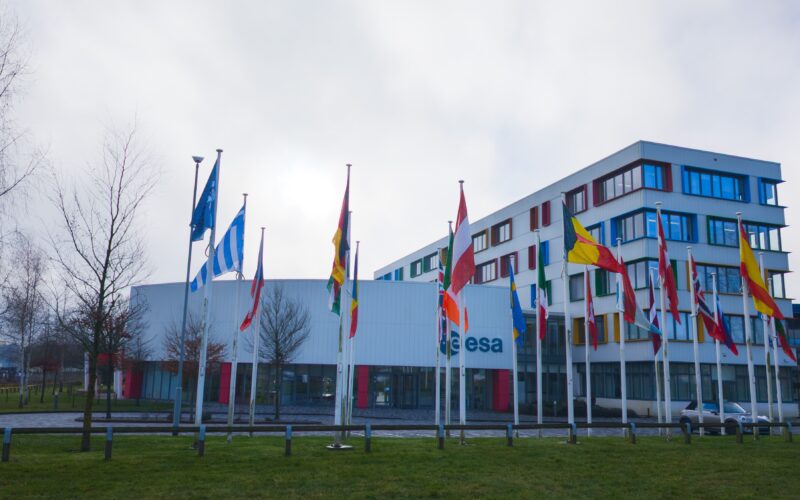
Siemens AG (Xetra: SIEGn) has signed a letter of intent with the European Space Agency (ESA) to join its Partnership Initiative for Commercialisation, known as EPIC, marking a tangible step in the company’s push to extend its industrial software footprint into the growing European commercial space economy. Under the arrangement, Siemens will provide space technology startups emerging from the European Space Agency’s Business Incubation Centres with access to Siemens Xcelerator software licenses, digital twin capabilities, and a network of domain experts and mentors. The move positions Siemens as a strategic enabler for early-stage companies whose ability to commercialise hardware and systems has historically been constrained by the cost and complexity of industrial-grade engineering tools. Siemens AG shares on the Xetra exchange were trading around EUR 205 as of 31 March 2026, well below the 52-week high of EUR 275.75 recorded on 12 February 2026, a pullback that reflects broader European industrial sector pressure rather than any company-specific deterioration.
What does the Siemens and European Space Agency EPIC partnership actually offer space startups?
The partnership centres on access to Siemens Xcelerator, a broad portfolio of industrial software that spans simulation, product lifecycle management, and systems engineering. For a space startup trying to validate a propulsion subsystem or design an earth-observation payload, gaining access to tools typically reserved for large aerospace primes is not a trivial advantage. Siemens Xcelerator allows engineering teams to design, simulate, and validate complex systems in virtual environments before committing to physical manufacturing, compressing development timelines and reducing costly iteration cycles. Alongside software access, Siemens will operate what it describes as a tailored Incubator Program Offer, connecting startups with Siemens engineers and sector specialists who can provide mentoring on industrialisation strategy, production scaling, and market entry. The partnership also opens pathways for joint visibility activities within the European space ecosystem, which in practical terms may translate to co-marketing, conference presence, and introductions to Siemens’s existing network of aerospace primes and tier-one suppliers. Critically, the offer extends beyond the ESA Business Incubation Centres themselves to projects supported by the ESA Technology Brokers and ESA Phi-LabNET, widening the addressable pool of eligible startups across the continent.
How does the ESA Business Incubation Centre network position Europe in the global space startup race?
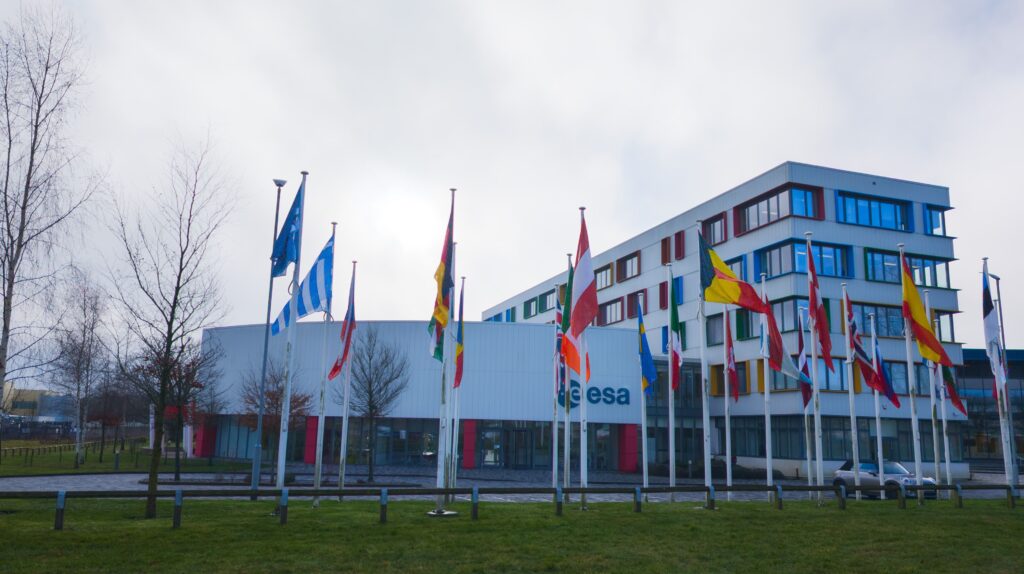
The European Space Agency’s Business Incubation Centres represent the largest institutional network of space-focused incubators in Europe, spanning 37 centres across the continent. More than 2,000 startups have moved through the program since its inception, producing companies operating in satellite communications, earth observation, in-orbit servicing, and downstream data analytics. That scale gives the European Space Agency unusual structural leverage when negotiating technology partnerships: a single agreement with Siemens effectively multiplies access for a large cohort of startups simultaneously, rather than requiring each company to source and negotiate individual software agreements. The challenge the network faces is a familiar one in deep-tech ecosystems. European founders tend to be scientifically strong but commercially slower to scale than their American or increasingly Chinese counterparts. The gap is not primarily one of ideas or engineering talent but of tooling, capital, and industrialisation know-how. Siemens’s involvement addresses the tooling and know-how dimensions directly. Whether it meaningfully shifts commercialisation velocity across the cohort will depend on how effectively the program is operationalised and whether startups can absorb the complexity of enterprise-grade software environments during their earliest phases.
Why is Siemens Xcelerator’s digital twin capability strategically valuable for early-stage space hardware companies?
Digital twin technology has moved from aerospace-prime luxury to competitive necessity over the past decade, driven by the falling cost of compute, the proliferation of simulation frameworks, and the growing expectations of institutional customers and launch operators. For a startup developing a satellite bus, a propellant management system, or a miniaturised radar payload, the ability to run virtual test campaigns before incurring the cost of physical prototypes reduces financial risk substantially. Hardware failures in space are expensive and often irreversible; failures caught in simulation are cheap. Siemens has built a coherent portfolio of simulation and systems engineering tools through a combination of organic development and acquisitions, including its takeover of Altair Engineering’s parent into the Siemens Xcelerator platform. This gives the toolset a breadth that covers mechanical, thermal, electromagnetic, and software domains within a common environment. For a startup team of ten engineers, operating that environment productively is not straightforward. The mentorship component of the Siemens EPIC offer is therefore not decorative; it is functionally necessary if software access is to translate into actual engineering productivity rather than licence underutilisation. Siemens’s Digital Industries division, which Cedrik Neike leads as chief executive alongside his position as a member of the Siemens AG managing board, generated the bulk of the company’s software revenue in fiscal 2025. Extending Xcelerator into the startup tier is consistent with a strategy of building long-term platform dependency early in a customer’s organisational lifecycle.
What is the competitive and geopolitical context driving European space industrial sovereignty in 2025 and 2026?
The European space sector is navigating a structural transition that is simultaneously technical, commercial, and geopolitical. SpaceX’s Falcon 9 and Starship programs have fundamentally disrupted launch economics, while the United States has built a formidable commercial space ecosystem anchored by venture capital, defence procurement, and NASA commercial contracts. China’s space industrial complex has accelerated rapidly under state direction. Against this backdrop, European policymakers and institutional players have become increasingly explicit about the need for technological sovereignty in space, a theme that resonates across defence satellite communications, earth observation for climate and security monitoring, and in-orbit servicing. The European Space Agency’s EPIC program is partly a response to this pressure: it seeks to convert European scientific and engineering talent into commercially viable companies before that talent migrates to American or private-equity-backed competitors. Siemens’s participation carries a credibility dimension that pure software vendors or consultancies cannot easily replicate. The company has decades of engagement with Airbus, ArianeGroup, and the European space prime contractor ecosystem, giving its brand and network a legitimacy that a startup founder can point to when approaching institutional buyers or government procurement processes. The partnership also fits a broader European industrial policy trend of anchoring sovereign technology capability in established continental companies rather than defaulting to American software platforms, a consideration that has become more salient as geopolitical tensions have complicated technology export frameworks.
How does the Siemens ESA collaboration fit within the company’s wider startup engagement and software growth strategy?
The European Space Agency partnership is not an isolated initiative. Siemens launched its Siemens for Startups program at CES 2025 in Las Vegas, simultaneously announcing a linkage with Amazon Web Services to provide qualifying startups with access to the Siemens Xcelerator marketplace and AWS cloud infrastructure and credits. The strategic logic is consistent across both initiatives: Siemens is building a pipeline of companies that begin their engineering lives on Siemens tooling, increasing the probability that those companies continue as Siemens customers as they scale. For a software-oriented industrial company competing against Dassault Systemes, Ansys, and PTC for long-term platform relationships, capturing customers at the startup stage before they commit to a competing toolchain is a measurable commercial objective. The space vertical is particularly attractive because space companies that survive the startup phase tend to generate long product development cycles and high software renewal rates. An earth observation constellation operator or an in-orbit servicing company does not change simulation platforms lightly. Siemens’s fiscal 2025 results, released for the year ended 30 September 2025, showed group revenue of EUR 78.9 billion and net income of EUR 10.4 billion, providing the financial foundation to absorb the cost of providing subsidised or free software access to startup cohorts as a customer acquisition mechanism without material impact on near-term earnings.
How is Siemens AG stock performing and what does the market signal about its software growth trajectory?
Siemens AG shares on the Xetra exchange were trading around EUR 205 as of 31 March 2026, against a 52-week range of EUR 162.38 to EUR 275.75. The stock reached its all-time high of EUR 275.75 on 12 February 2026 before pulling back sharply, a trajectory that tracked broader European industrial and technology sector volatility rather than any announced deterioration in Siemens’s underlying business. The consensus analyst price target sits around EUR 275, implying meaningful upside potential from current levels if execution on the Digital Industries software transition continues. Sixteen analysts carry buy recommendations on the stock against three sell recommendations, reflecting general confidence in the platform software strategy even as near-term macro headwinds weigh on the multiple. A partnership of the nature announced with the European Space Agency is unlikely to move the needle on near-term financials. The strategic value lies in ecosystem positioning, long-cycle customer seeding, and alignment with European institutional priorities rather than in any revenue contribution visible within the next two or three fiscal years. Investors who have been watching Siemens’s Digital Industries segment for evidence of accelerating software recurring revenue will view the European Space Agency collaboration as consistent with that thesis without requiring it to be a near-term catalyst.
Key takeaways: What the Siemens AG and ESA EPIC deal means for investors, space startups, and European industrial strategy
- Siemens AG has joined the European Space Agency’s EPIC program under a letter of intent, providing over 2,000 current and future ESA-supported startups with access to Siemens Xcelerator software licenses, digital twin tools, and expert mentorship.
- The partnership targets a structurally under-served gap in the European startup ecosystem: early-stage space companies with strong engineering capability but limited access to industrial-grade simulation and systems engineering environments.
- Siemens Xcelerator’s digital twin capability is the core asset on offer, enabling startups to design, simulate, and validate systems in virtual environments before committing to expensive physical prototyping cycles.
- The program extends beyond ESA Business Incubation Centres to ESA Technology Brokers and ESA Phi-LabNET, widening the eligible cohort and increasing the institutional reach of the arrangement.
- Strategically, the move fits Siemens’s broader effort to seed long-lifecycle software platform relationships at the startup stage, consistent with the Siemens for Startups program launched at CES 2025 and its Amazon Web Services partnership.
- The European Space Agency partnership reinforces the European industrial policy theme of technological sovereignty in space, aligning Siemens with institutional priorities that carry procurement and partnership advantages in the medium term.
- Siemens AG shares were trading around EUR 205 as of 31 March 2026, well below the 52-week high of EUR 275.75, with analyst consensus targets around EUR 275 reflecting confidence in the Digital Industries software strategy despite current market pressure.
- Near-term revenue contribution from the startup program will be negligible, but the long-cycle nature of space company software dependencies makes early platform relationships disproportionately valuable over five to ten year horizons.
- Competitors including Dassault Systemes and Ansys also serve the aerospace simulation market; Siemens’s differentiated approach of bundling mentorship, network access, and subsidised tooling may complicate purely price-based comparisons.
- Execution risk centres on startup absorption: enterprise-grade software requires implementation effort that resource-constrained founding teams may struggle to manage without effective hands-on mentoring from Siemens’s engineering community.
Share this:
Discover more from Business-News-Today.com
Subscribe to get the latest posts sent to your email.