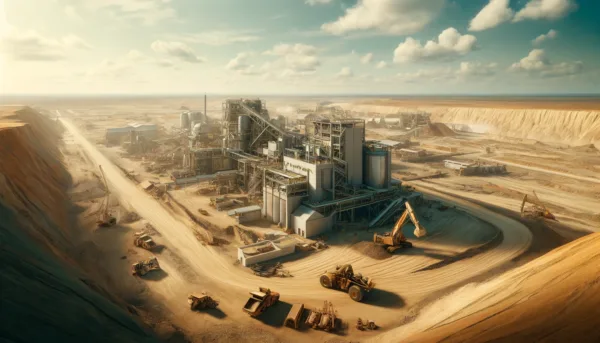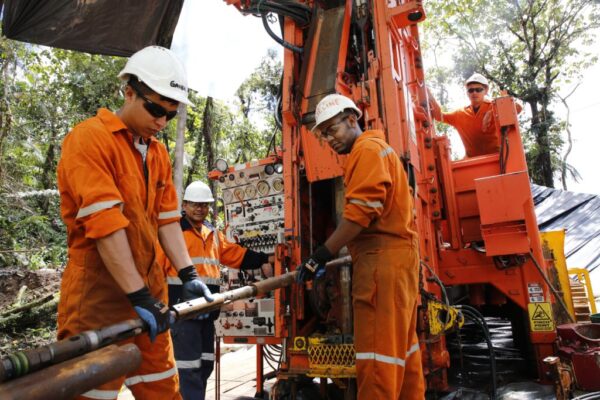





American Lithium Minerals Inc. (OTC: AMLM) has moved to materially reshape its market narrative with the acquisition of the Higginsville Gold Project in Western Australia, a package of four granted prospecting licenses located within one of Australia’s most prolific gold-producing corridors. For an exploration-stage company that has historically positioned itself around critical metals, precious metals, and rare earth elements, the transaction carries significance well beyond simple acreage expansion: it introduces a potentially more immediate, catalyst-driven gold exploration story that could reset how investors assess the company’s medium-term upside. The strategic relevance is immediate because Higginsville sits within the Southern Norseman-Wiluna greenstone belt and near the Zuleika Shear Zone, both geologically associated with high-grade gold discoveries and long-standing mining activity. In market terms, American Lithium Minerals Inc. is not merely adding land; it is placing itself inside a region where geology, infrastructure proximity, and historical production collectively support a more credible exploration thesis than frontier greenfield projects typically offer.
Why could the Higginsville Gold Project become the asset that materially changes how investors value American Lithium Minerals Inc.?
This acquisition appears to be as much about capital-market repositioning as it is about geology. Junior exploration companies, particularly those trading on OTC markets, often experience valuation swings driven by narrative strength almost as much as by hard operational milestones. Critical minerals stories can attract attention during policy-driven cycles, especially when lithium, rare earths, or battery metals dominate macroeconomic discussions, but those cycles can cool quickly and often become hostage to shifts in commodity sentiment, central bank policy, and changing risk appetite across small-cap equities.
Gold, by contrast, offers a more familiar and historically durable valuation framework. By acquiring Higginsville, American Lithium Minerals Inc. may be broadening its strategic identity from a thematic metals story into a more diversified exploration platform. That matters because it widens the potential investor base, drawing attention from gold-focused retail traders, speculative resource funds, and small-cap mining investors who may have previously overlooked the stock because its earlier portfolio narrative was more closely associated with critical minerals and long-cycle energy transition themes.
More importantly, the acquisition comes with embedded geographic credibility. The project lies just 9 kilometers from the Higginsville Mine, which has historically produced approximately 1.1 million ounces of gold. For investors, proximity to established production frequently acts as an immediate confidence signal because it lowers perceived geological uncertainty and supports the probability of structurally similar mineralization. In junior mining markets, location often functions as an early valuation proxy well before resource estimates are available, and that may be exactly what management is attempting to leverage here.
This is precisely the kind of acquisition that can reset investor attention because it provides a more visible and potentially faster-moving exploration narrative than many early-stage metals projects. It also allows American Lithium Minerals Inc. to reposition itself into a commodity theme that tends to receive stronger retail engagement during periods of macro uncertainty, inflation concern, or renewed interest in hard assets.
How does the Southern Norseman-Wiluna greenstone belt location strengthen the probability of sustained exploration upside?
The geological setting is where the investment thesis begins to gain real depth. The Higginsville Project sits on the western limb of the Greater Eundynie Anticline and directly within the Southern Norseman-Wiluna greenstone belt, one of Australia’s most productive gold provinces. Its proximity to the Zuleika Shear Zone is particularly notable because major regional shear structures frequently act as fluid pathways for gold mineralization and are often associated with repeatable high-grade discoveries.
From an analytical standpoint, the project offers more than a single geological angle. The presence of both primary Archaean quartz-vein and shear-hosted gold systems alongside secondary Tertiary palaeochannel gold gives American Lithium Minerals Inc. multiple mineralization pathways. This matters because it reduces concentration risk within the exploration model itself. If one geological interpretation underperforms, another may still provide meaningful exploration value and sustain investor confidence through successive work programs.
For an OTC-listed explorer, multiple pathways also improve the probability of sustained news flow across successive quarters, which is often critical for maintaining market interest. Markets tend to reward companies that can provide a rolling sequence of geological updates, sampling results, target revisions, and drilling milestones. Higginsville’s mixed mineralization profile may therefore support a more durable communications and catalyst strategy, rather than a one-shot speculative drill story.
What do the historical grades and nugget discoveries really suggest about the 2026 drilling thesis?
The disclosed historical results are strong enough to attract speculative interest but still require disciplined interpretation. The company highlighted historical aircore drilling results of 1 meter at 8.69 grams per tonne gold, rock chips grading up to 8.26 grams per tonne at Rainbow Waters, and 2.37 grams per tonne at Little Gladys. The reported surface nuggets, including finds up to 27 ounces, add a powerful psychological element that markets often respond to quickly.
However, sophisticated investors will focus less on isolated grades and more on whether those results demonstrate continuity across meaningful strike length and depth. High-grade spot results can create headline excitement, but valuation expansion usually depends on the ability to demonstrate repeatability, width, and structural coherence. In other words, the market will be watching whether these historical datapoints begin to map into a deposit thesis rather than remaining isolated anomalies.
The real rerating trigger will be whether integrated geology, geophysics, and geochemistry work can convert these isolated findings into coherent drill-ready structural targets. If continuity emerges across strike and depth, the valuation framework could shift materially from speculative optionality to early-stage resource probability.
The planned 2026 work sequence supports this thesis: data integration in early 2026, drill target selection by mid-year, and drilling in the second half. That milestone visibility itself can support sentiment, especially in speculative resource equities where investors often trade forward to anticipated assay results.
Why American Lithium Minerals Inc.’s Perth office strategy could become a key execution catalyst for the Higginsville Gold Project
The decision to establish a Perth office is strategically stronger than it may initially appear. Perth remains one of the most important global hubs for mining finance, technical talent, and exploration operations. For American Lithium Minerals Inc., local presence improves contractor access, permitting coordination, geological staffing, and project execution speed.
More importantly, it changes investor perception. A local operational footprint reduces the impression that Higginsville is simply a narrative asset acquired for market attention. Instead, it signals a structured intent to actively advance the project on a visible timeline.
For executive and institutional readers, this matters because operational seriousness often becomes the dividing line between promotional junior miners and companies capable of moving assets toward resource definition. Frank Kristan’s framing of Higginsville as a “cornerstone asset” reinforces the likelihood that this project becomes central to the company’s equity-market story over the next 12 months.
Key takeaways on what this development means for American Lithium Minerals Inc., competitors, and the industry
- Higginsville materially strengthens American Lithium Minerals Inc.’s gold-led market narrative at a time when commodity diversification can widen investor interest
- Western Australia location adds immediate geological credibility and lowers perceived exploration risk relative to frontier jurisdictions
- Multiple mineralization styles improve strategic optionality and reduce reliance on a single geological model
- Historical grades and nugget finds support strong speculative sentiment heading into the 2026 drill cycle
- The Perth office materially improves execution credibility, local access, and market confidence
- 2026 drilling milestones are likely to become the primary drivers of valuation and sentiment
- If continuity is confirmed, Higginsville could evolve into the company’s lead rerating catalyst
- Broader sector implication: investors continue to favor junior explorers with assets in proven belts over frontier land packages
Discover more from Business-News-Today.com
Subscribe to get the latest posts sent to your email.