




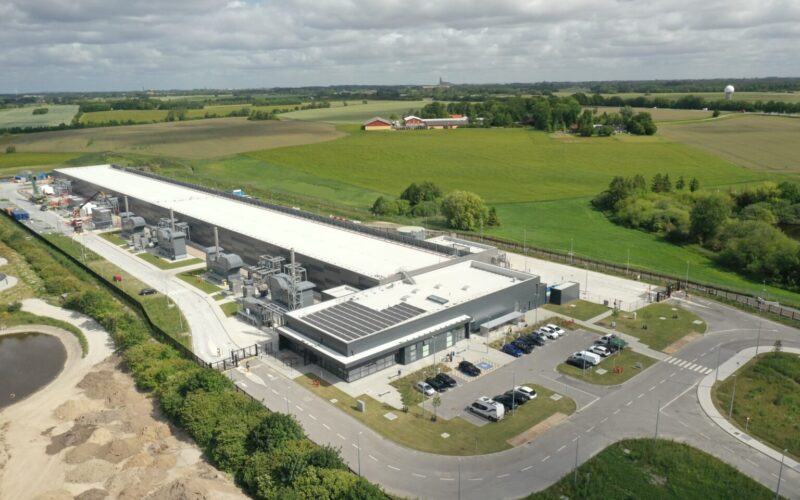
Microsoft Corporation (NASDAQ: MSFT) has officially opened its Denmark East datacenter region, a multi-campus infrastructure investment spanning sites in Hoje Taastrup, Koge, and Roskilde on the island of Zealand. The announcement signals a long-term capital commitment to European cloud sovereignty, local data residency, and renewable-energy-aligned operations at a moment when Microsoft’s strategic credibility around AI infrastructure spending is under intense market scrutiny. With MSFT trading near $357, roughly 34% below its October 2025 all-time high of $540, the company is deploying physical infrastructure in Europe even as investors question whether its multi-hundred-billion-dollar AI capex cycle will generate returns within a reasonable horizon. The Denmark East opening is both an operational milestone and a sovereignty-driven commercial play, positioning Microsoft to compete for public-sector and regulated-industry cloud contracts that require data to remain within European Union jurisdiction.
What does the Microsoft Denmark East datacenter region mean for European cloud sovereignty and data residency requirements?
The Denmark East region adds three independent availability zones within a single geographic footprint, giving Danish enterprise customers the fault-tolerant, low-latency cloud infrastructure that multi-region architectures typically require. For regulated sectors, including financial services, healthcare, energy, and public administration, the critical detail is local data residency: customer workloads can now be stored and processed entirely within Danish borders under full EU legal protection, with General Data Protection Regulation compliance baked into the architecture by default. Microsoft has framed this within its broader EU Data Boundary commitment, which ensures that customer data for Microsoft cloud services is stored and processed within the EU rather than being routed to US-based infrastructure. This matters commercially because European public-sector procurement increasingly requires demonstrable data sovereignty controls, and national governments across the region have been cautious about concentrating critical workloads on infrastructure where the legal reach of non-EU jurisdictions is ambiguous. The Denmark East opening gives Microsoft a concrete compliance answer to that hesitation.
The region is covered by Microsoft’s European Digital Commitments, which go beyond regulatory minimum compliance to include legally backed assurances, local governance structures, and operational transparency mechanisms. Microsoft has also articulated a Sovereign Cloud offering that allows customers to select degrees of control, isolation, and operational autonomy based on their specific workload sensitivity. That layered approach reflects a maturation of the sovereign cloud conversation in Europe: governments and regulated enterprises no longer want a binary on-premises versus public cloud choice. They want configurable sovereignty within a hyperscaler’s infrastructure. Microsoft, Amazon Web Services, and Google Cloud are all competing to define that middle ground, and each new regional opening is effectively a land grab for the compliance-sensitive workload segment.
How large is the economic multiplier effect from Microsoft’s projected $4.5 billion investment in Denmark over the next four years?
Independent analysis by IDC projects that Microsoft and its Danish partners will collectively spend approximately $4.5 billion in Denmark over the next four years on local services and products. The figure is notable not because of what Microsoft itself spends, but because of the downstream multiplier it generates in the local economy. For every dollar of Microsoft cloud revenue, more than six dollars are reportedly generated in the broader partner ecosystem, a ratio IDC projects will rise to nearly eight dollars by 2029. That leverage comes primarily from Danish IT consultancies, software developers, cybersecurity firms, and systems integrators who sell implementation and managed services to Danish organisations adopting cloud infrastructure. The datacenter itself is not the primary employment driver; the services ecosystem surrounding it is.
Nykredit, one of Denmark’s largest mortgage and financial services groups, has publicly acknowledged the operational benefit of the new region. The institution cited data security, regulatory compliance, and reduced latency from proximity to on-premises services as the primary advantages. That combination of compliance posture and performance benefit is the standard commercial case Microsoft will replicate across similar customer engagements in Denmark. For multinational companies operating Danish entities, the region also simplifies the legal architecture of cloud adoption by eliminating cross-border data transfer complexity that has historically added compliance overhead to Azure deployments.
How does Microsoft’s Denmark East zero-water cooling design and HVO fuel strategy advance its 2030 carbon negative commitment?
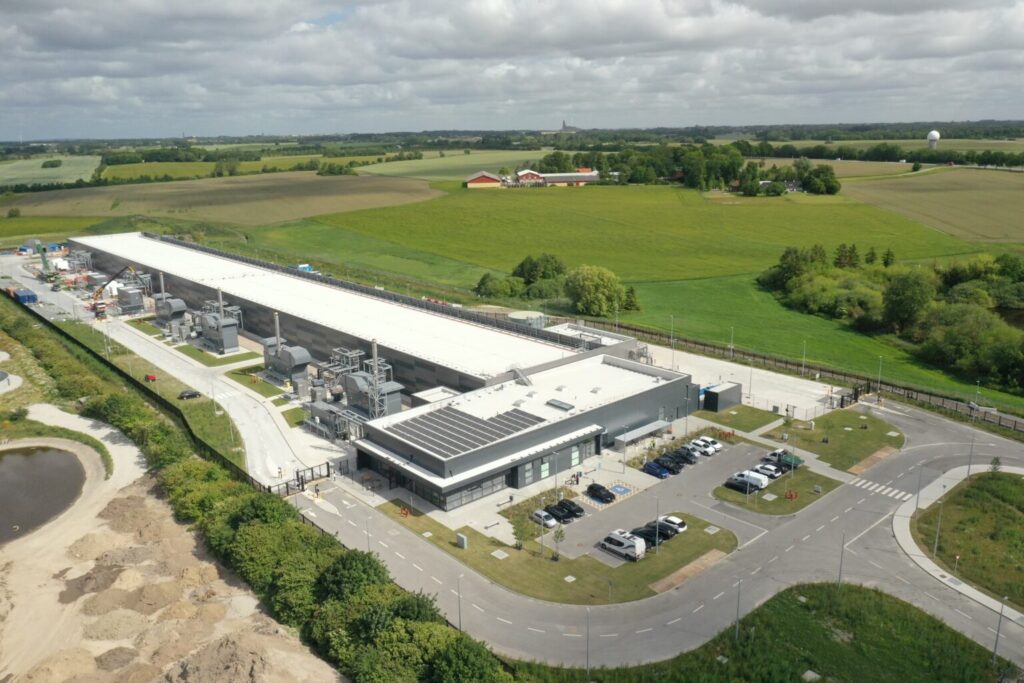
The Denmark East datacenters have been engineered for zero water use in cooling operations, a design decision that addresses one of the most persistent criticisms levelled at hyperscale datacenter infrastructure: its disproportionate consumption of local freshwater resources. Microsoft is targeting LEED Gold certification for the facilities and is aiming for a power usage effectiveness rating of 1.16, which represents a high level of energy efficiency for datacenters of this scale. On backup power, the campuses use hydrotreated vegetable oil, a renewable diesel produced from waste and residual materials that can substantially reduce lifecycle greenhouse gas emissions compared to conventional fossil diesel.
The waste heat recovery capability at the Hoje-Taastrup site is arguably the most commercially distinctive sustainability feature. Microsoft has engineered that campus to recover surplus heat for injection into the local district heating network, with capacity to warm approximately 6,000 homes. Future expansion of the heat recovery program is planned for the Koge site. This positions the datacenters not merely as net consumers of local energy infrastructure but as contributors to it, which changes the political economy of community relations around datacenter siting. Municipalities that might otherwise resist large-scale infrastructure projects on environmental grounds have a concrete public benefit to point to. Microsoft has entered into long-term power purchase agreements in Denmark providing 130 megawatts of renewable energy capacity annually, including a 27-megawatt solar park at Svinningegarden in Holbaek Municipality. Microsoft formally met its global commitment to match annual electricity consumption with renewable energy by end of 2025. IDC’s analysis suggests that Danish organisations migrating from on-premises infrastructure to cloud services could reduce collective CO2 emissions by nearly 88,000 metric tons over the next four years, equivalent to the annual emissions of roughly 22,700 Danish homes.
Why is Microsoft expanding European datacenter capacity while MSFT stock trades near its worst levels in over a year?
MSFT closed at approximately $357 on 27 March 2026, sitting near the bottom of its 52-week range of $344.79 to $555.45. The stock has declined roughly 34% from its October 2025 all-time high and is widely described as the worst-performing stock in the Magnificent Seven cohort year-to-date. The divergence between the scale of Microsoft’s infrastructure investment and the trajectory of its share price reflects a broader tension playing out across hyperscaler stocks: markets are struggling to reconcile enormous near-term AI capital expenditure with uncertain and delayed revenue payoffs.
Microsoft is spending approximately $30 billion per quarter on AI infrastructure. Azure growth came in at 39% in the most recent quarter, beating estimates, and the company reported earnings per share of $4.14 against a consensus estimate of $3.90. Yet the stock continues to slide, suggesting that investor concern extends beyond near-term financials to structural questions about whether Copilot and Azure AI can generate durable margin expansion or whether the company is in a capital-intensive arms race with uncertain end-state economics. The Denmark East opening does not directly answer those questions, but it does demonstrate execution discipline: the infrastructure is built, the sustainability commitments are being met, and the commercial pipeline in a high-trust regulated market is being unlocked. Microsoft’s next earnings release is scheduled for 28 April 2026, and the Azure growth trajectory and capex guidance for the second half of the financial year will be the pivotal data points for market sentiment.
How does Microsoft’s community partnership model in Koge, Roskilde, and Hoje-Taastrup change the political calculus of datacenter siting in Europe?
The siting of hyperscale datacenters in European municipalities has become an increasingly politicised process, with community opposition often centred on land use, water consumption, energy demands, and the perceived asymmetry between corporate benefit and local burden. Microsoft’s approach in Denmark is a studied attempt to address each of those friction points before they become organised resistance. The company has established partnerships with 13 local organisations across the three host municipalities, covering inclusion, biodiversity, and neighbourhood engagement, and has co-developed a 40,000-square-metre public park adjacent to the Hoje-Taastrup campus that provides a green buffer between the facility and surrounding residential areas.
Mayors from all three municipalities have offered public endorsements of the investment, citing job creation, skills development, and district heating supply as tangible community dividends. That political alignment is commercially significant because it reduces the regulatory risk of future capacity expansion on existing sites. A datacenter operator that has embedded itself in local civic life and contributed to public infrastructure is less vulnerable to planning disputes or political reversals than one that has maintained a purely transactional relationship with host communities. For Microsoft’s European infrastructure strategy, the Denmark model is likely a template for future regional openings where community trust must be built proactively rather than defended retroactively.
Key takeaways: what Microsoft Denmark East means for cloud sovereignty, sustainability, and AI infrastructure investment strategy
- Microsoft has opened a three-campus Denmark East datacenter region in Hoje Taastrup, Koge, and Roskilde, providing Danish customers with local data residency, EU Data Boundary compliance, and multiple independent availability zones for the first time.
- The region targets public-sector and regulated-industry contracts where European data sovereignty requirements have historically limited cloud migration. It directly competes with AWS and Google Cloud for compliance-sensitive workloads across financial services, healthcare, and government.
- IDC projects that Microsoft and its partners will invest approximately $4.5 billion in Denmark over the next four years, generating an economic multiplier of up to eight dollars in the partner ecosystem for every dollar of Microsoft cloud revenue.
- The facilities are designed with zero water cooling, a target power usage effectiveness of 1.16, LEED Gold certification, and HVO renewable fuel for backup generation. The Hoje-Taastrup site will supply surplus heat to the local district heating network, enough to warm roughly 6,000 homes.
- Microsoft reached its 2025 target of matching global electricity consumption with renewable energy and has secured 130 MW of renewable energy capacity in Denmark through long-term power purchase agreements.
- MSFT is trading near $357, approximately 34% below its October 2025 all-time high, under pressure from investor concern that AI infrastructure capital expenditure of roughly $30 billion per quarter is not translating into adequate near-term revenue acceleration.
- Azure grew 39% in the most recent quarter and Microsoft beat earnings estimates at $4.14 per share versus a $3.90 consensus, but the stock continues to face sentiment headwinds as the broader Magnificent Seven cohort retreats on macro concerns.
- The company’s community partnership model in Denmark, covering biodiversity, inclusion, and public park co-development, represents a deliberate strategy to reduce planning risk and build political support for future capacity expansion on European sites.
- Microsoft’s next earnings release on 28 April 2026 will be a critical inflection point: Azure growth trajectory and capex guidance for H2 FY2026 will determine whether the market re-rates the stock or deepens its discount.
- The Denmark East opening reinforces that Microsoft is executing on its infrastructure roadmap regardless of near-term share price pressure, signalling a long-duration conviction in European cloud demand that is likely shared by AWS and Google as all three hyperscalers accelerate regional footprint expansion.
Discover more from Business-News-Today.com
Subscribe to get the latest posts sent to your email.


