
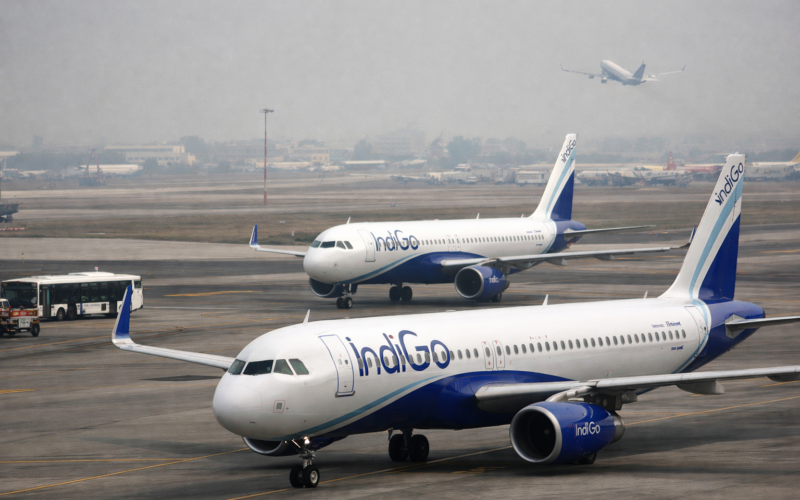
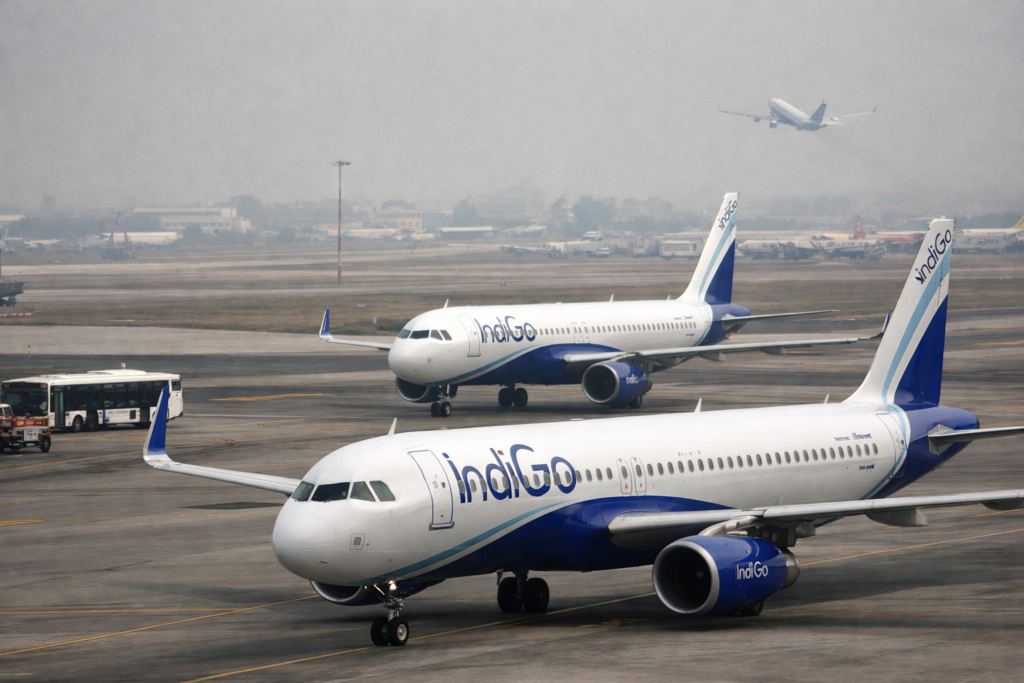
Indian airlines are set to operate approximately 23,049 weekly domestic flights in the summer 2026 schedule, a reduction of roughly 10 per cent compared to the 25,610 weekly services recorded in the summer 2025 schedule. The Directorate General of Civil Aviation published the airline-wise domestic summer schedule for 2026 on its website on 26 March 2026, covering the period from 29 March to 24 October. Nine scheduled airlines are included in the schedule: Air India, Air India Express, IndiGo, Akasa Air, SpiceJet, Alliance Air, FLY91, Star Air, and IndiaOne Air.
A senior Directorate General of Civil Aviation official confirmed to Press Trust of India that the number of weekly flights would fall by approximately 2,561 services compared to the same period in the previous year. The regulator published carrier-level breakdowns on its website but did not release a consolidated comparison figure or an aggregate tally against the ongoing winter schedule.
The reduction arrives against the backdrop of two compounding crises. The first is the operational collapse at IndiGo, India’s largest airline by market share, which occurred in early December 2025 and prompted the Directorate General of Civil Aviation to curtail IndiGo’s winter schedule by 10 per cent. The winter schedule, which ran from 26 October 2025 to 28 March 2026, had scheduled 26,495 weekly flights across all carriers before the curtailment.
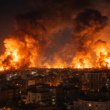
The second crisis is the ongoing armed conflict in West Asia involving the United States, Israel, and Iran, which commenced on 28 February 2026. The conflict has triggered widespread airspace closures across the Persian Gulf region, directly disrupting Indian carrier operations to one of the busiest international corridors served by Indian airlines.
Why did the Directorate General of Civil Aviation publish a reduced summer 2026 flight schedule for Indian airlines?
The 2026 summer schedule was largely prepared during January and February 2026, a period during which no West Asia conflict risk had emerged. Airline executives told Press Trust of India that the scenario had changed completely by the time the schedule was published, with operational complexities having increased substantially. At least one airline official indicated that there could be further reductions to the existing summer schedule itself depending on how the situation evolves in the coming weeks.
The Directorate General of Civil Aviation issued an advisory in late March instructing Indian airlines to avoid flying through 11 airspace zones across West Asia and the Persian Gulf, identifying Iran, Israel, Lebanon, Saudi Arabia, Bahrain, Oman, Iraq, Jordan, the United Arab Emirates, Qatar, and Kuwait as high-risk zones covering all altitudes and flight levels. The regulator cited threats ranging from possible attacks on United States and Israeli assets to hazards arising from ongoing military activity. A subsequent advisory narrowed the list to nine airspaces, permitting operations over Oman and Saudi Arabia subject to conditions.
Union Civil Aviation Minister Ram Mohan Naidu Kinjarapu informed the Lok Sabha that Indian carriers had cancelled more than 4,335 flights due to the West Asia crisis, with foreign airlines cancelling an additional 1,187 services. The minister stated that passenger safety remained the paramount concern and that airlines cannot operate when the airspace in conflict-affected areas is closed. Despite the disruptions, he noted that approximately 219,780 passengers travelled during the period of high tension.
How is the West Asia conflict affecting Indian airline operations on the India-Gulf corridor and international routes?
The India-Gulf aviation corridor is one of the busiest international routes served by Indian carriers, accounting for approximately 40 per cent of total international passenger traffic to and from India. For SpiceJet, Air India Express, and Akasa Air, more than 80 per cent of origin-destination international passenger traffic originates in or is destined for the Gulf region. Air India cancelled approximately 2,500 flights to the Gulf region in the period since the conflict began on 28 February and was operating at around 30 per cent of its normal West Asia capacity at the peak of the disruption.
IndiGo, which derives approximately 18 per cent of its revenue from West Asia routes according to credit rating agency Moody’s Ratings, cancelled more than 450 flights within the first 48 hours of the conflict and suspended several services to the Middle East. The airline stated on 24 March 2026 that it intended to begin the domestic summer schedule with nearly 2,000 daily flights in April but acknowledged that the deployed international scale would vary based on ongoing circumstances in the Middle East.
Indian carrier operations westward have faced a compounded airspace problem. Pakistan has maintained a closure of its airspace to Indian airlines since May 2025. The addition of West Asia airspace restrictions means airlines must use significantly longer routes to reach Europe and North America, travelling via Central Asia or alternative northern corridors. The extended routings add fuel burn, crew time, and maintenance demands to already strained operations.
What is the impact of rising aviation turbine fuel prices on Indian airline summer fares and profitability?
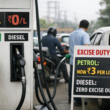
Aviation turbine fuel accounts for approximately 40 per cent of an airline’s operating costs and has emerged as the central financial pressure point for Indian carriers in the current crisis. The International Air Transport Association’s Jet Fuel Monitor recorded a rise of more than 85 per cent in jet fuel prices for the region in March 2026. Oil Marketing Companies in India had not fully passed on the global surge in the March revision cycle, though aviation turbine fuel prices were increased. The next monthly revision by Oil Marketing Companies was scheduled for 1 April 2026.
Air India, IndiGo, Akasa Air, and SpiceJet had all introduced fuel surcharges ahead of the summer schedule. IndiGo levied fuel surcharges ranging from Rs 425 to Rs 2,300 per sector from 14 March 2026, citing a significant surge in jet fuel prices due to geopolitical tensions in the Middle East. Akasa Air introduced a fuel surcharge ranging from Rs 199 to Rs 1,300 on domestic and international routes from 15 March 2026, with the charge varying based on flight duration.
Industry estimates indicate that fuel surcharges offset approximately 10 to 15 per cent of the increase in costs on domestic routes, leaving airlines to absorb the remainder. Air India Chief Executive Officer Campbell Wilson stated in an internal communication that the full impact of the energy crisis would become clearer in April and acknowledged that there is a limit to fare increases before demand begins to fall.
Moody’s Ratings stated in a report that the West Asia conflict would squeeze airline profitability globally as fuel costs remain high and operational disruptions continue, adding that no airline is immune and that unhedged carriers and those with thinner margins face the greatest immediate pressure. The report specifically noted that IndiGo, which does not hedge fuel purchases, will face near-term pressure from increased fuel costs, longer flight times due to rerouting, and foreign exchange volatility.
How have Indian government regulators and the Ministry of Civil Aviation responded to the aviation sector crisis?
The Ministry of Civil Aviation lifted the domestic airfare caps that had been imposed in December 2025 following IndiGo’s operational meltdown, effective from 23 March 2026, restoring market-driven pricing. The caps had set ceilings ranging from Rs 7,500 on short-haul routes to Rs 18,000 on longer domestic sectors. The ministry removed them after operations stabilised, while simultaneously cautioning airlines to maintain reasonable and transparent pricing.
The Indian government was also reported to be considering tax relief and liquidity support measures for airlines in response to the compounding cost pressures arising from the West Asia crisis. The government has assured Parliament that there is no immediate shortage of aviation turbine fuel and that domestic supplies remain stable, though the risk of prolonged geopolitical disruption continues to weigh on the sector’s outlook.
A separate proposed government directive requiring airlines to offer 60 per cent of seats free for passenger selection has drawn strong opposition from carriers. The Federation of Indian Airlines warned that such a policy would reduce ancillary revenues and force carriers to recover losses through higher base fares, potentially negating any consumer benefit.
What broader financial context explains why Indian aviation is particularly vulnerable to the West Asia and fuel price crisis?
Indian domestic airlines derive approximately 25 to 35 per cent of their revenues from international routes, with Gulf markets forming the single largest component of international traffic. The closure of the Gulf corridor therefore strikes at a disproportionately large share of revenue for carriers such as Air India Express, SpiceJet, and Akasa Air.
The rupee depreciated sharply against the United States dollar in the same period, falling to a new low of 93.72 against the dollar on the day of the sharpest single-session decline, which represented a fall of 1.15 per cent in one trading session. Between 35 and 50 per cent of airline operating expenses, including aircraft lease payments, fuel costs, maintenance, and engine overhaul, are denominated in United States dollars. Airlines have a partial natural hedge from international earnings, but the net foreign currency payable position remains exposed.
Elevated crude oil prices resulting from the conflict have also pressured the Indian crude basket. The closure of the Strait of Hormuz, the primary maritime gateway through which Gulf oil and gas reaches global markets, has removed the principal alternative to other supply routes. Credit rating agency ICRA had forecast losses of Rs 17,000 to Rs 18,000 crore for Indian airlines in financial year 2026 before the West Asia conflict began, underscoring the fragility of airline balance sheets entering the summer season.
International long-haul and Gulf routes typically generate higher profit margins per passenger than domestic sectors, according to the International Air Transport Association. The sustained closure of these routes therefore removes the margin contribution that carriers depend upon to offset the highly commoditised pricing environment on Indian domestic routes.
Key takeaways on what the Indian summer 2026 flight schedule reduction means for airlines, passengers, and the aviation sector
- The Indian government lifted domestic airfare caps on 23 March 2026 and has been reported to be considering tax relief and liquidity support for carriers; the combined pressures of airspace closures, fuel cost surges, rupee depreciation, and Pakistan airspace restrictions are expected to generate substantial losses for the Indian aviation sector in financial year 2026.
- The Directorate General of Civil Aviation’s summer 2026 schedule covers nine Indian carriers operating approximately 23,049 weekly domestic flights from 29 March to 24 October, representing a 10 per cent reduction against the 25,610 weekly services recorded in summer 2025.
- The West Asia conflict involving the United States, Israel, and Iran, which commenced 28 February 2026, has disrupted the India-Gulf corridor that accounts for 40 per cent of India’s international passenger traffic; Indian carriers cancelled more than 4,335 flights and foreign carriers cancelled a further 1,187 since the conflict began.
- Aviation turbine fuel prices in the region rose more than 85 per cent in March 2026 according to the International Air Transport Association’s Jet Fuel Monitor, prompting Air India, IndiGo, Akasa Air, and SpiceJet to levy fuel surcharges ranging from Rs 199 to Rs 2,300 per sector; fuel surcharges are estimated to offset only 10 to 15 per cent of the increase on domestic routes.
- Airline executives have warned the 2026 summer schedule carries further downside risk as it was finalised in January and February before the conflict began, and operational conditions have deteriorated materially since then.
Discover more from Business-News-Today.com
Subscribe to get the latest posts sent to your email.