




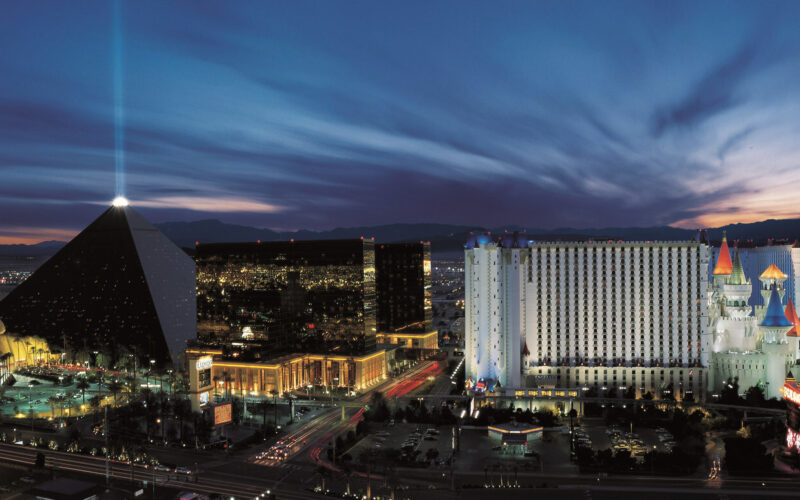
MGM Resorts International (NYSE: MGM) has launched a new all-inclusive package on the Las Vegas Strip, bundling hotel accommodation, resort fees, meals, entertainment, parking, and selected attractions into a single upfront price at Luxor Hotel & Casino and Excalibur Hotel & Casino. The offer starts at $330 plus tax for a two-night stay for two guests and becomes available for travel beginning April 6. Strategically, the move is less about copying Caribbean resort logic and more about solving a very Las Vegas problem: consumer fatigue with fragmented pricing, surprise fees, and trip-planning complexity. For MGM Resorts International, the bundle is a demand-shaping tool, a cross-property monetization engine, and a useful test of whether value packaging can widen the Strip’s addressable market without damaging spend per visitor.
Why is MGM Resorts International testing all-inclusive pricing on the Las Vegas Strip now?
The timing is not accidental. Las Vegas remains one of the most flexible pricing markets in global travel, but that flexibility has become a double-edged sword. Consumers like choice until choice starts to feel like a math exam. A room rate that does not include resort fees, meals, parking, or entertainment may still work for high-intent visitors, convention travelers, and premium gamblers. It is less compelling for cost-sensitive leisure travelers, families, and first-time visitors who increasingly compare destination trips by total price rather than entry price.
That is where MGM Resorts International’s new package becomes strategically interesting. By combining rooms at Luxor and Excalibur with meals across several south Strip properties, show tickets, coaster rides, and self-parking, MGM Resorts International is not merely discounting inventory. It is simplifying a purchase decision. In plain English, the company is trying to make Las Vegas feel less like an à la carte labyrinth and more like a bookable, understandable vacation product.
This matters because the current travel environment rewards predictability. Airlines, cruise lines, theme parks, and even midscale resorts have trained consumers to look at the full trip cost early. Las Vegas, by contrast, has often relied on the psychology of the teaser rate. MGM Resorts International appears to be testing whether a clearer total-price proposition can unlock incremental demand at the more value-oriented end of its Strip portfolio.
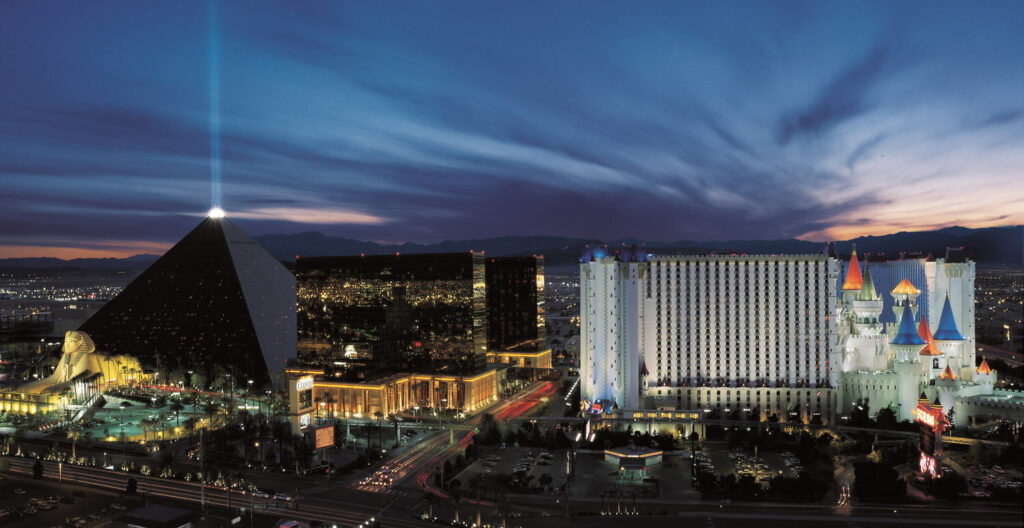
How does the Luxor and Excalibur bundle help MGM Resorts International use underleveraged assets more efficiently?
Luxor and Excalibur are not the highest-end names in MGM Resorts International’s Las Vegas portfolio, but that is exactly why they make sense for this pilot. Both properties sit in the south Strip cluster, adjacent to other MGM-controlled venues including Mandalay Bay, MGM Grand, and New York-New York. That gives MGM Resorts International a contained ecosystem in which it can redistribute guest traffic across hotels, restaurants, attractions, and entertainment without needing to depend on third-party partners.
The structure of the package reveals the company’s real objective. Guests may sleep at Luxor or Excalibur, but they redeem meals and experiences across multiple MGM-operated sites. That spreads footfall, improves internal capture of visitor spend, and turns lower-priced rooms into gateways for broader ecosystem monetization. In other words, MGM Resorts International is using bundled demand to activate underused capacity across the south Strip rather than simply filling beds.
This is operationally smarter than it may first appear. A meal voucher redeemed at an in-network restaurant is not just a cost. It is also traffic steering. A show ticket is not only entertainment; it is a mechanism to convert a guest into a broader on-property spender. Parking, long a sore point for some leisure travelers, becomes a friction remover. The coaster ride adds perceived value at relatively manageable cost. When bundled together, these components help MGM Resorts International shape the guest journey instead of leaving it to chance.
Could MGM Resorts International’s all-inclusive package change how Las Vegas sells value travel?
Not overnight, but it could influence the conversation. Las Vegas has historically sold abundance, not inclusion. Visitors were offered optionality, spectacle, and price dispersion. That model still works, especially for premium segments. But it has become more vulnerable in an era where travelers scrutinize add-on fees and often arrive with tighter budgets. MGM Resorts International is effectively asking whether there is room on the Strip for a more transparent value proposition that still preserves margin through internal spend capture.
The offer also reflects a subtle repositioning of what “all-inclusive” means in an urban gaming destination. This is not a beach resort model where the guest never leaves the property. It is a curated bundle built around selected experiences inside a tightly controlled geographic portfolio. That distinction matters. MGM Resorts International is not trying to eliminate variability. It is trying to reduce purchase anxiety while preserving the sense of optional entertainment that defines Las Vegas.
If the concept proves successful, it could create competitive pressure on other operators to think harder about bundled value, especially in off-peak periods or for mid-market segments. Caesars Entertainment and other Strip players may not rush to duplicate the exact product, but they will notice if MGM Resorts International starts converting price-sensitive traffic more efficiently through transparent packaging.
What revenue and margin risks does MGM Resorts International face if bundled pricing gains traction?
The main risk is obvious: bundling can fill rooms while quietly compressing economics if not managed with precision. MGM Resorts International will need to ensure the package attracts incremental guests rather than simply discounting trips that would have been booked anyway at higher total profitability. This is the classic hospitality bundling trap. A full hotel achieved through diluted yield is still a problem wearing good makeup.
There is also the issue of behavioral substitution. A guest using included meals and entertainment may spend less on premium upgrades, gaming, or third-party activity elsewhere. MGM Resorts International clearly hopes the convenience of the package increases overall on-property engagement, but that is an empirical question, not a guaranteed outcome. The company will likely be watching whether bundled guests generate additional spend beyond the included components and whether they return at attractive rates.
Operational complexity is another consideration. Cross-property voucher redemption, menu control, show capacity management, and service consistency all become part of the product. One weak link, such as redemption friction or disappointing menu limitations, can damage the value perception quickly. In hospitality, the bundle lives or dies not only by price but by whether the guest feels clever after buying it instead of feeling managed.
Still, these are manageable risks if the pilot remains tightly scoped. Starting with Luxor and Excalibur gives MGM Resorts International room to test elasticity, guest satisfaction, and incremental spend patterns without disrupting its premium flagship pricing architecture.
Why does this MGM Resorts International move matter for broader travel and gaming industry strategy?
What makes this announcement more than a marketing footnote is that it sits at the intersection of pricing strategy, consumer psychology, and asset productivity. Travel companies increasingly want to own a larger share of the trip wallet while making purchase decisions simpler. Gaming and resort operators want higher occupancy, better non-gaming monetization, and more predictable customer journeys. MGM Resorts International’s bundle speaks to all three goals.
It also signals that Las Vegas operators are still experimenting with how to grow beyond the old playbook of room deals plus on-site extraction. The Strip has become more entertainment-driven, more food-led, and more diversified in its revenue base. That makes bundling more plausible than it once was. A company with a dense cluster of connected properties can package experiences in a way that looks consumer-friendly while still keeping spending inside its own walls.
There is also a branding implication. Luxor and Excalibur have long been associated with accessible price points rather than luxury positioning. By wrapping them into a structured, easier-to-understand vacation product, MGM Resorts International may be trying to redefine them as reliable value hubs rather than merely cheaper room options. That sounds subtle, but in destination marketing, framing is half the battle.
What does current MGM stock sentiment suggest about investor confidence in execution and consumer demand?
The market is not pricing this announcement as a transformational event, nor should it. But it lands at a time when MGM Resorts International shares have been trading closer to the upper half of their 52-week range, suggesting investors remain constructive on the company’s broader operating profile. A higher-quality question is not whether this bundle moves the stock on its own, but whether it fits management’s larger effort to defend leisure demand, improve property-level productivity, and sustain non-gaming revenue resilience.
For investors, the relevance lies in signal rather than immediate earnings impact. This package suggests MGM Resorts International is still actively optimizing its Las Vegas operating model rather than passively riding visitor flows. That matters in a consumer environment where value perception can influence trip conversion rates more than broad macro headlines. The company’s willingness to experiment with packaging also indicates confidence in the controllability of its south Strip ecosystem.
At the same time, institutional investors are unlikely to assign much valuation premium unless the strategy scales or demonstrates measurable lift in occupancy, cross-property spend, and customer satisfaction. Wall Street tends to reward repeatable systems, not one-off promotions. So the real test is whether this becomes a seasonal package, a segment-specific channel strategy, or the early shape of a broader pricing rethink.
What happens next if MGM Resorts International’s Las Vegas all-inclusive trial succeeds or fails?
If it succeeds, MGM Resorts International gains a replicable template for using bundled pricing to drive demand at selected properties while deepening wallet capture across adjacent assets. The company could expand the concept seasonally, tailor it for families or event-driven weekends, and potentially introduce graduated versions for different customer profiles. A successful outcome would also strengthen the case that transparent pricing can coexist with Las Vegas’ traditional upsell culture.
If it disappoints, the likely conclusion will not be that bundling itself is flawed, but that the economics or guest mix were not attractive enough in this format. MGM Resorts International can then retreat with limited strategic damage because the package is concentrated in a specific portfolio pocket rather than across the full Strip estate. In that sense, this is a sensible experiment with asymmetric upside. If it works, it creates a new merchandising lever. If it fails, it becomes a contained lesson rather than a balance-sheet event.
That is why this small-looking announcement deserves more attention than it might initially get. MGM Resorts International is testing whether Las Vegas can sell convenience, clarity, and perceived value in a way that feels modern without losing what makes the Strip commercially powerful. In a city built on optionality, the next real luxury for many travelers may simply be not having to calculate everything twice.
What are the key takeaways from MGM Resorts International’s all-inclusive Las Vegas Strip strategy?
- Success could encourage MGM Resorts International to build more targeted packaged products around family, seasonal, or event-driven travel demand.
- MGM Resorts International is using bundling as a pricing and demand-shaping tool, not just a promotion.
- Luxor and Excalibur are logical test beds because they sit inside a tightly connected south Strip operating cluster.
- The package helps MGM Resorts International steer guest spending across its own restaurants, shows, and attractions.
- Transparent upfront pricing may appeal to value-conscious travelers who have become skeptical of fragmented resort costs.
- The move reflects a broader travel-industry shift toward simpler, more understandable total-trip pricing.
- Competitive implications matter more for mid-market Strip operators than for premium luxury properties.
- The biggest execution risk is cannibalization, where bundled guests replace higher-margin bookings instead of adding new demand.
- If guest redemption patterns lift cross-property utilization, the model could improve overall asset productivity.
- Investors should view the announcement as a strategic operating signal rather than an immediate earnings catalyst.
Discover more from Business-News-Today.com
Subscribe to get the latest posts sent to your email.