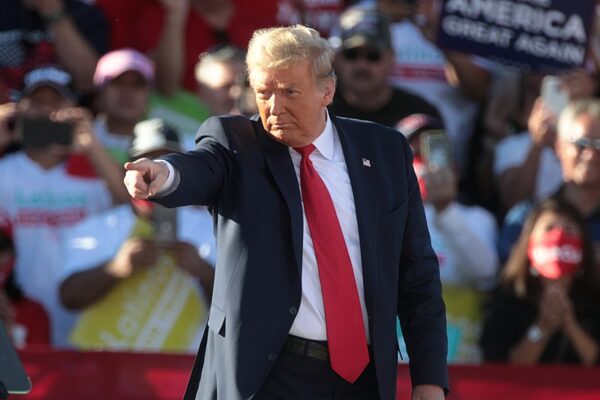



United States President Donald Trump announced on Monday, 23 March 2026, that he had instructed the Department of War to postpone all planned military strikes against Iranian power plants and energy infrastructure for a period of five days. The announcement followed what Trump described as productive diplomatic conversations between United States envoys and a senior Iranian official over the preceding two days, creating a narrow but deeply contested diplomatic window at a critical juncture in the 2026 Iran War now entering its fourth week.
Trump made the announcement via a post on Truth Social early on Monday morning, stating that the United States and Iran had held very good and productive conversations regarding a complete and total resolution of hostilities in the Middle East. He said the five-day postponement was conditional on the continued progress of ongoing meetings and discussions, adding that failure to produce results would result in resumed military operations.
Speaking to reporters in West Palm Beach, Florida, Trump identified his son-in-law Jared Kushner and United States Special Envoy Steve Witkoff as the principal United States representatives in the discussions. Trump said the two men had been engaged in talks with a senior Iranian official on Sunday evening and would continue those efforts through Monday and across the week, with an in-person meeting expected very soon.
Trump declined to publicly name the Iranian interlocutor, citing concern for the person’s safety, and described the individual as highly respected within the Iranian leadership structure. He confirmed that the person was not Supreme Leader Mojtaba Khamenei and stated that the United States had received no direct communications from Khamenei, expressing uncertainty about his current status and authority.
Trump told Fox Business Network that Iran wanted to make a deal and that the discussions could produce a resolution within five days. He described approximately 15 areas of agreement between the two sides, and stated that any final arrangement would require Iran to permanently abandon nuclear weapons development and surrender its stockpile of highly enriched uranium to the United States. He also claimed that Iran had initiated the outreach.
Iranian authorities directly and publicly contradicted Trump’s account. Iranian state media, citing an unnamed senior security official via the messaging application Telegram, said that no direct or indirect negotiations had occurred between Washington and Tehran. Mohammad Bagher Ghalibaf, the speaker of the Iranian Parliament and a former general in the Islamic Revolutionary Guard Corps, posted on the social media platform X in English, flatly denying any negotiations. Ghalibaf accused unnamed parties of spreading misinformation designed to manipulate global financial markets and oil prices, and called the United States and Israel’s position a situation of their own making. He also stated that the Iranian people demanded complete accountability from the aggressors and that all Iranian officials stood firmly behind their supreme leader.
The contradiction between Trump’s account and Iranian officials’ public denials reflects the deep mutual distrust that has characterised all diplomatic contacts between Washington and Tehran throughout the conflict. Despite Trump’s claims of growing consensus, a source with knowledge of the discussions said there did not appear to have been any direct talks between Ghalibaf and Trump’s team. The source indicated that Egypt, Pakistan, and Turkey had been passing messages between the two sides. An Israeli official cited by the news outlet Axios reported that Witkoff and Kushner had been in indirect contact with Ghalibaf, whose involvement was considered significant given his seniority and credibility within the Iranian regime. Ghalibaf is a former general in the Islamic Revolutionary Guard Corps, a former mayor of Tehran, and a close associate of Supreme Leader Mojtaba Khamenei. He played a key role in managing Iran’s war effort during the conflict and is currently regarded as the most senior civilian official in Iran’s decision-making structure.
An Israeli official told Axios that the mediating countries were attempting to convene a meeting in Islamabad involving Ghalibaf and other Iranian officials, as well as Witkoff, Kushner, and possibly United States Vice President JD Vance, potentially later in the week. The Egyptian Foreign Ministry confirmed that its minister, Badr Abdelatty, had spoken on Sunday with Witkoff, Iranian Foreign Minister Abbas Araghchi, and his counterparts from Pakistan, Turkey, and Qatar, emphasising the need to contain the broader effects of the conflict and prevent further escalation.
What was the immediate escalation that prompted Trump’s 48-hour ultimatum to Iran over the Strait of Hormuz?
The diplomatic pause follows a rapid and dangerous escalation in the days immediately preceding the announcement. On Saturday, 21 March 2026, Trump issued a 48-hour ultimatum to Tehran demanding the reopening of the Strait of Hormuz to all vessels, warning that otherwise the United States would destroy Iranian power plants. Iran’s response to that ultimatum was to intensify its own threats rather than comply. Iranian Parliament Speaker Ghalibaf warned on Sunday that any targeting of Iranian power plants would result in Iran irreversibly destroying vital infrastructure and energy facilities across the entire region. The Islamic Revolutionary Guard Corps separately warned that it would completely close the Strait of Hormuz to all shipping and that companies with United States shareholding interests would be regarded as legitimate military targets. Iran’s Defence Council stated that non-belligerent countries could only transit the Strait through prior coordination with Tehran, and warned that any attack on Iranian coasts or islands would trigger mine-laying across Gulf sea lanes.
How did Operation Epic Fury and the killing of Supreme Leader Khamenei lead to the current conflict in the Middle East?
The conflict began on 28 February 2026, when the United States and Israel launched coordinated airstrikes on Iran under the code name Operation Epic Fury. The opening phase included nearly 900 strikes in 12 hours targeting Iranian missiles, air defences, military infrastructure, and leadership. The strikes resulted in the death of Supreme Leader Ali Khamenei, who had led Iran since 1989, and dozens of other senior officials. Iran responded immediately with missile and drone strikes against Israel, United States military bases throughout the region, and Gulf Arab states, while simultaneously implementing an effective blockade of the Strait of Hormuz. Mojtaba Khamenei, the son of the killed supreme leader, was subsequently appointed to succeed his father as supreme leader of the Islamic Republic.
The conflict is now in its fourth week. More than 2,000 people have been killed across the Middle East. In Iran, Israeli and United States strikes have killed more than 1,200 people, according to the Iranian Red Crescent Society. At least 1,000 people have been killed in Lebanon and 15 in Israel. Thirteen United States service members have been killed in the conflict. The cost of the war to the United States was estimated at approximately 18 billion United States dollars as of 19 March 2026, with the Pentagon subsequently requesting an additional 200 billion dollars in supplementary funding.
Why does the closure of the Strait of Hormuz represent the worst global energy crisis since the oil shocks of the 1970s?
The Strait of Hormuz is the narrow waterway connecting the Persian Gulf and the Gulf of Oman, through which approximately one-fifth of global oil and liquefied natural gas supplies normally transit. Iran’s closure of the waterway, combined with strikes on energy infrastructure across multiple countries in the region, has produced what the International Energy Agency describes as the largest supply disruption in the history of global oil markets. International Energy Agency Executive Director Fatih Birol, speaking at Australia’s National Press Club in Canberra on Monday, stated that the current crisis exceeded the combined severity of the 1973 and 1979 oil shocks and the gas crisis that followed Russia’s 2022 invasion of Ukraine. Birol said global oil supplies had been reduced by approximately 11 million barrels per day and described the situation as a major threat to the global economy, warning that no country would be immune if the conflict continued on its current trajectory.
Oil prices surged more than 50 percent since the war began in late February 2026. Major container shipping companies including Maersk, CMA CGM, and Hapag-Lloyd suspended transits through the Strait and related routes such as the Red Sea. Saudi Arabia has been diverting oil westward to the Red Sea port of Yanbu via the East-West Crude Oil Pipeline, though that route’s capacity falls far below the volumes normally shipped through the Strait of Hormuz. Qatar’s Ras Laffan liquefied natural gas facility, a critical installation for global gas markets and the world’s largest LNG production site, sustained extensive damage from Iranian missile strikes, with QatarEnergy declaring force majeure on its operations. Analysts estimated that if the Ras Laffan outage continued, approximately 20 percent of global LNG supply would be removed from markets.
The International Energy Agency chief said the single most effective solution to the crisis remained reopening the Strait of Hormuz, and confirmed he was in consultation with multiple governments about releasing additional strategic oil reserves if required.
How did global financial markets respond to Trump’s five-day pause on strikes against Iranian energy infrastructure?
Financial markets responded sharply and immediately to Trump’s Monday announcement. The Dow Jones Industrial Average rose approximately 975 points, or 2.1 percent. The S&P 500 gained approximately 2 percent and the Nasdaq Composite rose approximately 2.3 percent in early trading, with the Nasdaq having closed on the verge of correction territory the previous Friday. Brent crude oil fell by more than 10 percent to below 101 United States dollars per barrel, briefly touching 96 dollars, while United States crude fell to below 89 dollars per barrel. Markets subsequently retreated from their initial gains after the Israel Defense Forces confirmed that Israeli military operations against Tehran were continuing, raising questions about whether the United States pause was coordinated with Israel or applied only to direct American strikes.
What is the regional and international diplomatic response to Trump’s decision to pause strikes on Iranian power plants?
German Chancellor Friedrich Merz confirmed he had spoken with Trump the previous day about the threatened power plant strikes, expressing his concerns about the potential consequences for civilian populations and regional infrastructure. Merz stated publicly on Monday that he was grateful Trump had agreed to delay the strikes for five days. Indian Prime Minister Narendra Modi, speaking in the Indian Parliament on Monday, compared the war’s economic challenges to those of the COVID-19 pandemic and said India was closely monitoring its power supply and coal reserves as summer approached, adding that all power supply systems were being closely supervised.
Explosions and air alert sirens were reported in Bahrain on Monday, among the first reported in the Gulf since the conflict began. The United Nations Interim Force in Lebanon, known as UNIFIL, reported that a building at its headquarters in the Lebanese coastal town of Naqoura had been struck by a projectile it believed to have been fired by a non-state actor, with sustained gunfire and explosions recorded over the preceding 48 hours across the Naqoura area.
The five-day period announced by Trump represents both a de-escalation from the immediate threat of strikes on Iranian civilian infrastructure and a test of whether indirect diplomatic channels can be converted into a formal negotiating framework. The outcome within that window will carry consequences not only for the immediate trajectory of the 2026 Iran War but for global energy supply, financial markets, and the wider balance of regional power in the Middle East.
Key takeaways on what Trump’s postponement of strikes means for the United States, Iran, and global energy stability
- United States President Donald Trump instructed the Department of War to postpone all military strikes on Iranian power plants and energy infrastructure for five days, citing productive diplomatic conversations with a senior Iranian official conducted through Jared Kushner and Steve Witkoff.
- Iranian Parliament Speaker Mohammad Bagher Ghalibaf and the Iranian Foreign Ministry publicly denied that any negotiations with the United States had taken place, creating a directly contested diplomatic narrative between Washington and Tehran.
- Sources familiar with the discussions indicated that Egypt, Pakistan, and Turkey were acting as intermediaries passing messages between the United States and Iran, with a potential in-person meeting being explored in Islamabad involving senior officials from both sides.
- The International Energy Agency warned on Monday that the conflict had produced the worst global energy crisis since the combined 1973 and 1979 oil shocks, with global oil supply reduced by approximately 11 million barrels per day due to the effective closure of the Strait of Hormuz and strikes on regional energy infrastructure.
- Global financial markets responded positively to the announcement, with major United States equity indices rising and Brent crude oil falling more than 10 percent, though markets retreated partially after the Israel Defense Forces confirmed continued Israeli strikes on Tehran.
Discover more from Business-News-Today.com
Subscribe to get the latest posts sent to your email.