


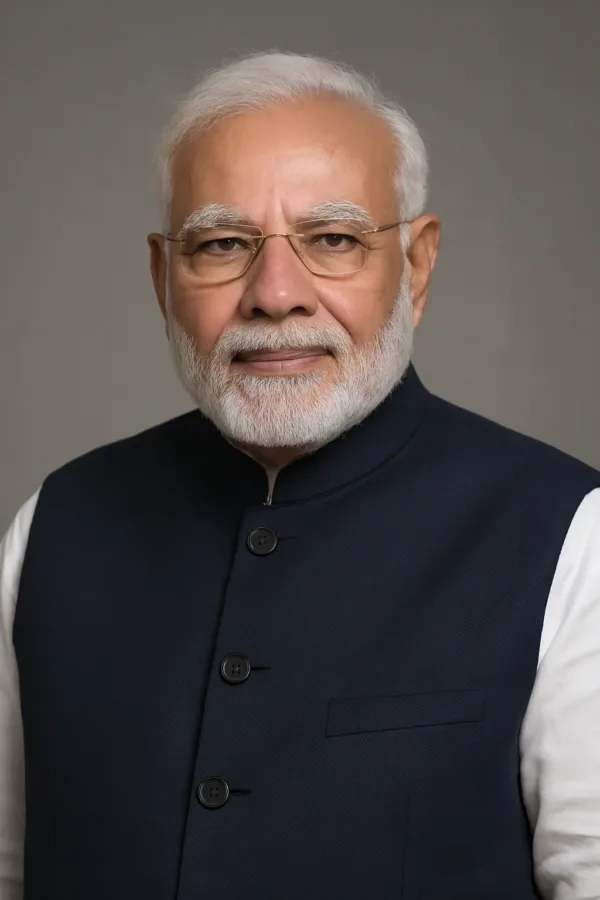
Prime Minister Narendra Modi chaired a comprehensive high-level cabinet review in New Delhi on 22 March 2026 to assess the widening impact of the West Asia conflict on India’s petroleum, crude oil, natural gas, power, and fertiliser supply chains. The meeting, attended by ministers from the defence, home, agriculture, external affairs, finance, petroleum, power, ports, civil aviation, railways, and health portfolios alongside National Security Adviser Ajit Doval and Principal Secretaries P.K. Mishra and Shaktikanta Das, reflected the full severity of the supply chain disruption confronting the Indian economy four weeks after the outbreak of the West Asia conflict.
Government sources confirmed that the review focused on ensuring uninterrupted supply, stable logistics, and efficient distribution of essential commodities across India. Officials stated that the government is taking proactive steps to safeguard national energy security and maintain adequate availability of fuel and agricultural inputs, while continuously monitoring global developments to protect consumer and industry interests. The review assessed current national inventory levels, alternative sourcing arrangements, and logistics contingencies as part of preparations for the possibility of a prolonged disruption to global energy flows.
How did the conflict in West Asia beginning 28 February 2026 lead to a near-total closure of the Strait of Hormuz for international shipping?
The West Asia conflict entered its fourth week following the outbreak of hostilities on 28 February 2026, when the United States and Israel conducted military strikes on Iran that resulted in the death of Supreme Leader Ayatollah Ali Khamenei and a number of senior Iranian military commanders. Iran responded with retaliatory drone and missile strikes against Israeli and United States assets across several Gulf Cooperation Council countries. In the immediate aftermath, Iran imposed severe restrictions on commercial vessel transit through the Strait of Hormuz, a 56-kilometre-wide passage between Iran and the Sultanate of Oman that functions as the sole maritime exit from the Persian Gulf for the region’s major oil and gas exporters.
The Strait of Hormuz handles approximately 20.9 million barrels per day of crude oil, condensate, and petroleum products, representing roughly 20 per cent of global petroleum liquids consumption and approximately one quarter of all seaborne oil trade. Approximately 19 per cent of global liquefied natural gas volumes, 29 per cent of global liquefied petroleum gas trade, and one third of global seaborne fertiliser trade also transit the waterway annually. Unlike the Suez Canal, which can be bypassed through alternative maritime routes, the Strait of Hormuz has no practical alternative for Persian Gulf exporters. Saudi Arabia’s East-West pipeline can move approximately 2.6 million barrels per day to the Red Sea, but this capacity does not substitute for the full volumes ordinarily shipped through the Strait.
Since the imposition of restrictions, daily commercial tanker transits through the Strait fell from a normal average of more than 150 vessels to as few as 2 to 13 per day, predominantly Iran-linked vessels. Approximately 500 tanker vessels of various types remained confined to the Persian Gulf as of mid-March, including crude oil tankers, oil product tankers, chemical carriers, and bulk vessels. Twenty-two Indian-flagged merchant vessels remained stranded on the western side of the Strait, carrying approximately 1.67 million tonnes of crude oil, 3.2 lakh tonnes of liquefied petroleum gas, and nearly 2 lakh tonnes of liquefied natural gas, with 611 Indian seafarers aboard.
Why is India particularly exposed to the Strait of Hormuz disruption compared with other large Asian economies in terms of energy and fertiliser import dependency?
India is the world’s third-largest importer of crude oil, the fourth-largest refiner, and the fifth-largest exporter of petroleum products globally. The country imports approximately 88 per cent of its crude oil requirements, 50 per cent of its natural gas, and 60 per cent of its liquefied petroleum gas. Before the conflict, more than half of India’s crude oil imports originated from Saudi Arabia, Iraq, and the United Arab Emirates, all of which route their exports through the Strait of Hormuz. In 2025, India imported liquefied natural gas worth approximately 9.2 billion United States dollars from West Asia, representing approximately 68.4 per cent of the country’s total liquefied natural gas import value. India also imports approximately 40 per cent of its fertiliser requirements directly from the Middle East, a dependency substantially higher than most other Asian economies.
The crisis has tested India’s energy import diversification strategy more severely than any episode since the Gulf War of 1990 to 1991. The Ministry of Petroleum and Natural Gas has indicated that approximately 70 per cent of India’s crude imports are now being sourced through routes outside the Strait of Hormuz, compared with approximately 55 per cent before the conflict. The Indian government has pursued emergency crude procurement from Russia and from suppliers in West Africa and Latin America to compensate for reduced Gulf inflows. However, the combination of higher spot prices, longer voyage times, and elevated insurance premiums has substantially increased the cost of imported energy across all categories.
How has the Hormuz shipping blockade disrupted India’s gas supply chain, urea output, and fertiliser availability ahead of the 2026 kharif sowing season?
Qatar’s Petronet LNG Ltd suspended liquefied natural gas deliveries to GAIL (India) Ltd from 4 March 2026 following restrictions on vessel movement through the Strait. Petronet LNG Ltd, which operates India’s largest liquefied natural gas receiving terminal, subsequently declared force majeure after upstream suppliers indicated inability to deliver contracted cargo volumes. The force majeure declaration by Petronet LNG Ltd triggered gas supply curtailments by GAIL (India) Ltd, Indian Oil Corporation Ltd, and Bharat Petroleum Corporation Ltd to fertiliser manufacturing units operating under RasGas contracts across India.
Gas supplies to fertiliser plants have been curtailed to approximately 60 to 65 per cent of normal volumes, with some units reporting effective availability below 50 per cent when accounting for scheduled maintenance interruptions. India’s urea manufacturing plants are consequently operating at approximately half their normal output capacity. GAIL (India) Ltd notified fertiliser companies in a letter dated 15 March that long-term regasified liquefied natural gas volumes would be billed at multiple price points, including contract price, GAIL Pooled Price, and Gazette Pooled Price, effective 1 March 2026. Since the pooled price remains provisional and subject to retrospective revision, fertiliser producers are absorbing compounding financial uncertainty alongside reduced operating rates. The Indian government has activated an emergency contingency fund of approximately INR 6 billion to procure spot-market liquefied natural gas, with spot prices having risen above 20 United States dollars per million British thermal units.
The kharif sowing season, which accounts for a substantial share of India’s annual agricultural output and sees fertiliser demand peak around mid-May, has added urgency to the supply review. The government has guaranteed fertiliser plants a minimum of 70 per cent of their natural gas requirements based on average consumption over the preceding six months and has directed producers to prioritise urea output by diverting available ammonia to fertiliser manufacturing. National urea stocks stood at approximately 61.14 lakh tonnes as of 19 March, roughly 5.9 lakh tonnes higher than the same date in the preceding year. Diammonium phosphate stocks have nearly doubled to approximately 25 lakh tonnes, and NPK stocks have reached approximately 56 lakh tonnes, providing a buffer against near-term supply constraints. The government has also advanced a global urea import tender and ordered approximately 13.5 lakh tonnes of fertiliser, with approximately 90 per cent of this order expected to arrive at Indian ports by the end of March. Fertiliser supply from Russia and Morocco is continuing through alternative shipping routes via the Cape of Good Hope.
What emergency policy measures has the Indian government enacted to manage domestic liquefied petroleum gas supply and protect household fuel availability in 2026?
Domestic liquefied petroleum gas sales fell approximately 17.3 per cent year-on-year in the first half of March 2026, with state-owned retailers Indian Oil Corporation, Hindustan Petroleum Corporation, and Bharat Petroleum Corporation together selling approximately 1.15 million tonnes across the period, a decline of 26.3 per cent compared with the preceding month. To counter declining import volumes, the Indian government has increased domestic liquefied petroleum gas output from refineries by approximately 36 per cent, reducing the country’s reliance on Gulf-sourced imports.
The central government issued a Natural Gas Control Order on 9 March 2026, under the Essential Commodities Act, to manage allocation across priority user categories. Under this order, domestic piped natural gas supply and compressed natural gas for vehicles continue to receive full allocations, while industrial users connected to the gas grid may receive moderated supply volumes. The Ministry of Petroleum and Natural Gas established a 24-hour control room to monitor national petroleum stocks and fuel availability across the country. The ministry confirmed on 11 March that petrol, diesel, and aviation turbine fuel inventories remained sufficient for short-term management of the current disruption.
How has the broader West Asia conflict spread disruption from energy to India’s pharmaceutical and steel manufacturing sectors in March 2026?
The supply disruption linked to the near-closure of the Strait of Hormuz has extended beyond petroleum and fertiliser sectors into India’s pharmaceutical and steel manufacturing industries. Propane and liquefied petroleum gas shortages have begun to constrain production at pharmaceutical units in Gujarat, Maharashtra, Telangana, and Andhra Pradesh, where fuel is essential for steam generation and temperature-controlled manufacturing cycles used in the production of paracetamol, vitamins, and hormone-based medicines. Industry stakeholders have flagged that prolonged shortages could affect output of bulk drugs and injectables. The Indian Steel Association has warned that propane and liquefied petroleum gas shortages are affecting steel micro, small, and medium enterprises and their ancillary units, and has urged the government to pursue faster alternative sourcing for these industrial inputs.
What diplomatic steps has India taken with Gulf Cooperation Council governments and Iran to protect maritime supply lines and facilitate vessel transit through the Strait of Hormuz?
India has pursued an intensive diplomatic engagement campaign with West Asian governments, regional powers, and global partners in response to the supply chain crisis. Since the outbreak of hostilities, Prime Minister Modi has held telephonic conversations with the leaders of Saudi Arabia, the United Arab Emirates, Qatar, Bahrain, Kuwait, Jordan, the Sultanate of Oman, France, Malaysia, Israel, and the Islamic Republic of Iran. The outreach has served dual objectives: securing supply continuity assurances from Gulf Cooperation Council states and pressing for freedom of navigation through the Strait of Hormuz for commercial shipping.
In a conversation with Oman’s Sultan Haitham bin Tariq, Prime Minister Modi explicitly raised the need for free and safe passage through the Strait of Hormuz, with a joint statement noting that India and Oman stand for safe and free navigation through the waterway. On 20 March, Prime Minister Modi and Bahrain’s King Hamad Bin Isa Al Khalifa jointly condemned attacks on energy and civilian infrastructure in the region, noting their adverse impact on global food, fuel, and fertiliser security and underlining the necessity of maritime stability.
India’s diplomatic engagement with the Islamic Republic of Iran has been among the most sensitive dimensions of the crisis response. On 21 March, Prime Minister Modi held a telephonic conversation with Iranian President Masoud Pezeshkian to discuss regional developments and bilateral cooperation. Iranian Ambassador to India Mohammad Fathali indicated that Iranian authorities were considering allowing additional Indian vessels to transit the Strait as a goodwill gesture in recognition of the historical relationship between the two countries. On 14 March, two Indian-flagged liquefied petroleum gas carriers owned by the Shipping Corporation of India, Shivalik and Nanda Devi, successfully crossed the Strait under Indian Navy escort carrying a combined cargo of approximately 92,700 metric tonnes. Iranian authorities described the transit as a limited exception, not a resumption of general commercial navigation.
External Affairs Minister S. Jaishankar met the United Arab Emirates’ Minister of State for International Cooperation Reem Al Hashimy and separately held a telephonic conversation with Israeli Foreign Minister Gideon Saar to exchange views on the conflict and its economic repercussions. India has reached out to Russia and Jordan to diversify fertiliser sourcing, with vessels carrying emergency consignments en route to Indian ports. The Ministry of External Affairs spokesperson confirmed that all supply partners have provided assurances of continued supply and expressed optimism about achieving adequate fertiliser stocks before the peak of the kharif demand cycle.
The Indian Navy has continued Operation Sankalp, a maritime security deployment originally launched in June 2019, expanding the number of warships deployed in rotation across the Gulf of Oman and the Persian Gulf. Naval escorts have been assigned to Indian-flagged merchant vessels transiting the affected zone. Shipping authorities have established a 24-hour maritime monitoring system to coordinate vessel tracking and facilitate assistance when required. All crew members and vessels have been advised to adopt enhanced security procedures given the elevated risk environment in the region.
Key takeaways on what India’s energy security review means for supply chains, diplomacy, and the agricultural sector
- Prime Minister Narendra Modi chaired a multi-ministry emergency review on 22 March 2026 covering petroleum, gas, power, and fertiliser sectors, with the stated focus on ensuring uninterrupted supply and stable logistics amid the Strait of Hormuz disruption caused by the West Asia conflict that began 28 February 2026.
- Gas supplies to Indian fertiliser plants have been curtailed to approximately 60 to 65 per cent of normal volumes, with Petronet LNG Ltd having declared force majeure; national urea stocks of approximately 61.14 lakh tonnes as of 19 March remain higher than a year earlier, and the government has advanced emergency import procurement of 13.5 lakh tonnes to protect kharif season supply.
- Twenty-two Indian-flagged vessels carrying approximately 1.67 million tonnes of crude oil, 3.2 lakh tonnes of liquefied petroleum gas, and nearly 2 lakh tonnes of liquefied natural gas remain stranded in the Persian Gulf; two liquefied petroleum gas carriers successfully crossed the Strait on 14 March under Indian Navy escort following a limited Iranian exception, with Iran describing this as a goodwill gesture rather than a general reopening.
- India has diversified crude oil sourcing so that approximately 70 per cent of imports now arrive via non-Hormuz routes, up from approximately 55 per cent before the conflict; emergency procurement from Russia and Jordan is underway for fertiliser inputs, and domestic liquefied petroleum gas refinery output has been increased by approximately 36 per cent.
- Prime Minister Modi has engaged by telephone with the leaders of eleven countries since the conflict began, including Iranian President Masoud Pezeshkian on 21 March, consistently pressing for freedom of navigation through the Strait of Hormuz and condemning attacks on energy and civilian infrastructure in the region.
Discover more from Business-News-Today.com
Subscribe to get the latest posts sent to your email.